





























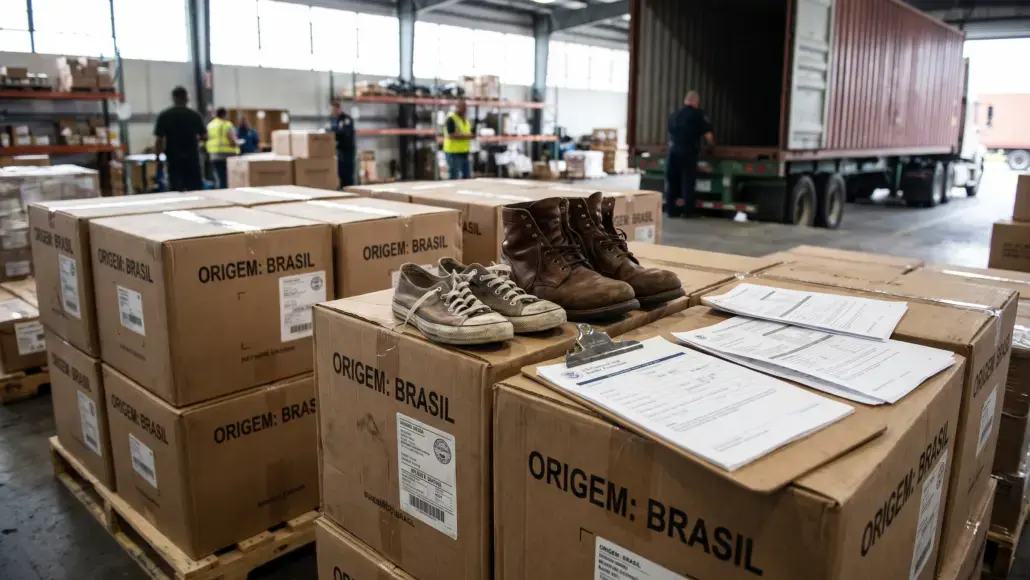
The United States government has officially announced the implementation of new 25% tariffs on footwear imported from Brazil, scheduled to take effect on July 22, 2026. This final action, confirmed by Ambassador Jamieson Greer on July 15, 2026, follows a comprehensive yearlong Section 301 investigation into the trade practices of the South American nation. The directive for these measures originated from the administration to address specific commercial concerns identified during the probe.
Findings of the Section 301 Investigation and Trade Practices
The investigation conducted by the Office of the United States Trade Representative (USTR) scrutinized various Brazilian government measures. The review focused on digital trade restrictions, regulations surrounding electronic payment services, and preferential tariffs. Additionally, the probe examined anti-corruption enforcement, intellectual property protection, ethanol market access, and issues related to illegal deforestation. The USTR concluded that these practices were unfair and served to restrict American commercial interests.
While the final order imposes significant import duties on footwear, certain goods have been granted exemptions. Brazilian exports of beef, coffee, and aircraft will not be subject to these specific footwear tariffs. According to official statements, the USTR determined that footwear is a consumer good generally available from alternative third-country sources. Importers were reportedly given notice as early as June 1, 2026, to identify and secure alternative supply chains outside of Brazil.
Official Stance on US Trade Policy and Economic Interests
Ambassador Greer emphasized that the decision is rooted in the administration’s broader US trade policy designed to safeguard domestic economic interests. Greer noted that the action was necessary to ensure that American workers and companies can compete on a level playing field. The Ambassador cited several grievances, including the treatment of technology companies, backsliding on anti-corruption efforts, and advantages gained by Brazilian farmers through land use practices that impact American producers.
The review process was extensive, involving two public hearings that featured testimony from 77 witnesses and the review of more than 360 written comments. Despite attempts by negotiators to resolve the identified issues through bilateral talks, the USTR stated that these efforts did not yield a successful resolution. While US officials remain open to future discussions, the 25% import duties will remain in place unless a formal resolution is reached.
Industry Response from the American Apparel & Footwear Association
The American Apparel & Footwear Association has expressed significant concern regarding the impact of these measures. Steve Lamar, president and CEO of the American Apparel & Footwear Association, stated that the organization is deeply disappointed by the decision to impose a stacked 25% tariff. Lamar highlighted that Brazil has emerged as a growing sourcing leader for the industry as companies seek to diversify their supply chains.
Concerns Over Supply Chain Disruption and Costs
Industry groups and retailers argued during the investigation that alternative suppliers might struggle to replicate the volume and quality currently provided by Brazilian manufacturers. The American Apparel & Footwear Association warned that these footwear tariffs could undermine Brazil as a critical sourcing alternative and potentially disrupt long-term investments. Lamar also called for robust Congressional oversight to ensure that delegated authorities are used transparently, noting that the US trade policy shift could result in increased cost burdens for American businesses and families.
The implementation of these footwear tariffs on July 22 coincides with the period just before the expiration of a temporary 10% global tariff. As the Section 301 investigation concludes with this final action, the industry continues to monitor the potential for further negotiations between the two nations.

