



























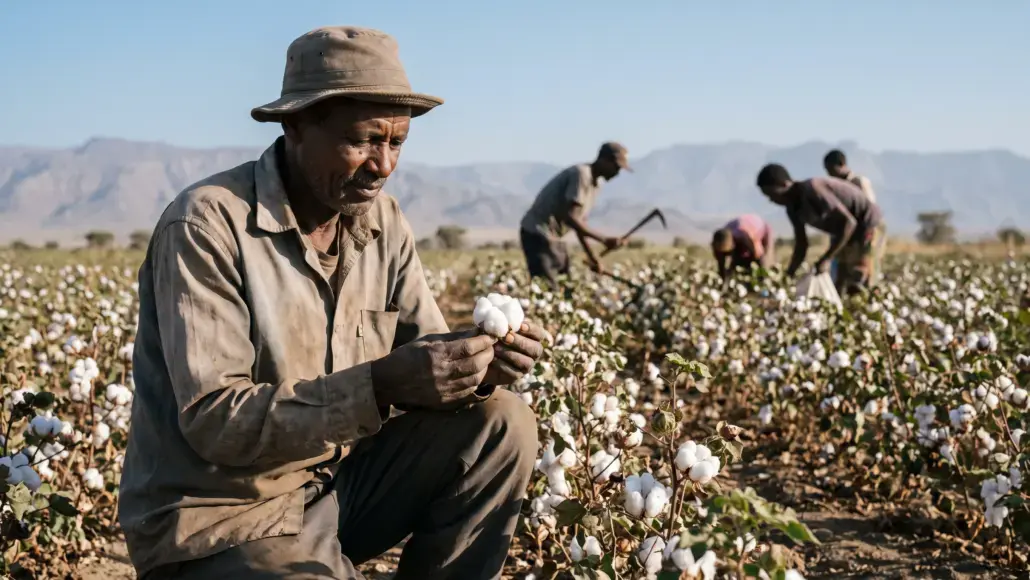
In the Afar Region of Ethiopia, the morning sun illuminates the vast fields of the Gewane District, where farmers like Yossef Tewelde inspect cotton bolls ready for harvest. For Tewelde and many others in the region, the Ethiopia cotton industry is the primary source of household stability, providing the means for education and nutrition. However, the transition from raw cultivation to a fully realized Ethiopia textile value chain remains a complex journey involving farmers, researchers, and industrial manufacturers.
Ethiopia currently possesses approximately three million hectares of land suitable for cotton production. Despite this vast potential, the nation is working to overcome hurdles related to irrigation, seed quality, and logistics. The objective is to transform Ethiopia from a traditional exporter of raw materials into a premier hub for textile manufacturing and apparel exports across the African continent.
Bridging the Gap Between Farm and Factory
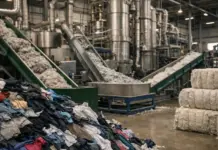
The movement of cotton from the farm gate to the factory floor is the ultimate test of the national industrial ambition. Once harvested, the cotton is processed in ginneries to separate the fiber from the seed, eventually reaching spinning mills where it is converted into yarn and fabric. This integrated value chain is designed to retain more economic worth within the country, utilizing competitive energy costs and a growing labor force.
To support this vision, Ethiopia has established several industrial parks in locations such as Hawassa, Bole Lemi, Adama, Kombolcha, and Mekelle. These zones have successfully attracted international textile manufacturing firms. However, a significant challenge persists: local factories often struggle to secure a consistent supply of high-quality domestic cotton. This discrepancy occasionally forces manufacturers to rely on imported lint or yarn to maintain production schedules, highlighting the need for increased agricultural productivity.
Research and Quality Control Challenges
Berhanu Megersa, the director general of the Werer Agricultural Research Center, notes that while improved cotton varieties have been developed to enhance yields, limited funding has impacted the scale at which these seeds reach farmers. Climate variability and inconsistent access to modern irrigation further constrain the output of the Ethiopia cotton industry. Without a steady supply of premium fiber, the entire manufacturing sector faces operational pressures.
Abje Menegesha, Procurement Manager at Amibara Agricultural Development, emphasizes that while local sourcing is the priority to shorten supply chains, the current domestic production does not always meet the required volume or grading standards. Industry leaders suggest that contract farming and more transparent pricing models could bridge the gap between producers and the textile manufacturing sector.
Policy Initiatives for an Integrated Value Chain
The Ethiopian government is increasingly focusing on the National Cotton Development Strategy to synchronize the efforts of all stakeholders. Samson Assefa, Executive Director for Cotton Development at the Ministry of Agriculture, states that the priority is to strengthen the value chain by improving seed quality and market linkages. This sentiment is echoed by the Minister of Industry, Melaku Alebel, who asserts that realizing the country’s untapped potential requires closer collaboration between the agricultural and industrial sectors.
Negash Goshu, President of the Textile Manufacturers Association, maintains that the problems facing farmers and manufacturers are interconnected. He advocates for continuous dialogue to ensure that the Ethiopia textile value chain remains competitive. While the investment in industrial parks has been significant, experts suggest that the next phase of growth must focus on the agricultural productivity of the raw materials that feed these factories.
Regional Trade and the AfCFTA Opportunity
The African Continental Free Trade Area (AfCFTA) presents a significant opportunity for Ethiopia to expand its apparel exports. By reducing regional trade barriers, the agreement could allow Ethiopian textiles to reach wider markets. Researcher Oumar Hassen points out that while Ethiopia has the land and manufacturing capacity, long-term success depends on infrastructure and the ability of local cotton to compete with international imports.
The experience of the Ethiopia cotton industry serves as a model for how African nations can move away from exporting raw commodities. By investing in the full value chain—from the research center to the retail shelf—Ethiopia aims to create skilled jobs and demonstrate a sustainable path for industrialization. As trucks carry the latest harvest from Gewane to the ginneries, the goal remains to ensure that every link in the chain contributes to a robust and self-sufficient economy.