













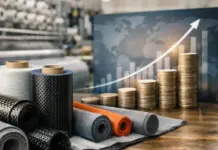











Tag: Sustainability
Sustainability
Advancements in Natural Fiber Textile Recycling for Cotton and Wool
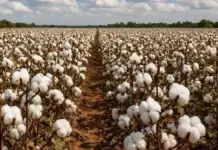
Natural fiber textile recycling has advanced significantly through cutting-edge chemical dissolution, fiber regeneration, and advanced separation technologies enabling high-purity recovery of cotton and wool fibers matching virgin specifications. Processes like Renewcell’s Circulose® and Evrnu’s NuCycl technology now enable indefinite cycling of cotton fibers while wool recycling technologies preserve fiber properties across multiple reuse cycles, creating genuine circular pathways for natural textiles and addressing the environmental advantages of fiber recovery from conventional resource-intensive virgin cultivation.
Sustainability
The Role of AI and Automation in Advancing Textile Recycling Systems
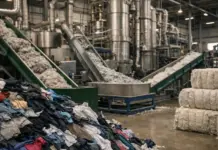
Artificial intelligence and automation technologies are revolutionizing textile recycling by dramatically improving sorting accuracy, material separation efficiency, and overall system throughput. Machine learning algorithms, computer vision systems, near-infrared spectroscopy, and robotic automation are transforming labor-intensive manual processes into intelligent automated systems capable of identifying and processing hundreds of items per hour with accuracy exceeding 95%, enabling scalable textile recycling infrastructure that was previously economically unviable.
Apparel
How Brands are Redesigning Products to Support Textile Recycling and Circularity
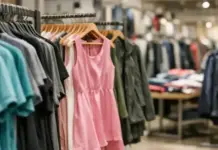
Fashion brands are fundamentally redesigning product architecture to support textile recycling and circular business models through design-for-recycling principles including mono-material construction, detachable trims, and simplified component design. These design transformations address downstream processing requirements, reduce end-of-life complexity, and enable brands to achieve circular positioning while simultaneously improving manufacturing efficiency and creating differentiated market positioning in sustainability-conscious segments.
Sustainability
Economic Opportunities Emerging Through Textile Recycling Markets
The expanding global textile recycling sector is generating substantial economic opportunities through new business models, emerging market segments, job creation across regions, and investment potential. From recycling infrastructure development to downstream processed fiber markets to brand partnerships and technology innovation, the textile recycling economy presents multiple profit pathways and entrepreneurial opportunities for organizations positioned to capture value across the circular textile supply chain.
Apparel
Global Regulations and Policies Accelerating Textile Recycling Adoption
Global regulatory frameworks including extended producer responsibility (EPR) mandates, circular economy directives, and textile-specific policies are fundamentally restructuring apparel industry accountability for end-of-life product management. From the European Union’s comprehensive textile EPR requirements to France’s pioneering AGEC law to emerging California regulations, policy drivers are increasingly compelling manufacturers and brands to incorporate textile recycling into their business models, creating economic incentives for circular design and driving infrastructure investment across multiple geographies.
Sustainability
How Consumer Behavior Influences the Success of Textile Recycling Programs
Consumer behavior fundamentally determines textile recycling program success or failure. Awareness levels, perceived convenience of recycling access, financial incentives, and cultural attitudes toward clothing disposal directly influence participation rates that determine overall collection volumes. While recycling technology and infrastructure represent necessary preconditions, behavioral factors including consumer understanding of recycling benefits, trust in program efficacy, and motivation structures are equally critical in determining whether recycling systems achieve collection targets and whether circular textile systems achieve operational viability.
Sustainability
Textile Recycling of Synthetic Fibers: Overcoming Polyester and Nylon Challenges
Synthetic fiber recycling presents distinct technical challenges differing substantially from natural fiber processing. Polyester, nylon, elastane, and their blends require specialized depolymerization, hydrolysis, or mechanical approaches to achieve material recovery without property degradation. Recent technological breakthroughs in chemical recycling, mixed-fiber processing, and advanced separation techniques are progressively overcoming historical barriers that confined synthetic fiber recycling to mechanical downcycling, enabling virgin-equivalent fiber recovery and genuine circular pathways for synthetic textiles.
Subscribe
- Never miss a story with notifications
- Gain full access to our premium content
- Browse free from up to 5 devices at once
Must read