






















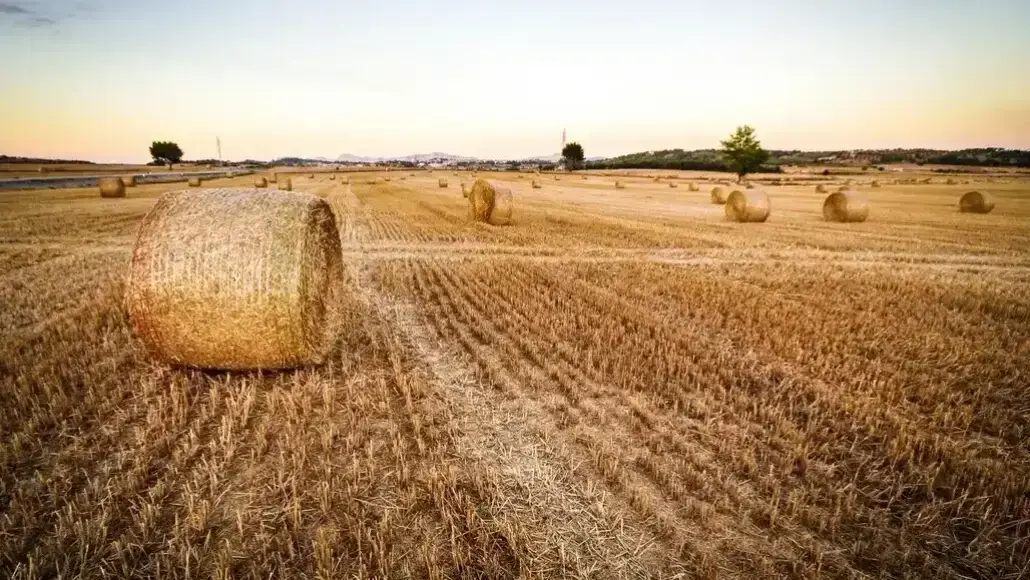
A new report from environmental nonprofit Canopy argues that wheat straw could become a serious alternative raw material for man-made cellulosic fibres, offering the fashion industry a way to expand viscose and lyocell production without leaning so heavily on forest-derived pulp. The findings, published in From Wheat Straw to Wardrobes: Fashioning a new fibre future, are based on pilot work showing that pulp made from Indian wheat straw can be processed into fibre and then spun and knitted into fabrics that meet commercial performance expectations.
The project tested whether agricultural residue specifically wheat straw typically left after harvest can be turned into dissolving pulp suitable for viscose and lyocell lines. According to the report, the resulting pulp can function as a direct substitute for wood-based feedstock, producing yarns and fabrics that pass brand-level standards across multiple end uses. For the industry, that suggests wheat straw viscose fibre and related lyocell outputs are moving closer to practical, scalable options rather than remaining confined to lab trials.
Canopy’s argument lands in the middle of a longstanding tension in cellulosics. Viscose and lyocell are frequently positioned as preferable to synthetics because they are bio-based, and in some cases as an alternative to cotton because they can be produced with different land and water profiles. However, Canopy points to the scale of forest extraction tied to conventional MMCF supply chains, noting that hundreds of millions of trees are felled each year to produce pulp used in these fibres, including in areas with high climate and biodiversity value. Keeping those forests intact is increasingly viewed as one of the fastest and most cost-effective routes to cutting emissions while supporting conservation targets such as “30×30,” which aims to protect 30% of land and waters by 2030.
The wheat-straw pilot, known as Project Latvus, was designed to tackle the hardest part of new-material adoption: getting an entire supply chain to work together from feedstock through to finished garment. The initiative linked NGOs, brands, supply-chain innovators, fibre and textile manufacturers, traceability specialists and an Indian straw supplier, aiming to surface technical bottlenecks early and resolve them collaboratively. The report notes that participants saw the fibre as comparable in look and feel to conventional lyocell, with performance suited to commercial applications—an important validation point for mills and brands wary of inconsistent hand feel, dye behaviour or durability.
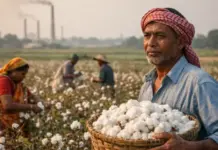
Beyond fibre diversification, Canopy frames agricultural residues as a two-for-one opportunity, particularly in India. The report highlights that large volumes of crop residue are burned each year, representing a lost feedstock stream that could instead be converted into industrial pulp. Reducing burning could also have public health benefits. Seasonal air pollution in Northern India has repeatedly reached hazardous levels, with fine particulate matter (PM2.5) often exceeding World Health Organization guidance. Redirecting residues into industrial value chains could therefore help cut emissions from burning while creating incremental income for farming communities that supply the straw.
Canopy argues that India could emerge as a major hub for next-generation MMCF production, given both the scale of agricultural residue and the opportunity to build circular manufacturing models alongside existing textile capacity. If the economics can be improved, the report suggests wheat straw viscose fibre could complement recycling and other circular inputs, strengthening resilience by reducing dependence on a single raw material source.
A key barrier remains price and scale. Canopy’s report calls on fashion brands to back commercialisation through pooled demand, arguing that aggregated offtake commitments are often what allows new materials to reach price parity and unlock investment in capacity.
“Project Latvus shows that the future of fibre is already here. While continued scale-up is needed to optimize efficiency and close the price difference, the direction is clear — Next Gen MMCFs are ready for the next stage of commercial adoption,” said Nicole Rycroft, Founder and Executive Director of Canopy. “By diversifying feedstocks beyond forests, we have a real opportunity to build a more resilient, circular, and low-impact textile industry.”