
































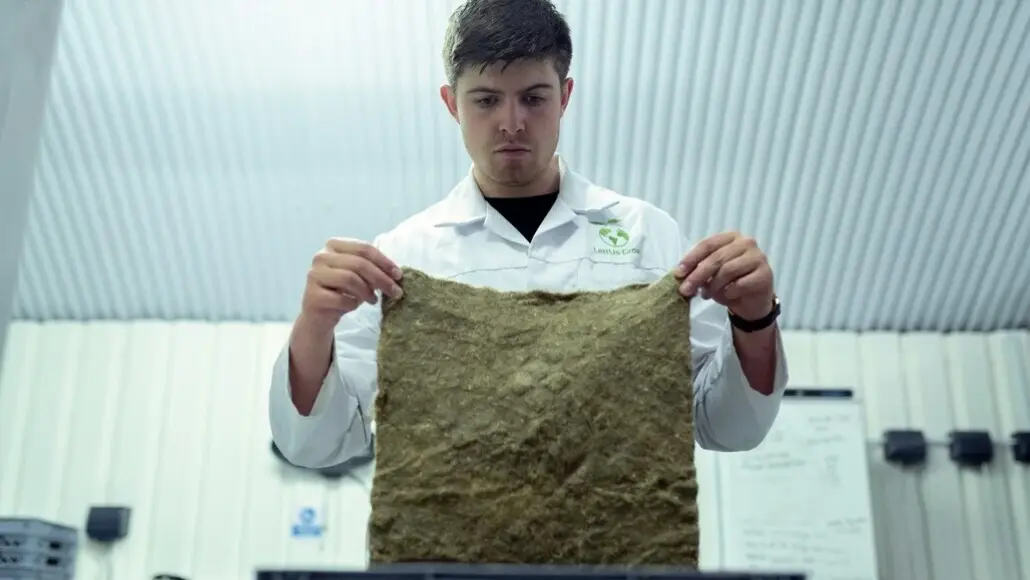
The Bezos Earth Fund has announced a significant $34 million investment across four grants, dedicated to fostering sustainable fashion innovation through the development of advanced, plastic-free textile fibers. This strategic funding aims to transform the clothing sector by backing cutting-edge research into materials like bacterial waste fibers, genetically enhanced cotton, and laboratory-produced silk alternatives.
This substantial commitment underscores the urgent need for eco-friendly solutions in an industry widely recognized for its considerable environmental footprint. The grants are specifically designed to address the materials and manufacturing processes that contribute to an estimated 80% of the fashion industry’s climate impact, encompassing greenhouse gas emissions, excessive water consumption, pervasive pollution, and mounting landfill waste.
Pioneering Research for Climate-Friendly Materials
The $34 million in funding is directed towards several groundbreaking projects, each focused on creating climate-friendly materials that mimic the look and feel of traditional fabrics such as rayon, silk, and cotton, while offering superior cost-effectiveness, performance, and environmental attributes.
Columbia University, in collaboration with the Fashion Institute of Technology, will receive the largest share, an $11.5 million grant. This project targets the development of a high-quality textile fiber derived from feeding bacteria on agricultural waste. The resulting material promises to be strong, flexible, breathable, and fully biodegradable, significantly reducing land use and eliminating microplastic pollution.
Clemson University, partnered with the University of Georgia, has been awarded $11 million. Their research will utilize gene-editing and synthetic biology to cultivate new cotton varieties featuring built-in color, enhanced performance characteristics, and improved resilience. This initiative seeks to produce cotton that can compete with synthetic alternatives while drastically lowering its environmental impact. Professor Christopher Saski of Clemson University emphasized the approach: “This work fundamentally focuses on how we grow fibers that can be inherently better for the planet by moving color, performance, and resilience upstream into the biology of cotton itself. This approach flips the traditional model that has been used for more than a century to build a future of sustainable fashion.”
A $10 million grant will support the University of California, Berkeley, working alongside scientists from Stanford University and the California Institute of Technology. Their endeavor focuses on developing a high-performance, biodegradable alternative to spider silk, critically avoiding the need for silkworms, spiders, or plastic components.
Finally, The Cotton Foundation will receive $1.5 million to aid in restoring the world’s most diverse publicly accessible cotton seedbank. This vital resource will empower scientists and farmers to develop and cultivate improved, more sustainable varieties of cotton. Chad Brewer, Executive Director of The Cotton Foundation, commented on the timely investment: “This investment from the Bezos Earth Fund comes at a critical moment to protect one of agriculture’s most valuable genetic resources. By strengthening the foundation of cotton genetics, we can advance more resilient, sustainable natural fibers, offering safe, scalable alternatives to synthetic materials.
The Imperative for Textile Innovation
The fashion sector’s need for textile innovation is profound. The industry faces scrutiny for its environmental footprint, with estimates suggesting it could emit 712 million tonnes of CO2e over the next two decades if no significant action is taken. Beyond emissions, cotton cultivation alone consumes 2.5% of the world’s arable land and accounts for 16% of global pesticide use annually. The water consumption for cotton is equally staggering, with the amount needed for a single T-shirt capable of sustaining a human for two-and-a-half years. Plastic-based clothing also poses a severe problem, taking centuries to degrade and contributing significantly to global emissions.
Lauren Sánches Bezos, the fund’s vice-chair, articulated the potential of these advancements, stating, “When I started asking questions about how clothes are actually made, I couldn’t stop. The science happening right now is incredible. These teams are growing fiber from bacteria, engineering cotton that comes out of the ground in color, and creating silk-like fibers from compost. That’s not just good for the planet. That’s the future of fashion.”
This push for lab-grown textiles and other novel materials aligns with broader industry efforts, where numerous startups like Galy (producing lab-grown cotton), Circulose and Evrnu (recycling cotton waste), Alt Tex (food-waste-based polyester alternative), and Spiber (creating “brewed proteins” from agricultural waste) are actively seeking more sustainable alternatives to conventional fibers. The Bezos Earth Fund’s investment seeks to bridge the gap between scientific potential and market reality, ensuring that designers, retailers, and manufacturers have access to high-performing, cost-effective, and environmentally sound materials.

