


























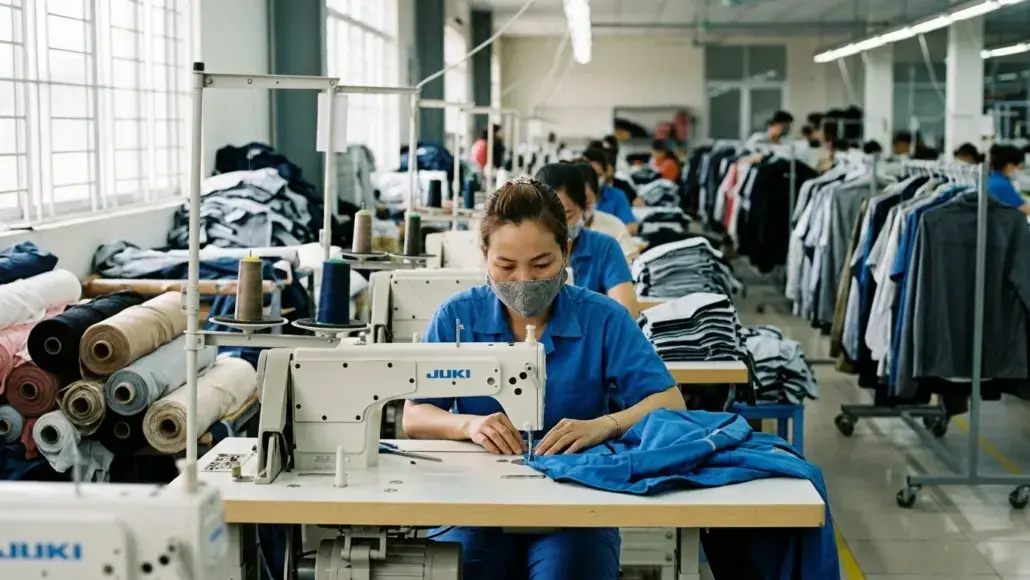
The Vietnam Textile and Apparel Association has reported that the nation’s textile and garment sector achieved an estimated export turnover of 22.2 billion USD during the first six months of 2026. This figure represents a 1.7% increase compared to the same period in the previous year. The data highlights a divergence in performance across different segments of the industry, with raw materials showing robust expansion while finished products faced a slight contraction.
According to the association, exports of accessories, nonwoven materials, fabrics, and fibers saw solid growth, with increases ranging between 5.6% and 10.6%. In contrast, shipments within the garment industry experienced a marginal decline of 0.4%. This dip is attributed to persistent weakness in consumer demand across several major international markets. Despite these mixed results, the sector maintained a significant trade surplus of nearly 10 billion USD for the first half of the year.
Market Performance and Global Demand Trends
The United States continues to hold its position as the primary destination for Vietnamese textile goods. Shipments to the U.S. reached 6.81 billion USD in the first five months of the year, marking a 1.3% rise and representing approximately 45% of the total export share. The European Union emerged as a particularly strong performer, with an 8.8% increase bringing its total to 1.94 billion USD. However, the industry faced headwinds in Asia, as exports to Japan and the Republic of Korea fell by 6.2% and 8.9%, respectively.
While the overall export revenue remains positive, the industry is navigating a complex landscape of challenges. These include intense price competition, a heavy reliance on imported raw materials, and the rising costs associated with meeting environmental, social, and governance standards. Furthermore, the upcoming implementation of the European Union’s Digital Product Passport in 2028 is necessitating a rapid build-up of data infrastructure to ensure product traceability and compliance within the global supply chain.
Strategic Shift Toward Value and Sustainability
Industry leadership has noted that the era of expanding solely through production volume is reaching its limit. Future progress is now tied to enhancing productivity and the creation of higher-value items. To facilitate this transition, the association has authorized the creation of four specialized committees for the 2025–2030 term. These groups will focus on technology, international business, the global supply chain, and sustainable development.
Operational Goals for the Remainder of 2026
To reach the full-year target of 48 billion USD, the sector aims to generate a consistent monthly export revenue exceeding 4 billion USD through the second half of the year. Achieving this will require a multi-faceted approach, including diversifying export markets and increasing the localization rate of raw materials, which currently sits at approximately 50% of the value chain.
The industry is also prioritizing digital transformation and automation to remain competitive. By adapting to the evolving purchasing strategies of global brands and preparing for potential trade risks, the sector seeks to solidify its standing. The focus on digital transformation and sustainable development is expected to help the garment industry meet new international requirements while maintaining the momentum of Vietnam textile export growth in an increasingly regulated global market.