


























Vietnam’s export sector is expected to face greater challenges in the second half of 2026 despite a strong start to the year, prompting industry experts to call for measures that strengthen competitiveness, increase domestic value creation, and reduce dependence on imported materials.
Although export performance has remained encouraging, specialists warn that Vietnam continues to rely heavily on a limited number of overseas markets and product categories. At the same time, many export-oriented industries generate relatively low domestic value because production depends extensively on imported raw materials and components.
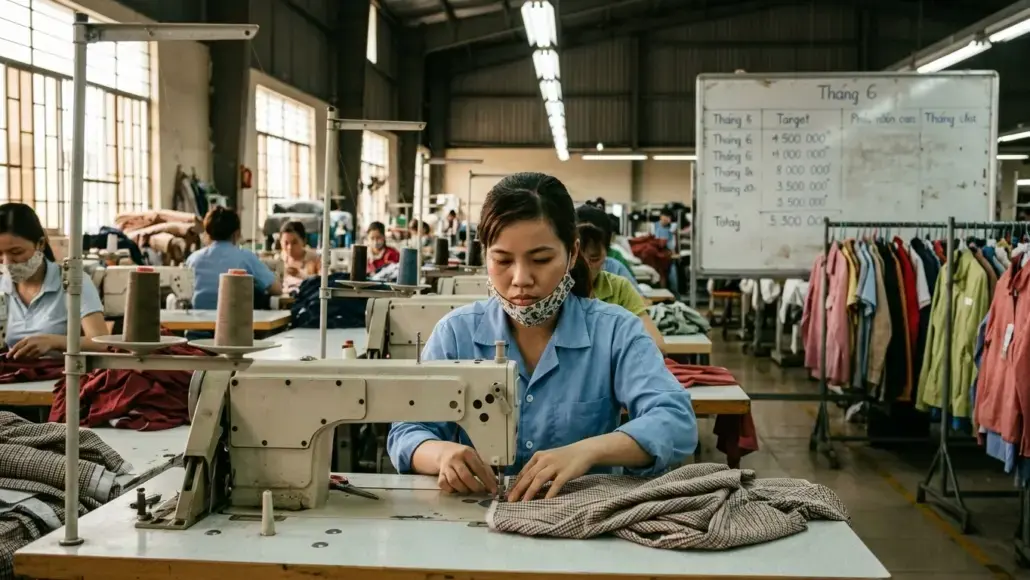
The Vietnam textile exports sector has been one of the country’s strongest performers, generating nearly US$19 billion in export revenue during the first half of 2026. However, manufacturers are operating in an increasingly demanding global environment marked by rising production expenses, higher logistics costs, and stricter compliance requirements.
Industry competition is also evolving. Buyers are placing greater emphasis on transparent supply chains, shorter delivery times, and adherence to environmental, social, and governance (ESG) standards rather than focusing primarily on low manufacturing costs.
A major obstacle remains the industry’s reliance on imported inputs. Raw materials sourced from overseas account for an estimated 60–70% of production requirements, limiting manufacturers’ ability to maximize the benefits offered by Vietnam’s free trade agreements (FTAs). Since the beginning of the year, the sector has imported materials worth more than US$13 billion, including approximately US$5.53 billion in fabric purchased from China.
The National Statistics Office has warned that weaker consumer demand in key international markets, declining commodity prices, expanding trade barriers, and elevated global interest rates could continue to weigh on export growth during the remainder of the year.
To strengthen the Vietnam textile exports outlook, the Ministry of Industry and Trade plans to expand support for businesses by improving the utilization of existing FTAs, intensifying trade promotion initiatives, and addressing market access challenges in major export destinations.
Authorities also intend to strengthen inspections aimed at preventing trade fraud and false declarations of product origin, particularly for high-value export categories. Verification of certificates of origin will be enhanced to reduce exposure to international trade remedy investigations.
In addition, the ministry will closely monitor global commodity markets to optimize imports of energy and fuel, helping businesses avoid purchasing during periods of elevated international prices. Improving logistics efficiency and reducing supply chain costs will also remain key priorities as Vietnam works to maintain export momentum through the second half of 2026.