
































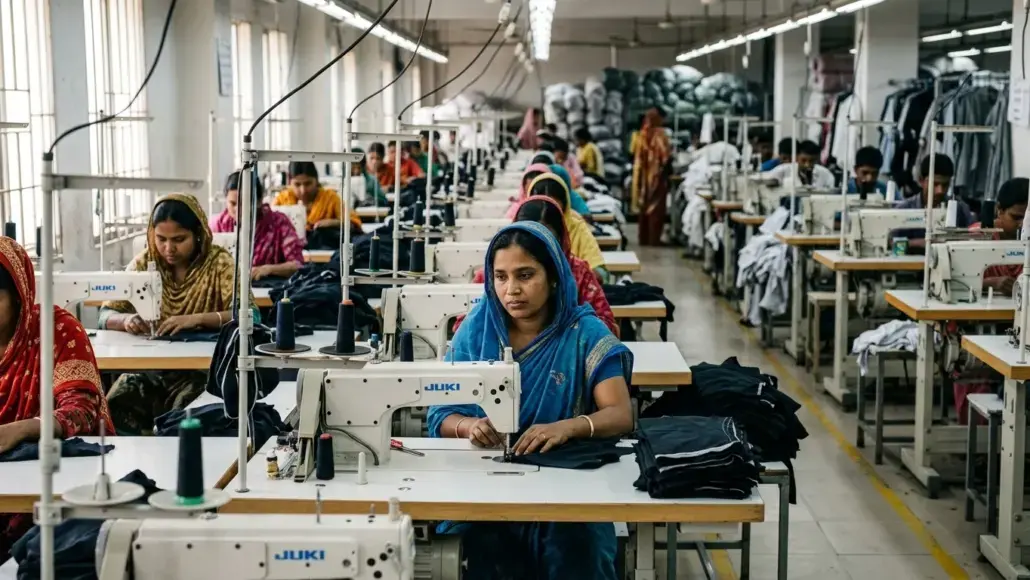
Bangladesh apparel sourcing continues to hold a prominent position in global supply chains, although international fashion brands are making greater efforts to diversify their procurement strategies. A newly released 2026 USFIA Benchmarking Study shows that factory utilisation among US fashion companies sourcing from Bangladesh declined significantly this year, reflecting changing buyer priorities rather than weakening confidence in the country.
According to the report published by the US Fashion Industry Association (USFIA), Bangladesh’s utilisation rate dropped to 78.9% in 2026, compared with 88.2% in 2025. The decline comes as apparel brands increasingly distribute orders across multiple sourcing destinations to improve production capacity, supply chain resilience, inventory responsiveness and regional balance.
Bangladesh Strengthens Position in the US Apparel Market
Despite the lower utilisation rate, Bangladesh apparel sourcing achieved a landmark milestone in the US market. For the first time in decades, Bangladesh overtook China in apparel exports to the United States by value.
The study found that during the first five months of 2026, Bangladesh accounted for 11.3% of US apparel imports, placing it behind only Vietnam, which captured a 22.2% market share. China’s contribution fell to 9.7%, marking a significant shift in global sourcing patterns.
The findings underline Bangladesh’s growing importance as an apparel supplier despite heightened competition and evolving procurement strategies.
Global Buyers Continue to Rely on Bangladesh
The survey also highlighted the country’s strategic role within international sourcing networks.
Nearly 47% of participating companies reported that Bangladesh represented more than 10% of their total sourcing value or production volume, demonstrating that many global fashion retailers continue to depend heavily on the country’s manufacturing capabilities.
Bangladesh remains particularly attractive for large-volume apparel production, where competitive pricing and extensive manufacturing capacity continue to provide significant advantages.
Lead Time Challenges Remain a Concern
While Bangladesh continues to perform well in cost-efficient mass production, the report identified delivery speed as one of the country’s biggest competitive weaknesses.
The study noted that slow speed-to-market, limited supply chain adaptability and ongoing compliance issues continue to affect sourcing decisions.
Bangladesh received a score of 2.3 out of 5 for speed-to-market, reflecting logistical bottlenecks and the country’s geographic distance from major consumer markets. As fashion brands accelerate product launches and shorten inventory cycles, faster replenishment has become an increasingly important purchasing criterion.
The report suggests that improving logistics and supply chain flexibility will be essential for maintaining competitiveness in the evolving global apparel market.
Buyers Expand Sourcing Networks
Rather than concentrating production in a single country, apparel companies are increasingly adopting multi-country sourcing strategies to reduce operational risks.
According to the study, brands are placing greater emphasis on manufacturing flexibility, inventory agility, production capacity and regional diversification when selecting sourcing partners.
This broader sourcing approach explains the decline in Bangladesh’s utilisation rate, even as overall confidence in the country’s manufacturing sector remains strong.
Positive Outlook for Future Growth
Despite current operational challenges, the long-term outlook for Bangladesh apparel sourcing remains encouraging.
The USFIA study ranked Bangladesh as the second most attractive “rising star” for future sourcing expansion. Around 46.7% of surveyed companies indicated plans to increase sourcing from Bangladesh over the next two years, placing the country second only to Indonesia among preferred expansion destinations.
The findings suggest that while Bangladesh must address lead-time efficiency and supply chain flexibility, its competitive manufacturing base, production scale and established role in global apparel sourcing continue to position it as a key partner for international fashion brands in the years ahead.

