































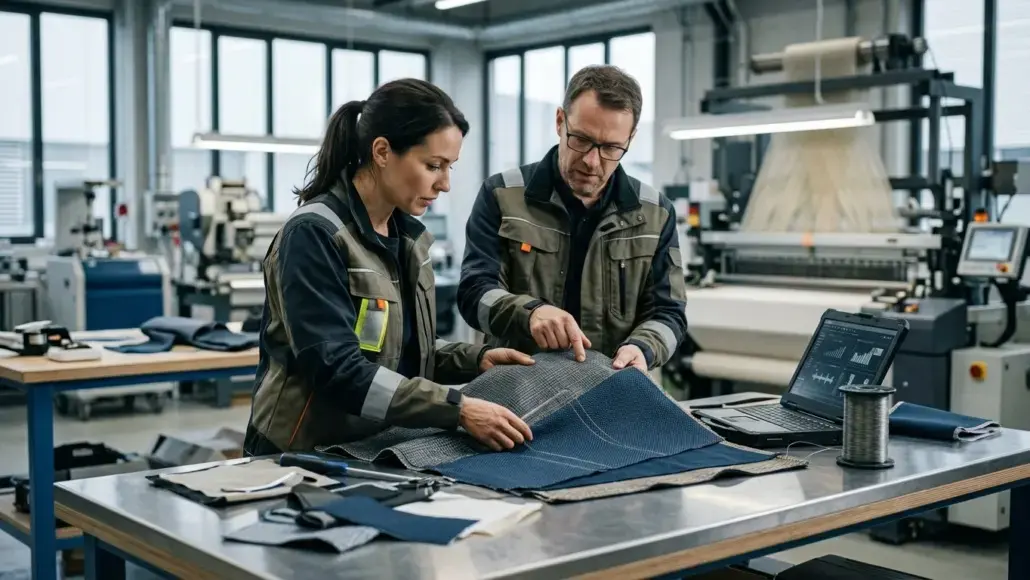
The landscape of global manufacturing is shifting, with a marked movement toward high-performance materials. Unlike traditional fashion, the Technical Textiles Market prioritizes utility, durability, and functional integration over mere aesthetics. These engineered fabrics are currently embedded into critical infrastructure, ranging from medical stents and firefighter gear to advanced agricultural shade nets and aerospace components.
Performance-Driven Industrial Fabrics
Industry reports indicate that the Technical Textiles Market is on a trajectory for significant growth, with valuations projected to reach $241.5 billion by 2035. This expansion is supported by a compound annual growth rate of 6.2 percent. Driving this demand are sectors such as automotive, healthcare, defense, and construction, where there is an urgent need for thermal resistance, chemical stability, and superior mechanical strength.
Advancements in Production Technology
Innovation in manufacturing is changing how these materials are created. Breakthroughs in 3D weaving, non-woven electrospinning, and 3D knitting allow for the production of complex structural geometries without seams. Currently, 3D weaving represents the largest segment of this industry, accounting for 23.4 percent of the total market share.
The Rise of Smart Textiles and Wearable Technology
A distinct, rapidly evolving segment within the broader industry is the emergence of Smart Textiles. Moving beyond simple moisture-wicking properties, these materials now feature embedded electronics, conductive yarns, and carbon nanotubes. This Wearable Technology captures biometric data, such as heart rate and muscle fatigue, or harvests kinetic and thermal energy to power micro-sensors.
Market Projections for Electronic Fabrics
Data suggests that the market for Smart Textiles will see explosive growth, potentially reaching $67.62 billion by 2035. This represents a significant leap, driven by the integration of IoT devices and a heightened consumer focus on health and wellness. These Performance Materials are increasingly found in specialized athletic wear and medical monitoring garments, effectively bridging the gap between clothing and electronic hardware.
Commitment to Sustainable Innovation
As the industry scales, manufacturers are placing a heavy emphasis on Sustainable Innovation. There is a concerted effort to move away from petrochemical reliance through the use of bio-fabrics derived from mycelium, algae, and hemp. Furthermore, advanced chemical recycling processes are now being deployed to handle complex blended fibers, ensuring that the production of these high-tech materials does not compromise environmental standards.
Sector-Wide Adoption
The need for resilience is also pushing innovation in personal protective equipment (PPE) and construction materials. With stricter global safety regulations in mining and manufacturing, companies are investing in fabrics that offer enhanced protection while maintaining comfort. As research and development continue to accelerate, these materials are expected to become even more deeply integrated into both industrial and consumer daily life.