


























Uzbekistan has pledged to purchase 100,000 tonnes of Afghan cotton annually as part of a broader effort to strengthen economic cooperation with Afghanistan, while also expanding collaboration in trade, transport, agriculture, and infrastructure development. The commitment was announced during a high-level visit to Kabul led by Uzbekistan’s Deputy Prime Minister Jamshid Khojaev, reflecting growing commercial engagement between the two neighbouring countries.
The announcement formed part of a series of meetings between the Uzbek delegation and senior Afghan officials, including representatives from the State-Owned Companies Authority and the National Development Company. Discussions focused on accelerating bilateral investment, improving agricultural productivity, and enhancing regional connectivity through long-term development projects.
As part of the cooperation package, Uzbekistan offered support for Afghanistan’s agricultural sector by supplying improved cotton seeds and chemical fertilisers aimed at increasing crop yields and strengthening cotton production. The two sides also reaffirmed their commitment to advancing the Trans-Afghan Railway project, a strategic transport corridor expected to improve regional trade by linking Central Asia with South Asian markets.
During meetings with Afghan Prime Minister Mohammad Hassan, the Uzbek delegation emphasized that Afghanistan continues to occupy an important place in Uzbekistan’s foreign policy agenda. Officials stated that the visit was intended to transform previously announced trade and investment commitments into implementable projects capable of delivering tangible economic benefits for both countries.
Trade between the two countries has continued to expand. Afghanistan exported goods worth approximately $150 million to Uzbekistan during the previous year, while exports have already reached $111 million since the beginning of the current year, indicating sustained momentum in bilateral commerce.
Transport cooperation also featured prominently during the visit. Afghan Minister of Transport and Civil Aviation Mohammad Fazil Mazloom met with Uzbek Transport Minister Ilkhom Makhkamov to discuss measures aimed at improving cross-border logistics and transit operations.
The two governments agreed to establish a joint technical working group to simplify transport procedures, enhance customs coordination, and facilitate smoother movement of freight between the two countries. Uzbekistan also pledged additional measures to increase the entry of Afghan transit vehicles, supporting faster and more efficient regional trade routes.
Beyond cotton procurement, Uzbekistan has expressed interest in expanding investment across Afghanistan’s agriculture, energy, mining, banking, and industrial sectors. Officials believe stronger economic integration could contribute to long-term regional stability while creating new business opportunities for both countries. Bilateral trade has already reached approximately $1.6 billion, with both governments seeking to significantly increase that figure through new infrastructure and investment initiatives.
The visit also resulted in the Afghanistan-Uzbekistan Business Forum, where government officials and private-sector representatives explored new commercial partnerships. The forum concluded with the signing of 22 trade agreements covering sectors including agriculture, logistics, industry, and investment, underlining the growing depth of economic relations between the two neighbours.
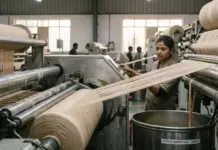
The planned expansion of cotton trade is expected to benefit both countries. Afghanistan gains access to a stable export market for one of its key agricultural commodities, while Uzbekistan secures additional raw material supplies to support its large textile manufacturing sector amid rising regional demand.
Industry observers believe that stronger cooperation in agriculture, transport, and infrastructure could further position Central Asia as an important textile and logistics hub, with the Trans-Afghan Railway expected to play a significant role in reducing transport costs and improving market access in the coming years