






























The global textile and apparel industry is witnessing a fundamental shift in how distribution centers operate. Traditionally viewed as back-end storage hubs, fashion warehouses are being repositioned as strategic assets. This transition is driven by the necessity to manage increasing SKU complexity, the rise of omni-channel fulfilment, and the urgent need for heightened supply chain resilience. Modern warehouse management systems are now at the forefront of this evolution, integrating advanced automation and real-time data to meet shifting consumer demands.
The Unique Complexity of Fashion Logistics and SKU Management
Unlike stable manufacturing sectors, the fashion industry is defined by rapid turnover and constant change. Every seasonal launch introduces a vast array of new product assortments, where a single garment style may encompass dozens of variations in size, color, and fit. This creates a massive volume of unique SKUs that manual tracking can no longer handle effectively.
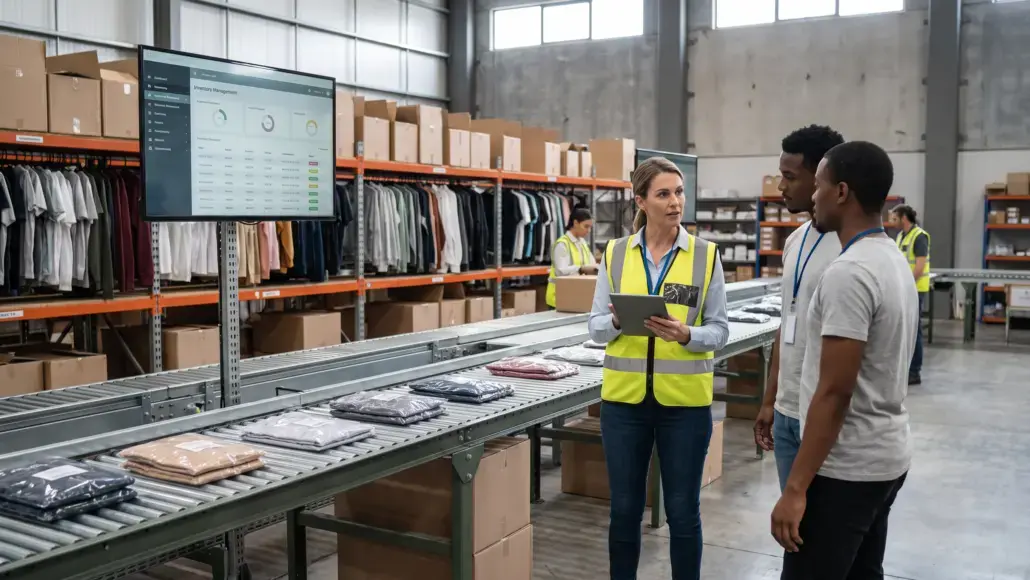
To maintain operational pace, businesses are adopting sophisticated warehouse management systems that categorize product families by specific attributes. This level of organization allows for near-instant location of inventory based on material or season, ensuring that the logistics chain remains agile enough to support flash sales and unpredictable demand spikes.
Real-Time Inventory Visibility Through RFID Technology
Accuracy in data is no longer optional for fashion brands. Consumers now demand transparency regarding stock availability across all platforms, from online marketplaces to physical storefronts. Achieving this requires high-level inventory visibility that transcends traditional barcode limitations.
While barcodes remain a staple, many facilities are transitioning toward RFID technology. This advancement allows for the simultaneous identification of multiple items without a direct line of sight. By verifying entire cartons of apparel in seconds, RFID technology significantly reduces the time required for cycle counting and minimizes fulfilment errors. This precision directly enhances the customer experience by ensuring that promised products are actually in stock and ready for dispatch.
Adapting to the Demands of Omni-channel Fulfilment
The modern shopping journey is no longer linear. Customers frequently move between social media discovery, online purchasing, and in-store returns. This fluidity places immense pressure on distribution centers to process various order types simultaneously, including wholesale, direct-to-consumer, and store replenishment.
Effective fashion warehouse management now relies on unified inventory strategies. Instead of isolating stock for different sales channels, modern warehouse management systems dynamically allocate inventory where the demand is highest. This flexibility is essential for improving stock utilization and maintaining supply chain resilience during peak seasonal periods or major collection launches.
Coordinating Automation with Intelligent Software
Automation is becoming a standard solution for addressing labor shortages and increasing productivity within the textile sector. Technologies such as Autonomous Mobile Robots (AMRs) and Automated Storage and Retrieval Systems (ASRS) are increasingly common. However, the value of these tools is only fully realized when they are orchestrated by intelligent software layers.
Warehouse management systems serve as the central brain, sequencing tasks and balancing workloads across human staff and robotic systems. This integration ensures that products move through the facility with maximum efficiency, maximizing the return on investment for automated infrastructure.
Returns Management and Sustainability as Strategic Pillars
The fashion sector faces uniquely high return rates, making reverse logistics a critical area for operational focus. Efficient warehouse management systems streamline the inspection and reintegration of returned goods, allowing them to be made available for resale quickly. This speed is vital for preserving sales opportunities within narrow seasonal windows.
Furthermore, these operational efficiencies contribute to broader sustainability goals. By enhancing inventory visibility, companies can reduce overproduction and minimize the energy consumption associated with unnecessary product movement. Accurate data within the warehouse supports more informed packaging and transportation decisions, aligning logistics with environmental reporting requirements and reducing the overall carbon footprint of the supply chain.
Summary of Strategic Operational Shifts
- Transitioning from manual tracking to automated attribute-based SKU organization.
- Implementing RFID technology to achieve total inventory transparency.
- Unifying stock pools to support seamless omni-channel fulfilment.
- Utilizing software to orchestrate human and robotic labor.
- Prioritizing rapid reverse logistics to recover value from returns.
The modern warehouse has effectively become the “backstage production team” of the fashion world. As consumer expectations continue to rise, the ability to manage inventory with precision and respond to change with confidence will remain the defining factor of success in the global apparel market.

