























Sri Lankan apparel producer Hela Apparel has moved to wind up its business after concluding that persistent liquidity problems have left the group unable to meet its financial obligations. The company has submitted winding-up petitions to the Commercial High Court covering the parent organisation and two subsidiaries.
The decision follows an extensive assessment by the company’s Board, which found that available restructuring measures and potential funding avenues were no longer sufficient to restore the business.
In a disclosure to the Colombo Stock Exchange on August 5, Hela Apparel said its directors had unanimously agreed the previous day to pursue a court-supervised winding-up process for Hela Apparel, Hela Clothing and Foundation Garments.
Board rules out further restructuring options
The Board’s decision came after reviewing the group’s assets that could potentially be realised, outstanding liabilities, projected cash generation and commitments to creditors.
Based on that assessment, directors concluded that continuing normal operations was no longer financially sustainable. The company said the winding-up route was pursued only after practical alternatives for restructuring the business and securing additional funding had been exhausted.
Applications relating to both subsidiaries were filed together with the petition involving the parent company.
The Commercial High Court will now review the applications and determine the appropriate course of action under Sri Lanka’s Companies Act No. 7 of 2007.
Sharp deterioration in financial performance
The move comes after a significant deterioration in Hela Apparel’s financial position.
For the nine months ended December 31, 2025, group revenue dropped to SLRs43.95 billion ($129.17 million) from SLRs61.55 billion during the corresponding period in 2024.
Gross profit fell by almost half, declining to SLRs4.27 billion from SLRs8.23 billion. The reduction reflected mounting pressure on operating margins and weaker overall profitability.
The group’s operating loss also increased, reaching SLRs4.81 billion, compared with SLRs3.58 billion a year earlier.
At the bottom line, Hela Apparel reported a net loss of SLRs7.59 billion for the nine-month period, compared with a loss of SLRs6.46 billion in the same period of 2024.
The financial deterioration placed additional pressure on the group’s ability to maintain operations and meet its obligations.
International manufacturing network
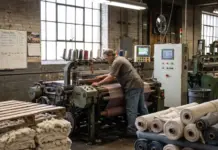
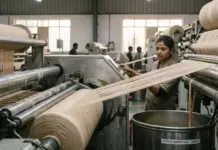
Based in Colombo, Hela Apparel provides supply-chain and manufacturing services to international fashion brands, with a particular focus on intimate apparel, activewear and children’s clothing.
The group has established a manufacturing footprint comprising 10 facilities across four countries and employs more than 17,000 people.
The scale of its operations had previously supported Hela’s position as an important supplier within the international apparel industry. However, deteriorating financial conditions have now forced the company to reconsider the viability of the group structure.
Previous sustainability and expansion initiatives
Hela Apparel had undertaken several initiatives aimed at strengthening its international operations and sustainability credentials before its current financial difficulties.
In 2022, the company received certification from The Sustainable Future Group for measuring and reporting greenhouse gas emissions across its operations.
The following year, Hela secured $14 million in funding to support the expansion of its manufacturing activities in East Africa, highlighting the group’s earlier ambitions to strengthen its international production network.
Those expansion efforts now stand against a significantly different financial backdrop, with the company’s latest filing placing the future of the parent company and its two subsidiaries in the hands of the Commercial High Court.
What happens next?
The court proceedings will determine the next stage for Hela Apparel and its subsidiaries. Creditors, employees, suppliers and other stakeholders are likely to be affected as the court considers the winding-up petitions.
The company’s decision represents a major development for Sri Lanka’s apparel sector, where Hela has maintained a substantial manufacturing and employment footprint. The outcome of the court process will determine how the group’s assets, liabilities and remaining operations are handled.