




























Apparel and textile companies placing products on the California market are facing increased regulatory pressure after the 1 July 2026 registration deadline under the state’s Responsible Textile Recovery Act passed without further extension.
Landbell USA, the designated Producer Responsibility Organization (PRO) for the programme, is urging potentially affected businesses to review their obligations and complete registration as soon as possible. Companies that have not met the requirement could now face enforcement measures and financial penalties.
California establishes textile-specific EPR framework
The Responsible Textile Recovery Act of 2024, also known as SB 707, represents a major change in how textile waste is managed in the United States. It establishes the country’s first comprehensive Extended Producer Responsibility (EPR) framework dedicated specifically to apparel and textiles.
The legislation moves much of the responsibility for products reaching the end of their useful life away from local authorities and taxpayers and places it on the companies that manufacture, import, distribute or sell those products.
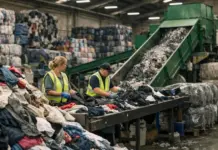
Under the new system, eligible producers are expected to participate in programmes covering activities such as collection, repair, reuse and recycling of covered textile products sold in California.
The legislation applies to a broad range of businesses, including brands, manufacturers, importers and retailers.
Wide range of products falls under SB 707
The scope of the California textile EPR programme extends well beyond conventional clothing.
Covered products include apparel, footwear, handbags, backpacks and knitted or woven accessories. The legislation also encompasses a range of household textile products, including blankets, curtains, towels, bedding, tablecloths, napkins, linens and pillows.
Generally, products must be made predominantly from textile fibres, yarns or fabrics to fall within the programme. Products primarily constructed from materials such as plastic, rubber or foam are generally excluded.
Certain smaller businesses may qualify for an exemption. Companies with aggregate worldwide annual revenue below $1 million, including applicable affiliated entities, are among those identified as outside the programme’s requirements.
Non-registration could bring significant penalties
The consequences of failing to comply could be substantial. Producers that do not register with an approved PRO, including Landbell USA, may face civil penalties of as much as $10,000 per day.
For violations determined to be intentional or knowing, the maximum penalty can rise to $50,000 per day.
The compliance implications extend beyond the producers themselves. Once CalRecycle publishes its official list of noncompliant companies, retailers, distributors and online marketplaces will be restricted from selling products belonging to businesses that have failed to meet the requirements.
This could create additional commercial pressure for brands that have yet to establish their compliance position.
Landbell calls for immediate registration
Landbell USA president John Hayes said companies that may fall within the legislation should not delay reviewing their status.
“The July 1 statutory deadline has passed, and companies that may be obligated under SB 707 should act promptly to evaluate their obligations and complete registration.
“Registration is the gateway to programme updates, educational resources, and producer discussions that can help companies prepare for what comes next. The sooner producers register, the sooner they can access those resources and participate in the conversation around implementation.”
The warning comes as businesses adjust to a regulatory model that will require greater attention to textile end-of-life management and circularity.
Landbell appointed programme PRO
California formally selected Landbell USA as the programme’s Producer Responsibility Organization on 27 February 2026.
As the designated PRO, the organisation is tasked with developing a statewide stewardship plan and supporting the infrastructure required for textile collection, reuse and recycling.
Its responsibilities also include working with participating producers and helping ensure that registered businesses comply with the circularity requirements established under SB 707.
For apparel and textile companies selling into California, the California textile EPR compliance process therefore represents more than a registration requirement. It signals a broader shift toward producer-funded responsibility for textile waste and could influence how brands approach product design, durability, reuse, recycling and end-of-life management.
With the statutory deadline now passed, businesses that have not yet determined their obligations face a narrower window to address compliance before enforcement activity intensifies.

