


















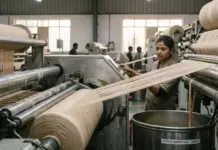











The European Commission has officially concluded a year-long trade investigation by implementing definitive anti-dumping duties on polyamide yarn imports originating from China. The final measures, which range from 60 percent to 67.6 percent, are designed to shield approximately 2,000 manufacturing positions across the European Union, specifically in nations such as Italy, Croatia, Romania, Spain, and Slovenia. While the move protects local producers, it is expected to influence textile manufacturing costs for various downstream sectors, including hosiery and sportswear.
Implementation of European Commission Regulation
Published as European Commission regulation (EU) 2026/1823, these trade measures target a market segment valued at roughly €400 million. The investigation was initiated in July 2025 following a formal complaint by the Ad Hoc Coalition of European Producers of Yarns of Polyamide. While provisional measures were introduced earlier in March 2026, the current ruling makes these tariffs definitive. Under the new schedule, a major Fujian-based exporter faces a 60 percent duty, while another primary exporter group is subject to a 67.6 percent rate. Other cooperating exporters will see a rate of 62.2 percent.
Benchmarking and Fair Price Calculations
The Commission conducted its analysis under Article 2(6a) of the basic anti-dumping rules, which allows for the adjustment of costs when significant market distortions are present. In this instance, the Commission utilized Türkiye as a representative market to construct a fair price benchmark. A significant point of contention involved the exclusion of low-priced Russian raw materials from the Turkish benchmark, as the Commission determined that post-2022 conditions had artificially lowered those prices. This adjustment ultimately led to the higher final anti-dumping duties observed in the definitive ruling.
Impacts on Downstream Textile Manufacturing Costs
The case underscores a persistent challenge in trade policy: balancing the protection of upstream manufacturers with the economic needs of downstream processors. European yarn producers maintained that polyamide yarn imports were being sold at unfairly low prices, hindering domestic capacity. Conversely, several textile manufacturers argued that the new EU polyamide yarn duties could inflate textile manufacturing costs during a period of high energy and labor expenses.
Stakeholders from the hosiery and technical fabric sectors expressed concern that specific synthetic filament yarns required for specialized products are not currently produced at scale within the Union. Despite these claims, the Commission concluded that European manufacturers possess the technical capacity to meet these needs and rejected requests to exclude those specific products from the scope of the duties.
Monitoring and Supply Chain Outlook
Importantly, the Commission decided against applying duties retroactively, as there was no evidence of a massive surge in imports during the investigation’s registration period. However, officials have indicated they will remain vigilant regarding potential circumvention of the new EU polyamide yarn duties. Unusual shifts in trade patterns could prompt further investigations to ensure the measures remain effective.
For the broader industry, these duties on synthetic filament yarns represent a significant shift in the sourcing landscape. While the tariffs do not apply to finished garments, the increased cost of raw materials may eventually move through the supply chain. The final decision rests on a broader industrial strategy aimed at maintaining strategic manufacturing capacity within the European borders, even as the cost of that protection is distributed across the value chain.
Technical Factfile: Trade Case Overview
- Primary Regulation: Commission Implementing Regulation (EU) 2026/1823, establishing definitive duties on certain yarns of polyamide.
- Product Scope: High-tenacity and synthetic filament yarns of aliphatic polyamides (including CN codes 5402 31 00 and 5402 45 00).
- Investigation Timeline: The formal period of investigation ran from July 1, 2024, to June 30, 2025, with injury trends analyzed from 2022 onwards.
- Effective Date: The definitive regulation entered into force the day following its publication in the Official Journal of the European Union.