
























The Philippine Textile Research Institute (DOST-PTRI) is pressing for tighter compliance with the Philippine Tropical Fabrics Law, arguing that consistent implementation across national agencies and local government units could open a sizeable, steady market for domestically made textiles. The institute said stronger adherence to the law could unlock an estimated ₱17.8 billion (about $289 million) in annual demand tied to government uniforms and official attire.
Republic Act No. 9242 requires government bodies to use Philippine Tropical Fabrics (PTF) for official uniforms and government-issued clothing. PTF materials are sourced and processed locally, using natural fibres such as abaca, pineapple, banana, bamboo, cotton and silk—resources the institute says can support both rural livelihoods and industrial upgrading when tied to reliable procurement.
DOST-PTRI said that despite the law being in place for years, awareness and purchasing practices remain uneven. Gaps persist among certain agencies and local government units, limiting demand that could otherwise provide a consistent base load for local fibre cultivation, spinning, weaving and garment production.
Government figures cited by the institute show public employees receive a combined uniform or clothing allowance worth roughly ₱17.8 billion annually. DOST-PTRI estimates around half of that total is effectively directed toward textile procurement. Based on that assumption, the market could translate into demand for about 30 million metres of fabric each year, at an average cost of roughly ₱300 per metre.
“Government uniform requirements can drive production across the entire value chain—from fibre cultivation to yarn production, weaving and garment manufacturing,” DOST-PTRI director IV Julius L Leano Jr. said was quoted as saying by domestic media outlets.
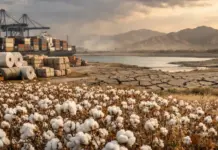
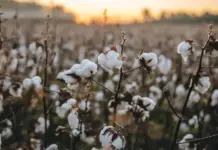
The institute said the Philippines already has a meaningful domestic raw-material base that could be scaled more effectively if supply chains were better integrated. Cotton farms covering about 12,600 hectares can produce an estimated 2,270 metric tonnes of cotton, while other natural fibres contribute around 1,000 metric tonnes. DOST-PTRI believes these volumes could help support projected demand if production, processing and procurement were coordinated more systematically.
Beyond industrial strategy, the institute also framed PTF materials as a lower-impact option. It said PTF-based fabrics can reduce carbon emissions compared with conventional polyester alternatives, adding an environmental rationale to procurement reform as government and institutions face growing pressure to improve sustainability performance.
To strengthen implementation of the Philippine Tropical Fabrics Law, DOST-PTRI said it continues to provide testing services, certification support and technical standards to ensure fabrics meet uniform requirements. The agency is also coordinating with the Civil Service Commission, the Department of Trade and Industry, and the Department of Agriculture’s Philippine Fibre Industry Development Authority to align policy, production capacity and purchasing processes.
In parallel, the institute is rolling out textile innovation hubs through its FRONTIER programme. These hubs are intended to link fibre producers, weavers, designers and manufacturers, building a stronger local ecosystem that can respond to larger, more predictable demand—starting with government procurement and potentially expanding into broader commercial markets over time.