































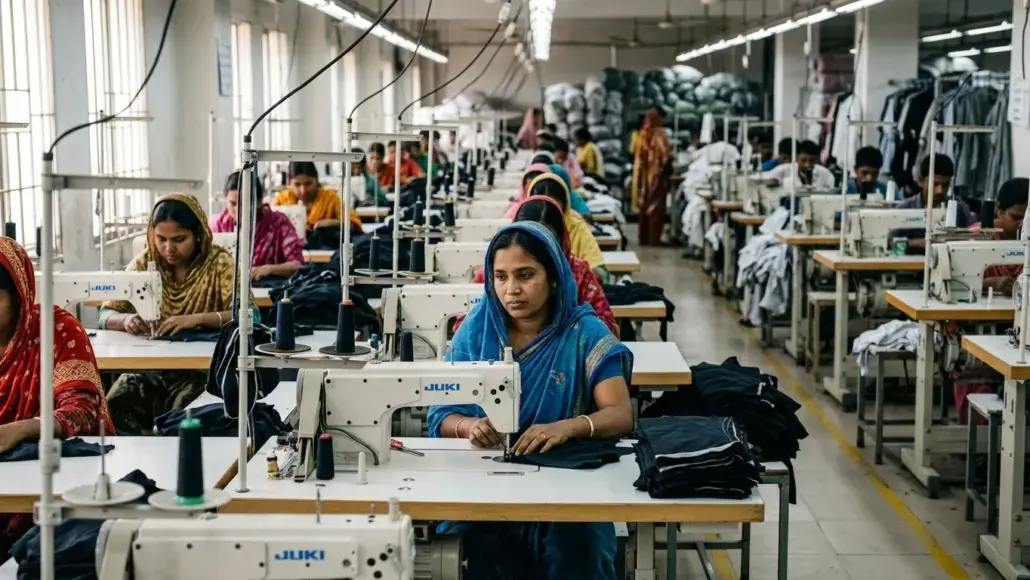
Bangladesh’s ready-made garment industry, the country’s largest export earner and a central pillar of the economy, is enduring one of its most difficult periods. Rising production costs, weaker global demand, inflationary pressures, supply chain disruptions, and labor unrest have converged, eroding margins and pushing many factories to scale back output, announce layoffs, or cease operations.
The sector accounts for more than 80 percent of national export earnings and provides employment to over four million people, the majority of them women. Long seen as a driver of growth, poverty reduction, and women’s empowerment, the industry is now under severe strain, raising questions about sustainability and broader economic effects.
Weaker Orders as Global Demand Cools
A slowdown across key markets including the United States, the European Union, and Canada has curbed apparel spending amid high inflation. Retailers have trimmed new orders, and many Bangladeshi suppliers report smaller purchase volumes than in prior years. Buyers are also seeking lower prices, faster turnarounds, and higher compliance standards, which manufacturers say are difficult to meet while remaining profitable.
Although export figures have occasionally shown signs of recovery, order volumes remain uneven. Small and medium-sized factories are finding it especially hard to compete with larger players that have stronger finances and long-standing relationships with global brands.
Costs Climb, Margins Shrink
Input costs have risen sharply. Imported raw materials such as cotton, dyes, chemicals, and accessories have grown more expensive due to global inflation and currency movements. Energy costs have also increased. Electricity shortages, higher fuel prices, and elevated transportation expenses have forced many facilities to run costly backup generators, further tightening margins.
Depreciation of the local currency has made imports pricier. While a weaker currency can support exports, manufacturers say the benefit has been offset by higher input costs. Factory owners also report that international buyers have been slow to revise purchasing prices, leaving producers to absorb much of the increase.
Wages, Living Costs, and Labor Unrest
A recent rise in the minimum wage has been welcomed by labor advocates as a step toward better living standards. Factory owners, however, say the adjustment adds to operating costs at a difficult time. Many workers argue that inflation in essentials food, rent, transport, and healthcare continues to erode purchasing power.
As a result, demands for improved pay, safer conditions, and timely payments have intensified. Labor demonstrations and temporary factory closures have disrupted production schedules. Employers cite financial pressures from declining orders and higher costs. Striking a balance between worker welfare and business sustainability remains one of the sector’s most complex challenges, with Bangladesh RMG labor unrest drawing heightened attention.
Layoffs and Factory Closures
Financial strain has led to workforce reductions across numerous facilities. Some manufacturers have implemented temporary measures, while others have shuttered production units. Smaller factories, often operating with limited reserves, have been particularly vulnerable. Without sufficient working capital or affordable credit, extended periods of weak demand have proven difficult to withstand.
The effects reach far beyond factory floors. Thousands of workers have lost primary sources of income, and entire communities feel the impact. Because women make up most of the workforce, the consequences of layoffs have been especially acute for households reliant on their earnings. The rise in layoffs has deepened financial uncertainty for many families.
Supply Chain Strains and Delivery Risks
Ongoing global supply chain disruptions continue to unsettle production planning. Delays in receiving imported raw materials have forced shipment postponements and renegotiation of delivery dates. In some trade routes, transportation costs remain above pre-pandemic levels. Port congestion, logistical inefficiencies, and geopolitical uncertainties complicate international shipments.
Manufacturers face the dual challenge of meeting strict deadlines while managing late arrivals and higher freight. Failure to deliver on time can trigger penalties or jeopardize future contracts. These supply chain headwinds add further pressure to already thin margins.
Intensifying Regional Competition
Bangladesh remains among the world’s top apparel exporters, yet competition has grown from Vietnam, India, Cambodia, Indonesia, and Turkey. Rival producers have invested in automation, technology, and end-to-end supply chain modernization, while moving into higher-value categories.
Bangladesh’s traditional advantages an abundant workforce and competitive costs have narrowed amid rising wages and expenses. Industry voices emphasize the need to progress beyond basic production into product diversification, innovation, branding, and advanced textile capabilities to maintain competitiveness.
Progress in Sustainability and Green Manufacturing
Despite the challenges, Bangladesh has made notable gains in sustainability. The country is home to many of the highest-rated green garment factories globally. These facilities employ energy-efficient technologies, water recycling, and environmentally responsible processes, which are increasingly favored by international buyers focused on strong environmental and social compliance.
Such investment enhances reputation and can improve long-term competitiveness by reducing operating costs and attracting premium orders. However, building and upgrading green facilities demands significant capital, which is difficult for smaller manufacturers facing reduced revenues.
Policy Support and Industry Priorities
Authorities have introduced support measures during difficult periods, including stimulus packages, export incentives, low-interest financing, and policy steps aimed at competitiveness. Business groups have called for simpler export procedures, improved access to credit, more reliable energy supplies, and stronger trade agreements.
Industry leaders also point to infrastructure upgrades ports, transport networks and vocational training to bolster productivity and reduce costs. Many economists note that coordinated action among government agencies, factory owners, labor organizations, and international buyers is important for long-term resilience.
Digital Tools and Automation
Technological change is reshaping production. Factories are gradually adopting automated cutting, digital design tools, artificial intelligence, robotics, and real-time monitoring systems. These tools help improve efficiency, reduce waste, and raise quality.
At the same time, increased automation can limit demand for lower-skilled roles. Retraining and upskilling are therefore essential so workers can adapt to more technology-driven processes. Investment in education, technical competencies, and digital literacy is seen as key to preparing the workforce for evolving manufacturing needs.
The Human Cost
Behind every closure is a personal story of hardship. Workers who lose jobs often struggle to cover basic expenses. Limited qualifications or specialized experience can make it difficult to find new employment. Some people migrate in search of work, while others return to rural communities where opportunities are scarce. The wave of layoffs has added to these pressures, and Bangladesh RMG labor unrest continues to reflect the strain felt across the sector.

