






























The U.S. textile industry has undergone a radical transformation over the last 250 years, moving from the decentralized, domestic crafts of 1776 into a highly mechanized and globally integrated sector. In the modern era, the industry has shifted its focus away from basic apparel manufacturing toward advanced textile manufacturing technology, sustainable engineering, and automated systems. This multi-trillion-dollar global sector is currently experiencing an aggressive technological transition, where AI is being adopted as a production standard rather than an experimental pilot.
Navigating the Regulatory Landscape of Artificial Intelligence
As production methods evolve, the U.S. regulatory environment is attempting to transition from a patchwork of state-level mandates to a unified federal baseline. This shift has created a notable tension between innovation and oversight. The White House National Policy Framework for Artificial Intelligence, released in March, outlines a “light-touch” approach designed to favor national economic competitiveness and industry-led standards. This framework intends to respect federalism while maintaining the state’s power to protect consumers, prevent fraud, and ensure child safety.
On the legislative front, there is a significant push to codify these standards through the Trump America AI Act. However, various states are asserting their own authority. The Colorado AI Act, specifically the SB 26-189 model, has gained attention for its focus on transparent notifications regarding the role of AI in textile production within employment and corporate decision-making. Sourcing executives now face the dual challenge of leveraging these new tools to combat shipping disruptions while navigating this volatile compliance environment.
Operational Shifts and the Rise of Autonomous Systems
The footprint of AI in sourcing continues to expand, moving from a secondary differentiator to a baseline necessity across global supply chains. One of the most significant applications is predictive procurement. By processing massive datasets, technology allows decision-makers to track minimum order quantities, geographic logistics, and supplier certifications in real-time. This agility enables companies to pivot to alternative mills instantly if port disruptions or tariff spikes occur.
Advancements on the Factory Floor
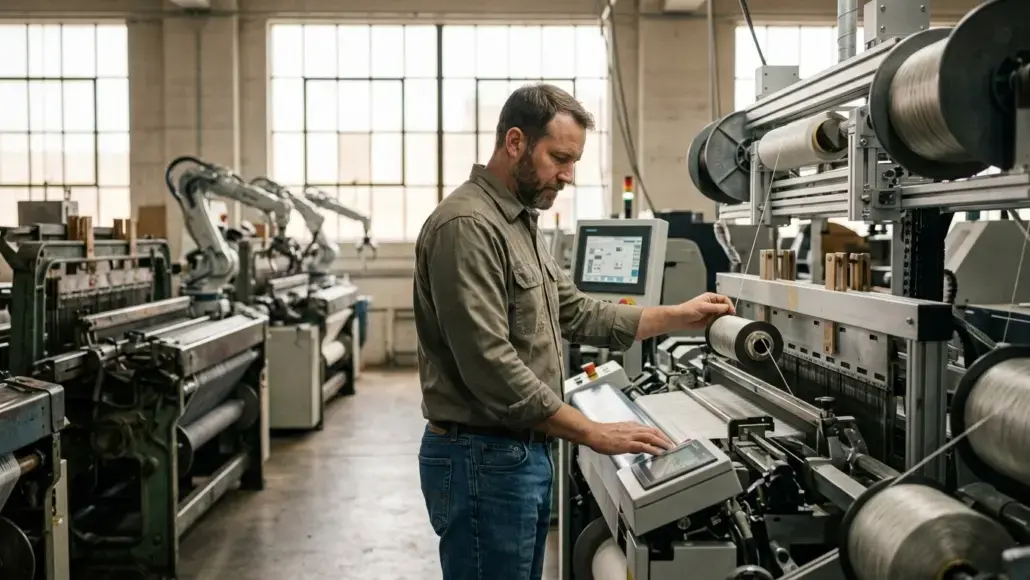
On the manufacturing floor, computer vision systems are currently slashing factory batch rejections by up to 60 percent. Additionally, AI is being deployed to screen global databases for eco-friendly fibers and track ESG compliance certificates to meet transparency mandates. Industry leaders are also preparing for the mass scaling of autonomous production scheduling. Static spreadsheets are being phased out in favor of real-time engines that automatically restructure mill schedules when yarn lots fail or shipping routes change.
The deployment of digital twins—virtual factory replicas—is also expected to move out of pilot phases and onto mainstream cutting floors. Analysts suggest this will drive a 10 to 15 percent reduction in raw material waste. As these systems become more prevalent, apparel brands must also ensure that consumer-facing tools, such as virtual try-on software, align with strengthening data collection and child safety laws.
Future Investment and Market Outlook
The transition toward a digital-first industry is backed by significant capital. Market data indicates that investments in AI by textile companies are projected to jump from the current $2.6 billion to approximately $12 billion by 2029. This massive scaling of textile manufacturing technology will define the next era of the sector.
Ultimately, the intersection of cutting-edge innovation and evolving regulation will determine which brands succeed. Sourcing executives must balance the immense efficiency gains of production automation against a shifting policy landscape. Those who successfully integrate AI in textile production while remaining agile amid regulatory changes will be best positioned to lead the multi-billion-dollar digital overhaul already underway.

