

















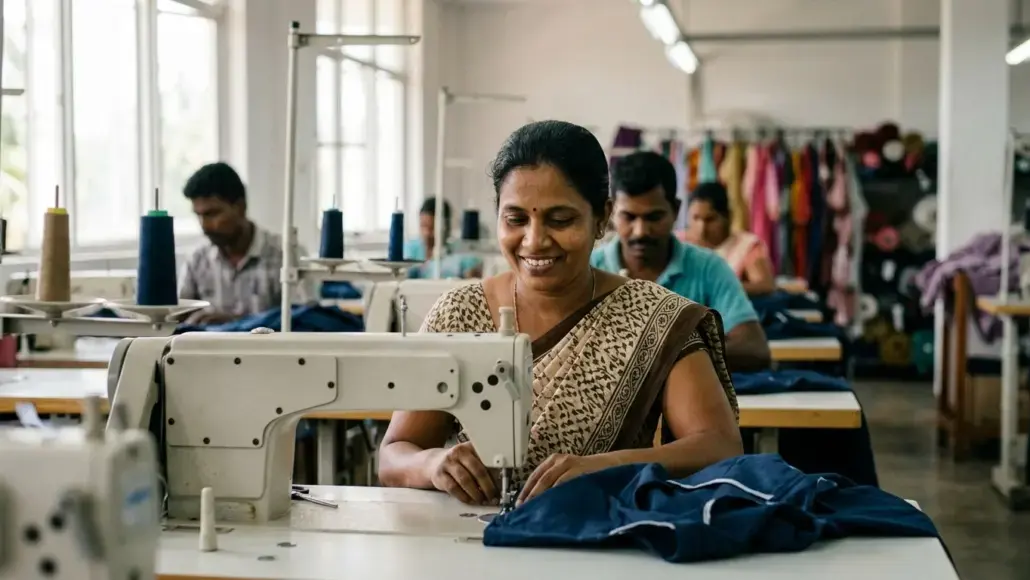
Sri Lanka is looking to accelerate apparel export growth through a combination of policy reforms, investment incentives and closer collaboration with industry stakeholders, as the country’s garment sector continues to regain momentum in global markets.
President Anura Kumara Dissanayake recently held discussions with senior business leaders, apparel manufacturers, investors and government officials at the Presidential Secretariat, focusing on strategies to strengthen exports and increase foreign exchange earnings. Representatives from key state institutions, including Sri Lanka Customs and other regulatory agencies, joined the meeting to address persistent challenges facing the country’s largest export industry.
At the heart of the discussions was the need to transform the Export Development Board’s latest export strategy into a practical roadmap capable of driving long-term economic expansion rather than remaining a policy framework on paper.
The President reportedly reaffirmed the government’s commitment to supporting exporters and attracting fresh investment. A major element of the proposed strategy involves encouraging industrial development beyond established manufacturing centres by creating new opportunities in regional areas.
One of the key proposals presented was a government-supported “Plug and Play” factory programme. The initiative would provide investors with ready-to-operate manufacturing facilities and supporting infrastructure, reducing setup costs, shortening project timelines and making investment in Sri Lanka’s apparel industry more attractive.
While investment promotion featured prominently in the discussions, officials also acknowledged broader economic concerns. According to reports, President Dissanayake highlighted the importance of strengthening foreign currency inflows, noting that increasing dollar earnings remains critical to the country’s economic recovery efforts.
Industry leaders used the meeting to raise several long-standing concerns, including difficulties related to land access, regulatory uncertainty and the impact of value-added tax burdens on domestic raw material suppliers. In response, the President reportedly pledged government action to address land-related challenges and accelerate legislative reforms aimed at improving the business environment.
On taxation issues, industry representatives were encouraged to present detailed recommendations for alternative relief mechanisms that could ease financial pressure across the supply chain.
Expanding market access also emerged as a priority area. Discussions reportedly covered opportunities to broaden free trade agreements and secure larger export quotas to help Sri Lankan manufacturers reach additional international markets and support future apparel export growth.
Efforts to modernise trade administration were another major focus. The National Single Window for Trade is expected to become fully operational by the end of July, while a corresponding platform for investment-related approvals is reportedly scheduled for completion before year-end. These digital initiatives are expected to streamline regulatory procedures, reduce paperwork and improve the efficiency of business operations.
Before concluding the meeting, apparel industry representatives proposed establishing a regular monthly consultation mechanism with government officials to ensure emerging challenges are addressed promptly. Reports indicate that President Dissanayake agreed to the suggestion, paving the way for more structured and ongoing engagement between policymakers and industry stakeholders.
The discussions come at a positive moment for Sri Lanka’s garment sector. Recent trade data showed apparel and textile exports rose 7.96% year-on-year to reach $394.14 million in May 2026, marking the strongest monthly export performance of the year. The increase suggests improving demand across key international markets after a challenging opening period to 2026 and provides renewed optimism for continued apparel export growth in the months ahead.