











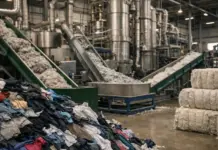




















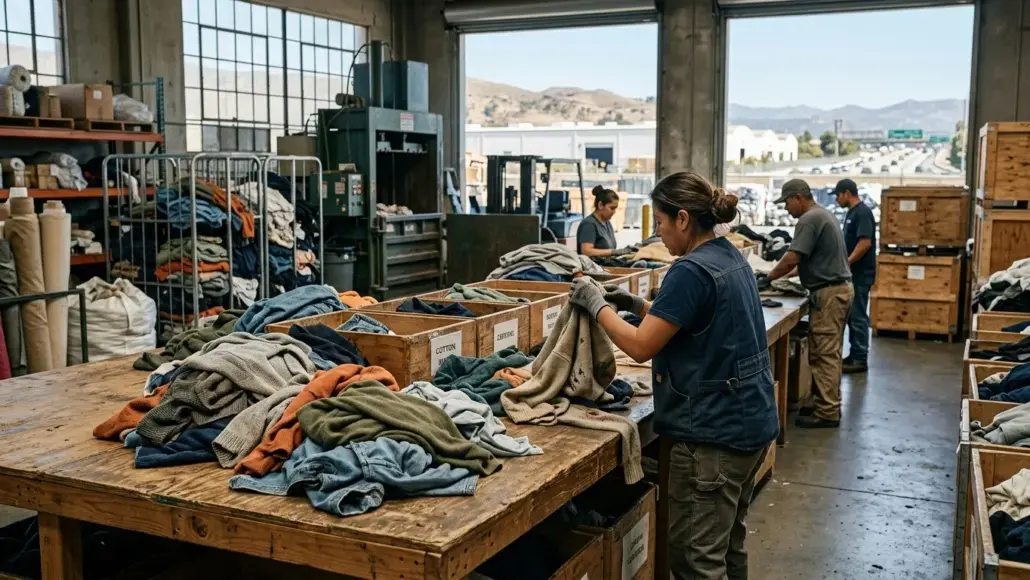
California has officially begun the implementation of a landmark recycling mandate that carries significant implications for the textile industry and home-focused companies. The Textile Recovery Act SB 707, signed into law by Governor Gavin Newsom in 2024, establishes the nation’s first extended producer responsibility program for textiles. This policy requires manufacturers and brands to take full accountability for the entire life cycle of their products, including their eventual reuse and textile recycling.
The Framework of Extended Producer Responsibility
Under the provisions of California SB 707, the financial responsibility for managing waste is shifted from local governments and taxpayers to the producers themselves. Companies are now required to pay an advance fee before their products enter the California market. These funds are managed by Landbell USA, a nonprofit organization responsible for overseeing the registry, compliance, and the development of collection and consumer education systems. This model ensures that sustainable home brands and other producers are active participants in the mitigation of environmental impacts.
Drivers Behind the Legislation
The push for the Textile Recovery Act SB 707 was influenced by the success of similar programs for mattresses, carpets, and batteries. Joanne Brasch, assistant director of the California Product Stewardship Council, noted that public awareness of textile waste has grown significantly. Factors such as the rise of home organization trends, the closure of donation centers during the pandemic, and the visibility of global clothing waste washing up in Ghana have created a climate ready for legislative action. The state aims to address a crisis where global clothing consumption has surged by 400 percent over two decades, often fueled by fast fashion models.
Challenges in Textile Waste Management
The necessity for a circular economy is highlighted by the low rates of textile recycling, which the Environmental Protection Agency estimated at less than 15 percent in 2018. Textiles are notoriously difficult to process in traditional municipal systems; they often act as contaminants that can damage sorting equipment or pose fire risks. Furthermore, the prevalence of synthetic fibers like polyester and nylon presents long-term environmental hazards, as these materials do not biodegrade and can release microplastics into the ecosystem.
Compliance Timelines and Industry Impact
The implementation phase of California SB 707 is currently underway. All apparel and textile producers were required to register with Landbell USA by July 1 of this year. Following this, a statewide needs assessment will be conducted, leading to a formal proposal in March 2027, with the full program rollout expected by July 1, 2030. Any business selling these products in California must comply or face civil penalties of up to $50,000 per day, though exemptions exist for secondhand sellers and small businesses with less than $1 million in annual global turnover.
Opportunities for a Circular Economy
The program includes “eco-modulated fees,” which provide financial incentives for manufacturers that produce durable goods or utilize less hazardous chemicals. For sustainable home brands like Coyuchi, which already utilize models for recycled textiles, the law provides a structured infrastructure to manage diverse material types. Margot Lyons, director of sustainability at Coyuchi, suggests that a statewide system will help overcome the challenges of managing low-volume materials and could eventually foster a more robust circular economy by creating new revenue streams through repair and resale models.
Stakeholders are encouraged to engage with the upcoming CalRecycle workshop on August 13 to contribute to the ongoing needs assessment and clarify the goals of the industry under these new regulations.

