































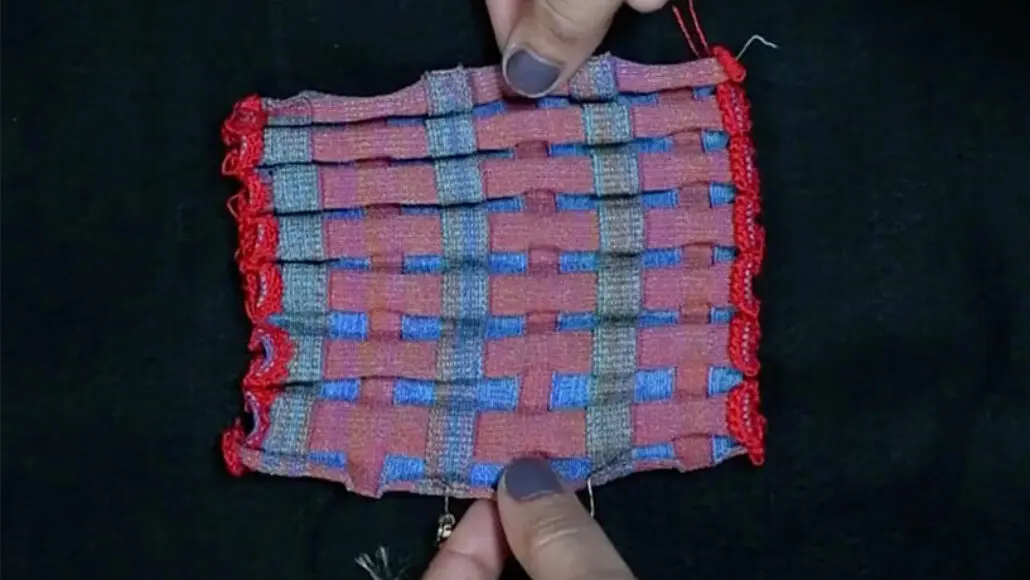
Researchers at the Harvard John A. Paulson School of Engineering and Applied Sciences have successfully engineered a new class of programmable knitted textiles. These materials utilize mechanical intelligence to transition between multiple stable three-dimensional configurations while simultaneously serving as soft sensors. The development, documented in Advanced Functional Materials, highlights how standard industrial knitting techniques can be adapted to create responsive materials.
Engineering Shape-Shifting Fabric
By employing a technique known as plating, the research team utilized elastic yarns to dictate the material’s behavior. The internal stresses generated during the manufacturing process allow the programmable knitted textiles to maintain various stable shapes without the need for constant external force. This multistability functions much like a mechanical switch, where the fabric snaps between configurations upon the application of pressure, offering tactile feedback without complex mechanical assemblies.
Integrating Electrical Functionality into Textiles
The researchers enhanced these fabrics by embedding conductive yarns directly into the structure. This integration allows the material to act as a soft switch or motion sensor. Because the sensing capability is built into the fabric itself, it eliminates the need for rigid components, making these smart fabrics ideal for wearable technology.
Practical Applications and Prototypes
The team demonstrated several functional prototypes to validate the technology:
- A multistable shell that manages LED lighting states based on shape changes.
- Wearable sensors designed to track movement when positioned over joints like the knee or elbow.
- A reconfigurable lampshade featuring multiple switches that control various light outputs.
Scalability and Future Implications
A primary benefit of this research is its compatibility with existing machinery. Since the materials are produced using standard double-bed weft-knitting equipment, the process is highly scalable. These soft sensors and smart fabrics represent a significant step in the evolution of mechanical intelligence, providing a foundation for future innovations in health monitoring, interactive apparel, and responsive architectural designs.

