
























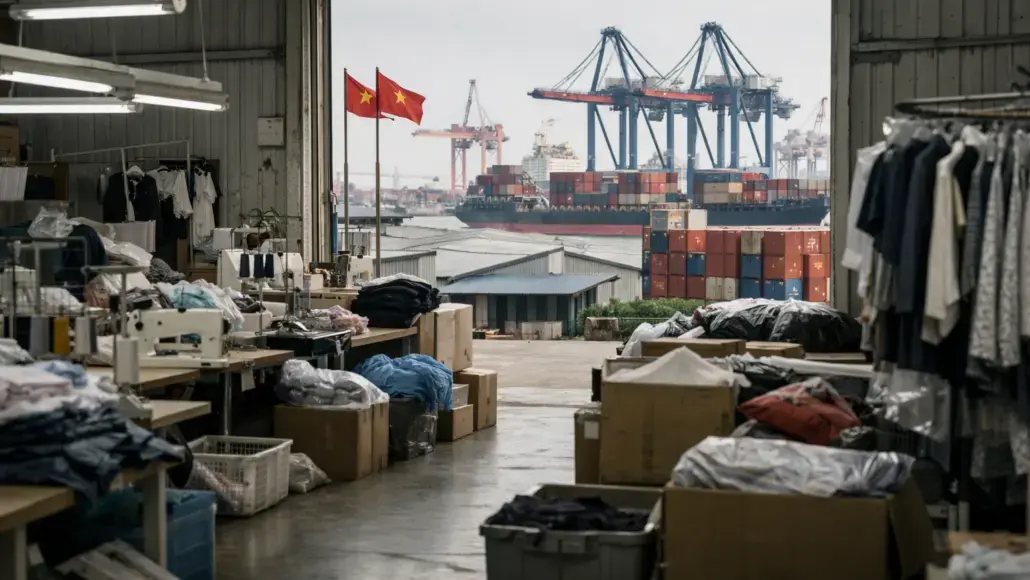
Fast-fashion giant Shein is scaling back part of its manufacturing and logistics push in Vietnam, highlighting the difficulty of replicating the highly integrated supplier ecosystem that has powered its rapid growth in China.
The company had viewed Vietnam as an important alternative production base as trade tensions between China and the United States intensified. Expanding manufacturing and warehousing outside China offered Shein a potential way to reduce exposure to tariffs and diversify its international supply network.
However, the experience has exposed several limitations. Shein has reportedly reduced the amount of warehouse space it had secured near Ho Chi Minh City, while its operations in China continue to provide advantages in production speed, supplier coordination and cost efficiency.
Vietnam expansion loses momentum
Shein’s move into Vietnam formed part of a wider effort to create greater geographic flexibility in its sourcing network. The company had leased almost 15 hectares of industrial space near Ho Chi Minh City for a major warehouse, with the facility intended to support exports and reduce reliance on China-based operations.
The strategy gained importance as US trade policy increasingly targeted Chinese imports. Shein had also encouraged some Chinese apparel suppliers to establish production facilities in Vietnam, reportedly offering higher purchasing prices to make the transition more attractive.
Yet establishing a comparable supplier network outside China has proved difficult. Vietnam offers an established garment manufacturing industry, but Shein’s business model depends on an unusually dense network of small and flexible Chinese suppliers capable of producing limited quantities, responding rapidly to demand signals and scaling successful products quickly.
That manufacturing ecosystem has been central to Shein’s ability to introduce large numbers of new styles while keeping production closely aligned with real-time consumer demand.
China retains a critical supply-chain advantage
The retreat from part of its Vietnam expansion does not mean Shein is abandoning supply-chain diversification. Instead, it demonstrates the continuing importance of China’s manufacturing infrastructure to the company’s operating model.
Shein has committed more than 10 billion yuan (about $1.45 billion) to strengthen its supply chain in southern China. The planned investment is focused on intelligent supply-chain systems in Guangdong, the centre of the company’s extensive manufacturing network.
The renewed investment represents an important shift in emphasis. Rather than moving production wholesale away from China, Shein is increasingly combining international diversification with deeper technological investment in its established domestic supplier base.
For Shein, the calculation is increasingly about balancing tariff exposure and geopolitical risk against the efficiency advantages of its Chinese production ecosystem.
Tariffs change the economics of global sourcing
The company’s international manufacturing strategy has been shaped heavily by changes in US trade policy. The removal of the long-standing de minimis exemption for low-value shipments has weakened one of the advantages previously enjoyed by direct-to-consumer platforms such as Shein and Temu.
The exemption had allowed qualifying low-value parcels to enter the US without conventional customs duties, supporting a business model built around small, frequent shipments directly to consumers.
With that advantage diminishing, Shein has greater incentive to develop alternative production and distribution routes. However, the latest developments suggest that simply relocating manufacturing may not deliver the same economics when the efficiency of the entire supplier network is taken into account.
Vietnam still matters to Shein’s diversification strategy
Despite the pullback, Vietnam remains relevant to Shein’s broader manufacturing diversification efforts. The country offers an established textile and apparel sector, access to regional supply chains and a strategic location for companies seeking alternatives to China.
The challenge is that shifting individual factories is considerably easier than reproducing an entire manufacturing ecosystem. Shein’s Chinese network provides access to fabric suppliers, trims, machinery, logistics providers and garment factories within a highly concentrated geographical area.
That proximity enables suppliers to respond quickly to changes in orders and product demand—an important advantage for an ultra-fast-fashion business.
A more technology-driven Chinese supply chain
Shein’s increased investment in Guangdong also points toward a more technology-intensive model for its Chinese operations.
The company has said it intends to develop a world-class fashion industry cluster in the region and increase its participation in Guangdong’s cross-border e-commerce initiatives. Such investments could help smaller manufacturers benefit from digital systems while allowing Shein to maintain closer coordination across its supply network.
The approach suggests that the future of Shein’s supply chain may not be defined simply by moving production from one country to another. Instead, automation, intelligent production systems, digital ordering and data-driven inventory management could become increasingly important in determining where manufacturing remains competitive.
Implications for the apparel supply chain
Shein’s experience offers a broader lesson for fashion companies attempting to diversify production away from China. Vietnam, India, Bangladesh and other manufacturing centres can provide important alternatives, but establishing a complete substitute for China’s interconnected industrial ecosystem takes time.
The Shein China supply chain strategy is therefore evolving rather than disappearing. The company is continuing to explore overseas manufacturing while simultaneously investing heavily in the infrastructure that made its Chinese model successful.
The Shein China supply chain strategy also reflects a wider change in global apparel manufacturing. Companies are increasingly seeking multiple production locations to reduce geopolitical and tariff risks, but they are discovering that cost, speed, supplier depth, logistics and technological capabilities must all be considered together.
For Shein, the immediate priority appears to be maintaining the responsiveness that underpins its business model while building enough geographic flexibility to navigate an increasingly fragmented global trade environment.

