
























Bangladesh’s readymade garment (RMG) industry is approaching a critical transition as the preferences of its key Western markets evolve beyond traditional cotton-based apparel. For buyers in the European Union and the United States, demand is increasingly moving towards man-made fibre (MMF) clothing, technical textiles, activewear and products incorporating recycled synthetic materials.
This shift presents both a challenge and an opportunity for Bangladesh. The country has built its global apparel position largely around competitively priced cotton garments, but its heavy dependence on this segment could become a weakness as international buyers increasingly seek diversified product portfolios and higher-value apparel.
Trade data show that cotton-based products account for approximately 72.7% of Bangladesh’s garment exports, considerably above the global average of 41.6%. By comparison, cotton represents around 34.8% of Vietnam’s garment exports, 29.4% of China’s and 41.9% of Cambodia’s.
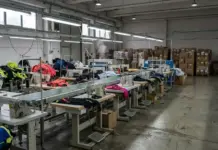
For EU and US buyers, the difference is increasingly significant. Competing suppliers have expanded their synthetic apparel capabilities, allowing them to serve fast-growing categories such as sportswear, performance clothing, outerwear and technical garments. Bangladesh, meanwhile, remains comparatively concentrated in basic cotton products.
EU and US markets push Bangladesh beyond cotton
Bangladesh’s dependence on cotton could become more challenging as the country approaches graduation from Least Developed Country (LDC) status. The potential loss of preferential market access means exporters will need to compete more strongly on product sophistication, speed, flexibility and value addition rather than relying predominantly on low production costs.
For European buyers, this transition is particularly important because sourcing decisions are increasingly influenced by product diversification, sustainability requirements and supply-chain resilience. US buyers are also looking for suppliers capable of producing a wider range of synthetic and performance-based garments while maintaining competitive pricing and reliable delivery schedules.
Bangladesh has made some progress. MMF products accounted for about 11.3% of total garment exports in 2016, rising to roughly 17% today. However, the pace of expansion remains insufficient compared with the scale and speed of international demand.
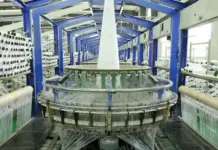
A major obstacle is the country’s limited domestic synthetic-textile supply chain. Bangladesh continues to depend heavily on imported synthetic fibres, yarns and fabrics because local capacity in synthetic spinning, specialised weaving, dyeing and technical finishing remains underdeveloped.
This creates additional challenges for manufacturers supplying EU and US brands, particularly when buyers demand shorter lead times and greater flexibility. Imported inputs can extend production schedules and make manufacturers more vulnerable to freight disruptions, exchange-rate movements and changes in global raw-material prices.
Building a complete MMF supply chain
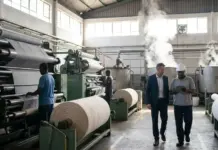
Industry leaders argue that Bangladesh needs to move beyond simply adding more sewing capacity. A competitive MMF ecosystem requires investment throughout the value chain, from fibre and yarn production to fabric development, dyeing, finishing and recycling.
“Bangladesh’s long-standing mastery of cotton-based garment manufacturing remains a core strength, but global market preferences are moving fast,” stated Mohiuddin Rubel, founder and CEO of Bangladesh Apparel Voice (BAV) and former director of BGMEA.
“Going forward, growth will not come from simply sewing higher volumes of basic items. Our competitiveness will be determined by what we produce, the value we add, and how fast we respond to changing buyer demands.”
“We cannot treat MMF expansion as merely adding sewing lines in existing factories,” Rubel emphasized.
“Competitor nations like Vietnam, China, and Cambodia built deep MMF capacity years ago. Bangladesh must establish a complete supply chain—from fiber and yarn spinning to specialized weaving, dyeing, and chemical finishing. To achieve this, the government must create a stable policy environment that attracts both domestic capital and foreign direct investment (FDI) into non-cotton textile processing.
Energy and infrastructure emerge as key priorities
Expanding MMF manufacturing will also require improvements in Bangladesh’s industrial infrastructure. Synthetic-fabric processing can involve substantial energy consumption and precise temperature control, making dependable electricity and gas supplies essential for investors.
Industry stakeholders have therefore called for dedicated and reliable energy allocations to textile clusters such as Gazipur and Mirsarai. Without dependable utilities, Bangladesh could struggle to attract the large-scale investment required to develop modern synthetic-fibre processing facilities.
The industry is also seeking policies that make MMF investment more attractive. Proposed measures include multi-year tax incentives, lower import duties on synthetic raw materials and preferential utility rates for MMF fabric producers.
Greater cooperation with overseas technology providers could further accelerate development. Joint ventures with companies from East Asia could give Bangladeshi manufacturers access to specialised machinery, technical knowledge and modern production systems that are already widely deployed in competing textile markets.
Skills must evolve with product demand
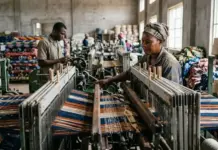
The transition towards MMF apparel will also require a new generation of technical skills. Manufacturers need workers trained in synthetic-fabric cutting and sewing, elasticity management, material inspection and specialised finishing processes.
Partnerships between textile manufacturers, universities and technical training institutions could help close this skills gap while creating a workforce better aligned with the requirements of EU and US apparel buyers.
Reducing dependence on imported finished fabrics and intermediate materials is another priority. A stronger domestic supply base could potentially cut current raw-material lead times of around 60–90 days to approximately 30–45 days, helping Bangladeshi suppliers respond more effectively to increasingly fast-moving global fashion cycles.
A strategic shift for Bangladesh
For Bangladesh, the expansion of MMF manufacturing is no longer simply a diversification strategy. It is becoming increasingly important to maintaining competitiveness in the EU and US markets as buyers broaden their sourcing requirements.
The country’s established expertise in cotton garments remains a major competitive advantage, but future growth will depend on combining that strength with synthetic fibres, technical textiles, recycled materials and higher-value products.
If Bangladesh can build the necessary backward linkages, improve energy reliability, attract technology investment and develop specialised skills, it could strengthen its position as a more versatile sourcing destination for European and American brands.
The transition will require substantial investment and coordinated policy action, but successfully moving beyond the cotton-heavy model could allow Bangladesh to protect its export base while capturing a larger share of the rapidly expanding global MMF apparel market.