





























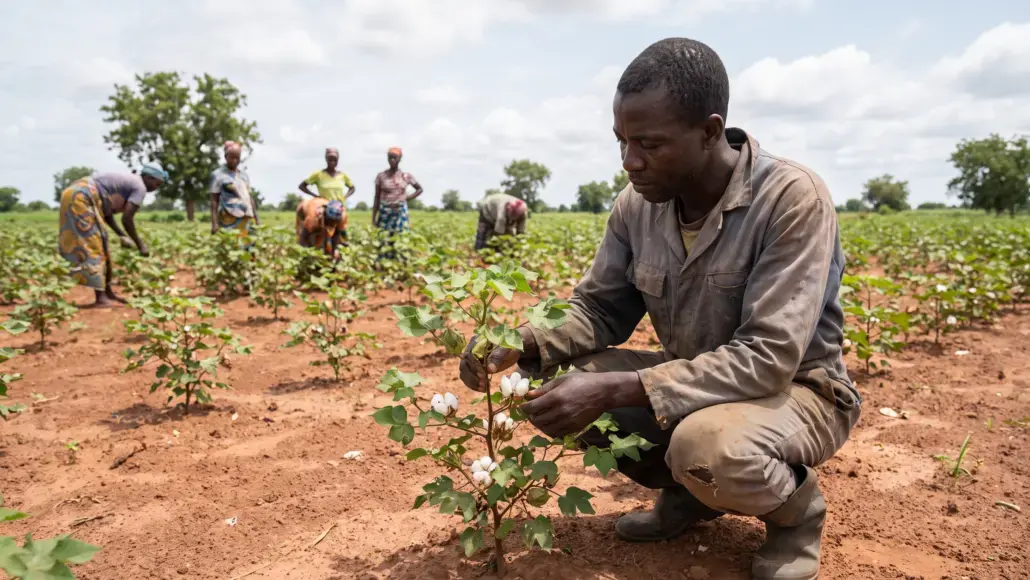
Ghana has taken a concrete step toward rebuilding its domestic cotton sector, launching a pilot cotton production project covering more than 20 hectares in the Savelugu Municipality of the Northern Region. The move signals the government’s intent to re-establish large-scale cotton farming as a foundation for the country’s growing textile and garment manufacturing base.
In a statement issued on August 27, the Ministry of Trade, Agribusiness and Industry announced the initiative as the first phase of a broader plan to revive cotton production across northern Ghana. Operating under the name Northern Cotton Revival Initiative, the project is being implemented in collaboration with several local and international partners, with a long-term goal of establishing a cotton production belt spanning multiple districts in the Northern Region.
Driving Down Costs Through Domestic Cotton Supply
Trade, Agribusiness and Industry Minister Elizabeth Ofosu-Adjare outlined the strategic rationale behind the initiative, stating that increasing domestic cotton production would give textile and garment manufacturers a reliable source of raw materials, reduce their production costs, and help lower the country’s overall import bill.
The Northern Cotton Revival Initiative comes at a time when Ghana is already looking beyond its borders to meet textile industry demand. In July, President John Dramani Mahama disclosed that his government was in active negotiations with Benin — Africa’s leading cotton producer — over an agreement to supply cotton fiber to Volta Star Textiles Limited, a former industrial plant currently being rehabilitated in Juapong, in the Volta Region. At its peak, the Juapong facility had an estimated production capacity of approximately 26 million yards — nearly 24 million meters — of fabric per year.
The planned cotton imports from Benin reflect the scale of Ghana’s current shortfall in locally produced cotton. Data from the Food and Agriculture Organization of the United Nations shows that seed cotton output remained largely stagnant, hovering at around 28,000 tons annually between 2020 and 2024, cultivated across approximately 15,000 hectares. These figures underline why reviving domestic cotton supply has become a policy priority.
Northshore Apparel Factory Adds Urgency to Cotton Supply Push
The case for scaling up domestic cotton production has grown stronger with the expansion of Ghana’s textile and apparel manufacturing capacity. On August 28, 2026, the Northshore Apparel Ghana Ltd factory was officially inaugurated in Savelugu, the same municipality where the cotton pilot project is underway. The new manufacturing hub is designed to produce garments for international brands.
The factory represents an initial investment of nearly €10 million — approximately $11.6 million — co-financed by the Ghana Export-Import Bank and German development bank KfW. In its first operational phase, the facility currently runs 50 sewing lines and employs more than 2,300 people. The Savelugu apparel factory is positioned to become a significant contributor to Ghana’s export-oriented garment sector.
A Roadmap Toward an Integrated Value Chain
Beyond its current capacity, Northshore Apparel Ghana Ltd has outlined plans to deepen its integration with local cotton producers over subsequent phases. As reported by the Ghana News Agency, the project’s second phase is expected to include a cotton-processing unit, while the third phase envisions the establishment of a local outgrower network to secure a consistent and sustainable supply of raw materials.
This phased approach could create a new and structured domestic market for Ghanaian cotton while supporting the government’s broader ambition to rebuild a complete, integrated value chain — one that links cotton production, ginning, textile processing, and garment manufacturing within the country.
The Northern Cotton Revival Initiative and the Savelugu apparel factory together reflect a coordinated effort to connect upstream agricultural production with downstream manufacturing demand. Domestic cotton supply remains the critical link in making that chain viable.
The central challenge going forward, however, will be scaling cotton production well beyond the current pilot stage to consistently meet the textile industry’s growing demand — a task that the government’s multi-partner initiative has only just begun to address.

