



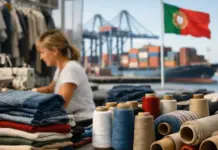


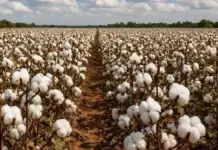






















The global textile industry has undergone a profound transformation over the past two decades. According to the August 2026 edition of The Textiles Observer, a publication issued by the International Cotton Advisory Committee (ICAC), knitted and woven clothing items together account for nearly 60% of global textile exports in 2025. Beneath that headline figure, however, lies a deeper story — one of shifting fiber preferences, reshuffled export rankings, and cotton fiber demand steadily losing ground to synthetic alternatives.
Global Textile Exports Nearly Double Over Two Decades
Global textile export values climbed from approximately $560 billion in 2006 to $914 billion in 2025. Exports of knitted garments nearly doubled over that period, rising from $145.2 billion to $289.1 billion, while woven garment exports advanced from $158.5 billion to $257.7 billion. The scale of this expansion reflects a genuinely broadened global appetite for apparel — but the critical question is which fibers and which countries are benefiting most from that growth.
Bangladesh and Vietnam Redefine the Textile Export Map
China continues to hold its position as the world’s foremost exporter of textiles and apparel. Yet the more striking development in global textile exports has been the rapid ascent of Bangladesh and Vietnam. Bangladesh advanced from the 14th largest textile exporter in 2006 all the way to second place by 2025. Vietnam moved up from 21st to third over the same period. Collectively, China, Bangladesh, and Vietnam represented approximately 44% of global textile exports in 2025 — a concentration that signals how decisively competitive advantage has been reordered across nations.
On the import side, demand has grown increasingly distributed. The United States remains the world’s leading textile importer, but its share of worldwide imports contracted from 18.9% in 2006 to 13.7% in 2025. A broader array of markets across Europe and Asia have grown in significance, producing a more multipolar global textile trading environment.
Cotton Fiber Demand Shrinks as Synthetics Take Over
The fiber composition story is where the transformation becomes most striking. Cotton fiber demand accounted for roughly 68.3% of total global fiber consumption in 1960. By 2025, that figure had fallen to just 21.1%. Over the same timeframe, synthetic fibers expanded their share from 4.6% to 71.7%.
Cotton still holds a leading position in several major individual product categories — including cotton t-shirts, cotton jerseys, and men’s and women’s cotton trousers and shorts. However, alternative fibers are growing at a faster pace across a wide range of end uses, and the divergence is becoming harder to ignore.
The shift in cotton fiber demand is visible within garment trade flows as well. Exports of knitted garments made from cotton rose from approximately $69.9 billion in 2006 to $128.3 billion in 2025, but their share of the category slipped from 48.3% to 44.5%. Meanwhile, knitted garments made from man-made and synthetic fibers expanded from $35.6 billion to $99.2 billion, lifting their share from 24.6% to 34.4%. In woven apparel, man-made and synthetic fibers surpassed cotton in export value as far back as 2021.
The ICAC report is clear that these figures do not indicate cotton is disappearing from the market. Rather, they point to a problem of relative competitiveness: cotton remains part of an expanding worldwide apparel market, but competing fibers are capturing a growing share of new demand.
Cotton Quality Challenges Add to Competitive Pressure
The Report also includes a contribution from Dr. Marinus (Rene) van der Sluijs addressing two notable cotton contamination concerns — stickiness and seed-coat fragments — both of which carry direct implications for cotton’s standing in global textile exports.
Stickiness has the potential to disrupt cotton processing, raise production expenses, reduce yarn quality, and damage the commercial reputation of cotton from specific origins. A worldwide study referenced in the report found that 64% of respondents considered stickiness a major cotton-fiber defect affecting yarn characteristics. Cotton from regions associated with stickiness may incur price reductions of as much as 50%, a significant penalty in a market where margins are already under pressure from synthetic competition.
Seed-coat fragments present a separate difficulty. Fibers that remain attached to fragments are difficult to eliminate during processing, can cause spinning end-breakages, raise production costs, and appear as dark specks in finished dyed textiles. The report explores techniques for identifying and quantifying both issues, along with practical measures to reduce their impact across production and processing stages.
Cotton’s Competitive Task in a Changing Market
Taken together, the findings presented in the report depict an industry being reshaped simultaneously by shifting production centers, increasingly varied consumer bases, intensifying rivalry between fibers, and growing requirements around cotton quality and processing efficiency.
Cotton fiber demand is under sustained pressure from synthetic alternatives that now command 71.7% of global fiber consumption. Bangladesh textile exports and those from Vietnam are rewriting the competitive map for global textile exports, squeezing established players while creating new sourcing dynamics for importers. And within the fiber debate itself, quality concerns like stickiness and seed-coat contamination are adding an additional layer of commercial risk for cotton.
As the report frames it, cotton’s challenge is not simply one of sustaining existing demand. It is one of enhancing competitive positioning and securing a meaningfully larger share of future growth in an industry that continues to expand, but that is doing so increasingly on terms set by synthetic fibers.