






















When the United States government announced the addition of 43 Chinese companies to an import blacklist in late July — citing allegations of forced labour in China’s western Xinjiang Uygur autonomous region — the response from within the region itself was, by most accounts, remarkably calm. The blacklisted firms included several well-known food and apparel brands, yet the announcement triggered little of the alarm one might have expected given the geopolitical weight behind it.
The owner of a cotton-ginning mill in southern Xinjiang, speaking on the condition of anonymity, described the mood plainly: it felt as though a sudden batch of companies had been added out of nowhere, but the broader impact on the sector was unlikely to be significant.
A Very Different Reaction From Four Years Ago
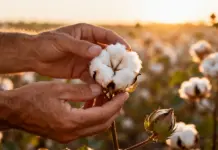
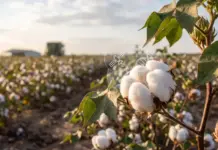
That measured response stands in sharp contrast to the near-panic that gripped the industry back in 2022, when Xinjiang cotton became a full-blown geopolitical flashpoint between Washington and Beijing. In June of that year, the same mill owner found himself sitting on a large stockpile of unsold cotton, watching trading prices fall and seeing downstream buyers pull away — all as a direct result of the Uygur Forced Labour Prevention Act, known as the UFLPA.
The UFLPA, a US law that effectively bans American imports of all goods containing inputs sourced from Xinjiang, sent a shockwave through the region’s cotton trade at the time. The uncertainty was real, and the consequences were felt across supply chains.
The Industry’s Transformation Since Then
Today, the picture looks considerably different. Local processing rates for cotton products in Xinjiang have climbed to what the mill owner described as “remarkably high” levels — somewhere in the range of 30 to 40 per cent. Development across the entire cotton textile supply chain, he noted, is currently booming.
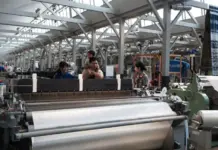
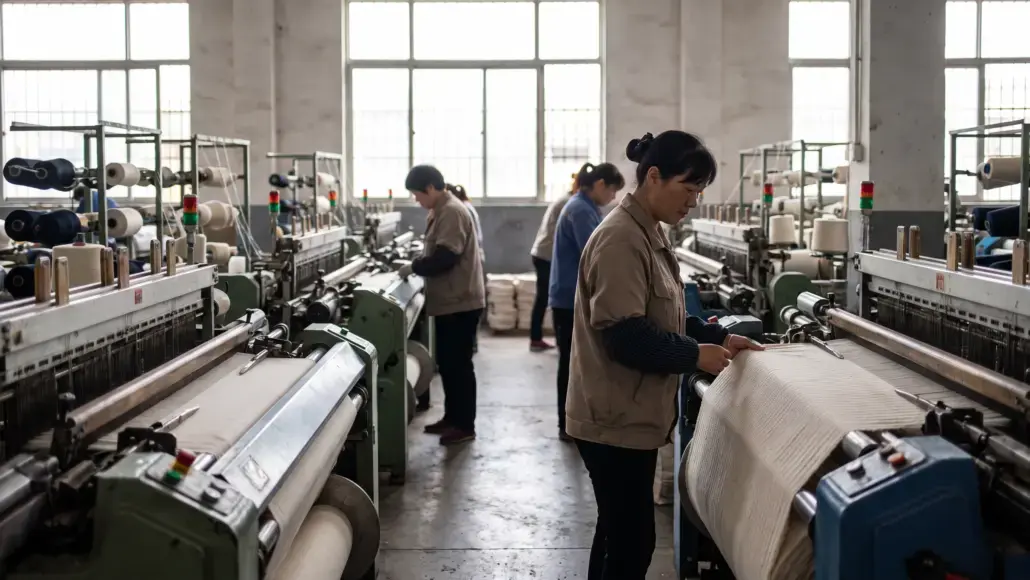
From spinning and weaving through to printing and dyeing, companies are steadily expanding their scale. The narrative of disruption has gradually given way to one of adaptation and consolidation.
The mill owner’s own shift in perspective is telling. Where he once faced stockpiles and anxiety over the effects of US sanctions on Xinjiang cotton, he now believes the industry has, in his own words, “weathered the storm.”
Export Diversification and a Shifting Global Balance
This broader sense of resilience is not isolated to one individual or one business. It appears to reflect a wider structural change within China’s textile industry — one that has been quietly unfolding over several years.
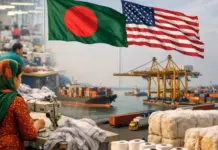
Significant export diversification efforts have helped reduce the sector’s dependence on American buyers. At the same time, the shifting balance of economic and trade power between China and the United States — particularly since the sweeping trade war that escalated in recent years — appears to have altered how Chinese industries perceive and respond to US sanctions.
The Xinjiang cotton sanctions, which once provoked considerable anxiety, are now being absorbed with far greater confidence across the supply chain. Rather than retreating, the region’s textile producers seem to have found new markets and reinforced domestic processing capacity.
A Sector That Has Adapted
The overall trajectory of China’s textile industry, as seen through the lens of Xinjiang cotton, suggests that years of deliberate export diversification have meaningfully cushioned the blow of Washington’s import restrictions. The UFLPA remains in force, and the addition of 43 companies to the US import blacklist in late July 2026 is not a trivial development — but for an industry that has spent years recalibrating, it appears to represent a manageable challenge rather than an existential threat.
Whether that confidence holds as geopolitical pressures continue to evolve remains to be seen, but for now, the mood in Xinjiang’s cotton country is one of cautious stability — a far cry from the uncertainty that defined the sector just a few years ago.

