



























South Korea’s leading fashion platform, Musinsa, is making a calculated move into Japan’s fast-expanding recovery-wear market, with its retail arm Musinsa Standard planning a September debut in the country. The push comes as other Korean fashion labels also turn their attention to a Japanese wellness apparel segment projected to grow ninefold by 2030.
Wellness is moving deeper into Asia’s fashion market, with brands using functional textiles to transform everyday items like pajamas and loungewear into recovery products designed to support sleep and physical recuperation. The intersection of fashion tech and wellness is reshaping consumer expectations across the region, and Japan has emerged as a key battleground for brands with serious ambitions in this space.
From Sneaker Forum to $4 Billion Fashion Unicorn
The story of Musinsa begins not in a boardroom but in a high school bedroom. In 2001, Cho Man-ho, a teenager with a deep obsession for sneakers, launched an online community to share photographs of Nike shoes and limited-edition releases. That community, which he named “Mujinjang Sinbal Sajin-i” — roughly translating to “an inexhaustible collection of sneaker photos” — would eventually evolve into one of Asia’s most recognised fashion platforms, now valued at approximately $4 billion.
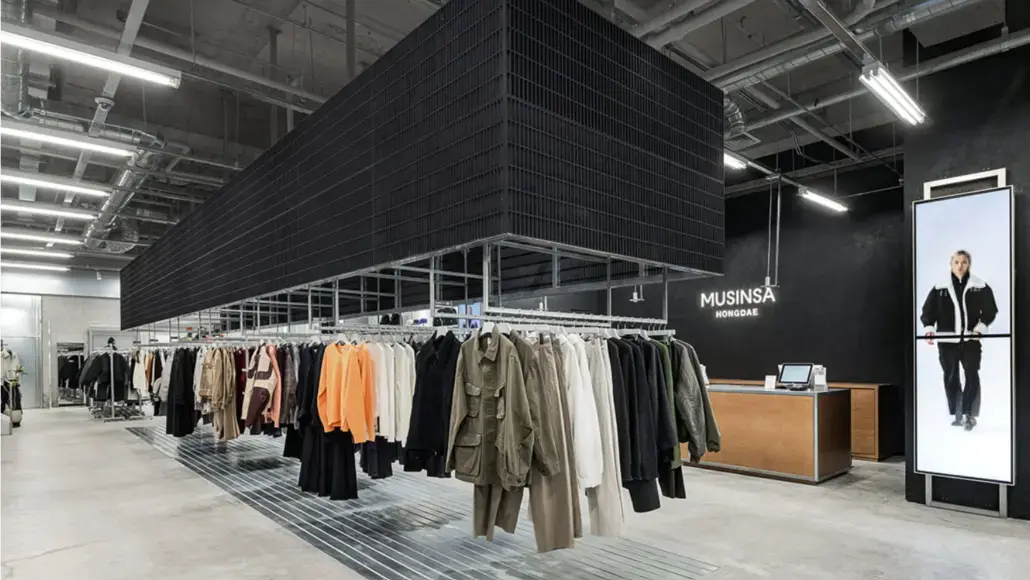
Today, backed by global investment firm KKR, Musinsa operates as a full-scale fashion ecosystem spanning e-commerce, brand incubation, and brick-and-mortar retail through its Musinsa Standard stores. The brand’s expansion into Japan’s recovery-wear market represents its latest chapter in that ongoing journey.
Japan’s Recovery-Wear Opportunity
Japan’s recovery-wear segment has been building momentum steadily, driven by a consumer culture that places considerable value on health, rest, and physical wellbeing. Products within this category — spanning recovery footwear, compression sleepwear, and functional fiber garments — have found growing acceptance among both athletes and everyday consumers seeking better post-activity recovery.
Domestic Japanese brands such as Tential, known for its BAKUNE recovery wear line, have already carved out a strong position in this space. Their success has signalled to international players that the recovery-wear market in Japan is both mature enough to support new entrants and wide open enough to reward differentiated offerings.
Korean brands entering this space bring with them a strong foundation in functional textiles and fashion tech innovation. Companies like Nepa and textile manufacturer Hyosung TNC have been central to advancing functional fiber capabilities in South Korea, providing the material backbone that makes recovery-wear products possible at scale.
Functional Textiles and the Wellness Apparel Wave
The broader trend driving all of this is the convergence of fashion tech and wellness apparel. Brands are no longer content to market clothing purely on aesthetics. Functional textiles — fabrics engineered to regulate temperature, support circulation, or accelerate muscle recovery — are becoming a defining feature of next-generation fashion products.
In the recovery-wear market specifically, the focus is on how garments can actively contribute to physical wellbeing during rest or sleep. This positions sleepwear and loungewear not just as comfort products but as performance and recovery tools — a framing that resonates strongly in health-conscious consumer markets like Japan.
Other international brands including OOFOS, which operates in recovery footwear, and LF’s Lusso Cloud label have also been active participants in shaping the recovery-wear market across Asia. Their presence underlines the growing global competition in a segment that was once considered niche.
Korean Brands and the Japanese Consumer
For Korean fashion labels eyeing Japan, the timing appears deliberate. With the recovery-wear market in Japan forecast to expand dramatically through 2030, entering now allows brands to establish recognition and loyalty before the segment reaches peak saturation.
Musinsa Standard’s planned September entry positions it as one of the earlier Korean fashion entrants specifically targeting the wellness apparel angle in Japan. As functional textiles continue to evolve and consumer interest in recovery-wear deepens, the brands that build credibility in this space early are likely to benefit most from the projected market growth.
The integration of fashion tech with recovery science is no longer a niche pursuit — it is becoming a mainstream expectation. And for Korean labels like Musinsa Standard, Japan’s recovery-wear market is shaping up to be both a proving ground and a significant commercial opportunity.

