


























The 2026 FIFA World Cup is shaping up to be more than a headline sporting event for the apparel industry. It could become a catalyst for the textile recycling market, as brands convert the tournament’s global visibility into a real-world test of recycled inputs at scale. Roughly three-quarters of national team kits produced for the competition are already made wholly or partly from recycled polyester derived from textile waste an adoption level that signals accelerating momentum for circular fibres.
For recyclers and material innovators, the appeal is not simply reputational. Industry watchers argue that large, predictable orders from the biggest sportswear companies can do what policy targets and pilot projects have struggled to achieve: unlock investment, stabilise demand, and help build the infrastructure needed to turn textile waste into high-grade recycled polyester on an industrial footing. Clothing and textiles remain among the most resource-intensive segments of the global economy, yet textile recycling has expanded slowly, in part because scale economics depend on dependable offtake.
That is why the shift by global sports brands toward fibres made from textile waste is being watched closely across the textile recycling market. For years, recyclers faced a chicken-and-egg problem. Brands wanted performance proof and consistent quality before committing to volume. Recyclers wanted long-term contracts before building capacity. Without demand signals big enough to justify new plants and supply chains, progress remained incremental.
World Cup kits become a proving ground
The leading sportswear players are now using the World Cup as a showcase for textile-to-textile recycling and the next generation of recycled inputs.
Nike has set the most expansive benchmark. Its Aero-Fit fabric, used for 12 national teams including Brazil, England and France, is made entirely from recycled textile waste one of the clearest statements yet that recycled fibres can meet the technical requirements of elite sport.
Puma is taking a similar route through its Re. programme. The company says at least 95% of the polyester in the kits for 11 national teams including Portugal, Morocco and Ghana originates from old clothing, unsold items, manufacturing offcuts, rejects and textile scraps.
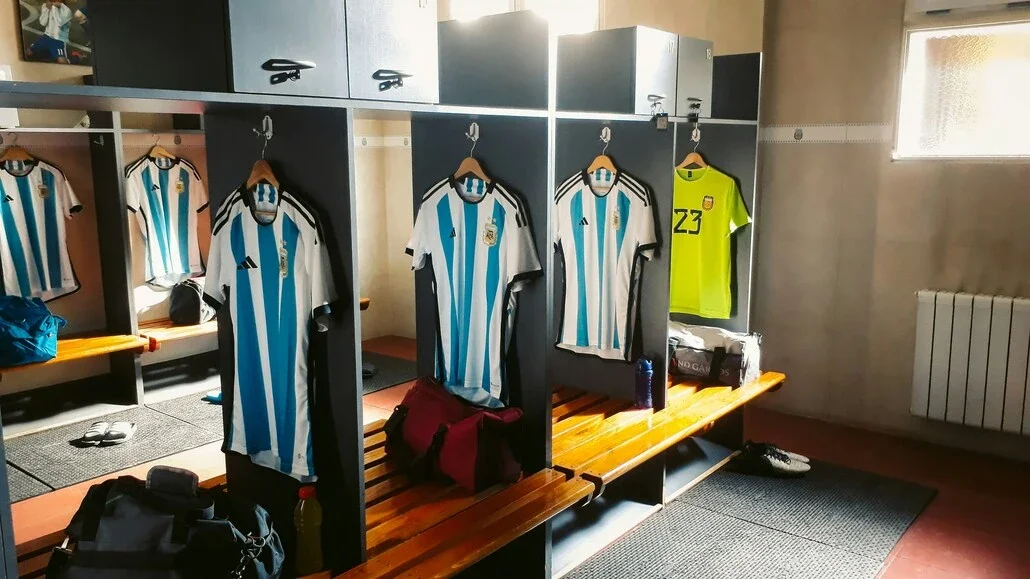
Adidas, which supplies 14 teams including Argentina, Spain and Mexico, has not published an exact percentage for recycled textile inputs in its World Cup products. However, it has already incorporated polyester from textile waste into its Climacool fabric and has said it plans to lift the share of such raw materials across its broader range to 10% by 2030.
Why performance categories matter
Sportswear is widely considered one of the hardest segments for material substitution. Fabrics must be light, breathable and comfortable, yet also durable enough to handle repeated high-stress use. The use of textile-waste-derived polyester in national team uniforms is therefore being interpreted as a milestone: if recycled fibres can satisfy the demands of professional-level kits, the pathway to wider adoption across training gear, performance basics and eventually mainstream apparel becomes more credible.
Industry experts emphasise that the importance of this push is not limited to the tonnage used for the tournament itself. The larger question is whether these initiatives can establish enduring supply chains collection, sorting, processing and polymerisation routes that brands can rely on after the World Cup spotlight fades.
If the systems prove commercially viable, the World Cup could mark a turning point comparable to what electric vehicle demand did for battery manufacturing: moving a technology from scattered trials to industrial deployment. For the textile recycling market, that would mean stronger investment in plants, clearer long-term purchasing commitments, and a more stable demand base for recycled polyester made from textile waste changing the economics of circular materials for years beyond 2026.

