
























You’ve just dressed your toddler in a brand-new outfit the one you spent twenty minutes picking out. Five minutes later, they’re yanking at the collar and refusing to move. Sound familiar? Nine times out of ten, the culprit isn’t the fit or the color. It’s the fabric.
How to Choose the Right Fabric for Kids’ Clothes: Durability, Safety & Comfort Explained
You’ve just dressed your toddler in a new outfit. Five minutes later, they’re yanking at the collar and refusing to move. More often than not, the culprit isn’t the fit it’s the fabric.
Fabric is the most important decision in children’s clothing, yet it consistently gets the least attention. Whether you’re launching a kids’ collection, expanding into childrenswear, or rethinking your sourcing, this guide is your clear framework.
Why Children’s Skin Demands a Higher Standard
Infant skin absorbs substances up to 65% more readily than adult skin, and babies spend up to 20 hours a day in contact with clothing. Conventional garments can contain residues from dyes, shrink-resistant treatments, and manufacturing processes including formaldehyde and heavy metals that have no business near developing skin.
For brands, this is a trust and liability issue as much as a comfort one. Today’s parents read labels and research certifications. Getting fabric right from the start builds loyalty that lasts.
The Best Fabrics for Kids’ Clothing
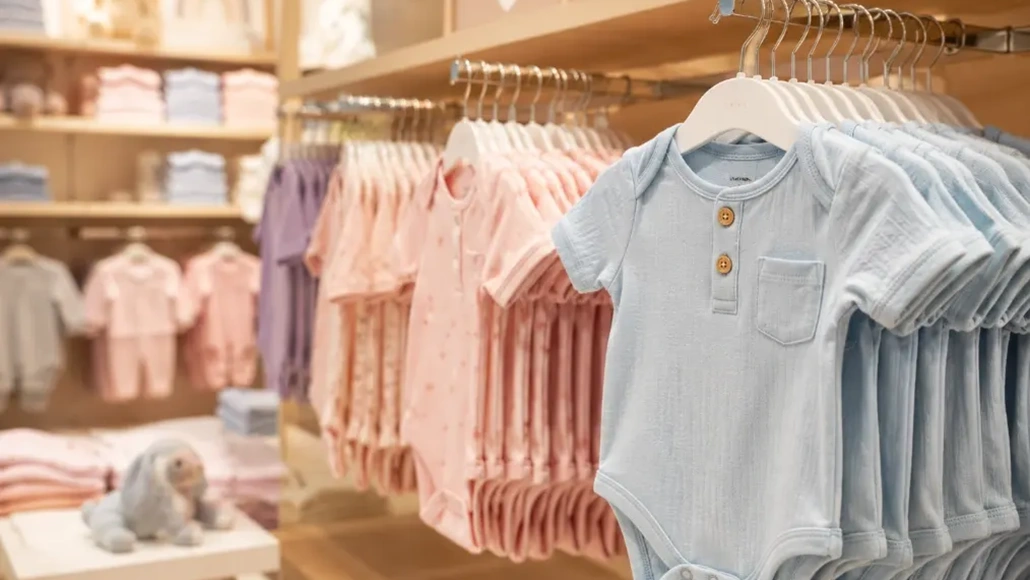
Organic Cotton is the benchmark. Grown without synthetic pesticides and free from chemical finishes, it’s hypoallergenic, breathable, and gets softer with every wash. It works across every garment category bodysuits, T-shirts, pajamas, uniforms and is the material most kidswear ranges are built around.
Bamboo is the soft performer brands often underestimate. Naturally moisture-wicking, temperature-regulating, and antimicrobial lab tests show eliminating up to 99.8% of bacteria within 24 hours it’s an excellent choice for sleepwear and activewear, with a silky feel that signals quality.
Jersey Knit and French Terry are the everyday workhorses of kidswear. Jersey’s four-way stretch handles active movement effortlessly French terry adds a soft interior that’s gentle on skin. Both are the backbone of casual separates and comfort-first ranges. 160–180gsm suits activewear and warmer seasons 220–280gsm is better for cooler-weather pieces.
Fleece delivers lightweight warmth that holds up to repeated washing ideal for outerwear and mid-layers. Its brushed surface is a genuine favorite with children. Best used over a base layer rather than directly against infant or sensitive skin.
Tencel (Lyocell), made from wood pulp in a closed-loop process, is silky-smooth, moisture-wicking, and biodegradable. It performs well in warmer-weather pieces and carries a strong sustainability story that resonates with values-driven parents.
Muslin’s open weave allows maximum airflow one of the best options for preventing overheating in babies who can’t yet regulate their own temperature. It gets softer with every wash and excels in newborn basics and summer layers.
What to Avoid
Synthetic fabrics next to the skin polyester and nylon trap heat and moisture, increasing the risk of overheating and rashes. Polyester also sheds microplastics during wear and washing.
“Easy care” and “wrinkle-free” finishes these labels almost always indicate chemical treatments. Avoid them for any direct-skin garment.
Unverified “natural” claims “natural,” “eco-conscious,” and “sustainable” are unregulated terms that mean nothing without a certification to back them up.
Certifications That Actually Matter
OEKO-TEX Standard 100 tests finished garments for over 1,000 harmful substances formaldehyde, heavy metals, specific dyes. It answers: is this safe to wear?
GOTS (Global Organic Textile Standard) covers the entire supply chain, from fiber cultivation to factory working conditions. It answers: was this made responsibly, start to finish?
For premium and infant kidswear, look for suppliers carrying both. The cost premium is typically 15–30%, but the trust it builds with health-conscious parents earns it back. For sourcing guidance on certified sustainable materials, Hapa Garments’ sustainable clothing manufacturer network is a strong starting point.
Matching Fabric to Age and Use Case
- Newborns (0–12 months): GOTS-certified organic cotton muslin and bamboo. Flat seams, no embellishments, no chemical finishes.
- Toddlers (1–3 years): Jersey knit and French terry for movement reinforced cotton twill for high-wear areas.
- School-age (4–12 years): Cotton-polyester blends for uniforms bamboo jersey or organic cotton interlock for activewear.
- Sleepwear: Organic cotton and bamboo in snug-fitting silhouettes avoids the need for chemical flame retardants.
- Summer: Lightweight muslin and bamboo jersey for breathability.
- Winter: French terry base layers, fleece mid-layers, water-resistant shells with cotton or fleece lining.
Practical Sourcing Tips
Always request certification documentation from suppliers and verify it on the GOTS or OEKO-TEX public lookup tools. Build wash testing into your QA process: quality kidswear fabric holds softness and structure through 50+ cycles. Put your material quality budget into everyday basics bodysuits, pajamas, T-shirts where skin contact and wash frequency are highest.
For brands seeking a manufacturing partner who understands these nuances, Hapa Garments brings production expertise and deep material knowledge to the kidswear category.
The Bottom Line
The framework is simple: safety first, comfort second, durability third with sustainability woven through all three as a baseline. Start with certifications. Build around organic cotton and bamboo. Match materials to age groups and use cases. Hold suppliers to verified quality, not marketing language.
Get the fabric right, and you’re not just building a better product you’re building the kind of trust that turns first-time buyers into long-term customers.

