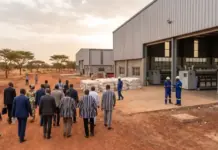






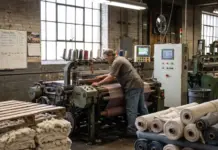











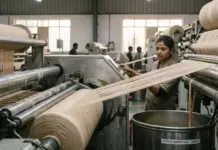










The textile and automotive industries look like different worlds. One spins, weaves, and finishes fabric. The other stamps, casts, and assembles vehicles. Yet underneath both sits the same quiet dependency: precision-machined metal parts, made to tight tolerances, that keep the machinery running. The shop that makes a roller for a weaving line and the shop that makes a housing for a car maker are often doing the same kind of work.
Understanding that shared foundation explains why the two sectors lean on the same suppliers, and why precision manufacturing is one of the threads that ties modern industry together.
Textile machinery runs on machined metal
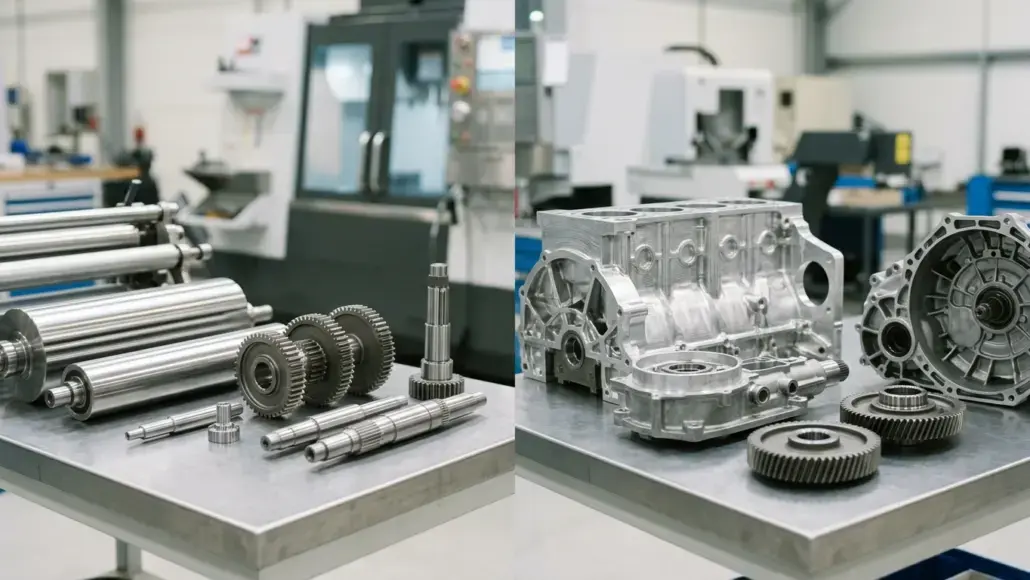
A modern mill is full of precision components. Spinning frames, looms, knitting machines, and finishing lines all depend on rollers, gears, bearings, cams, and shafts that have to be made accurately and hold up to constant running. A roller that is even slightly out of round leaves marks in the fabric. A gear cut to a loose tolerance wears fast and throws off timing across the line.
These are not parts a mill can buy generically. Many are specific to a machine, sometimes to a single installation, and when one wears out or a line is upgraded, it has to be reproduced precisely. That is machining work, the same discipline that supplies any other precision industry.
The automotive parallel
Vehicle manufacturing runs on the same kind of parts, only the names change. Housings, brackets, fittings, and drivetrain components all have to be machined to tight tolerances and produced consistently, in prototype quantities during development and in larger runs for production. The tolerances, the materials, and the quality systems behind them mirror what a textile plant needs from its own components.
Because the underlying capability is the same, a shop equipped to serve one sector is usually equipped to serve the other. A facility making precision parts for spinning and weaving plants is, in practice, also able to deliver the components a car maker or its suppliers require.
Why cross-industry suppliers matter
This overlap is good news for buyers in both sectors. A precision manufacturer that already supplies textile machinery components can apply the same equipment, tolerances, and quality controls to automotive industry solutions for OEM and aftermarket customers. The investment in machine tools, inspection, and process control serves more than one market, which keeps that capability viable and available.
For procurement teams, it widens the field of capable suppliers and reduces dependence on any single niche vendor. A part that is hard to source from a textile-only specialist may be straightforward for a precision shop that works across industries, because the core competence, holding tight tolerances repeatably in metal, transfers cleanly from one application to the next.
Shared standards, shared discipline
What really connects these sectors is not the parts themselves but the discipline behind them. Consistent tolerances, verified inspection, traceable materials, and reliable lead times matter as much to a mill keeping a line running as to a manufacturer keeping an assembly schedule. A supplier that meets those standards for one industry has already built what the other needs.
The takeaway
Textiles and automotive may sit far apart on the surface, but both rest on the same base of precision-machined components. The roller in a loom and the housing in a vehicle come from the same kind of shop, held to the same kind of standard. Seeing that shared foundation makes the supply chain easier to understand, and it points buyers in either industry toward the precision manufacturers who can serve them both.