




























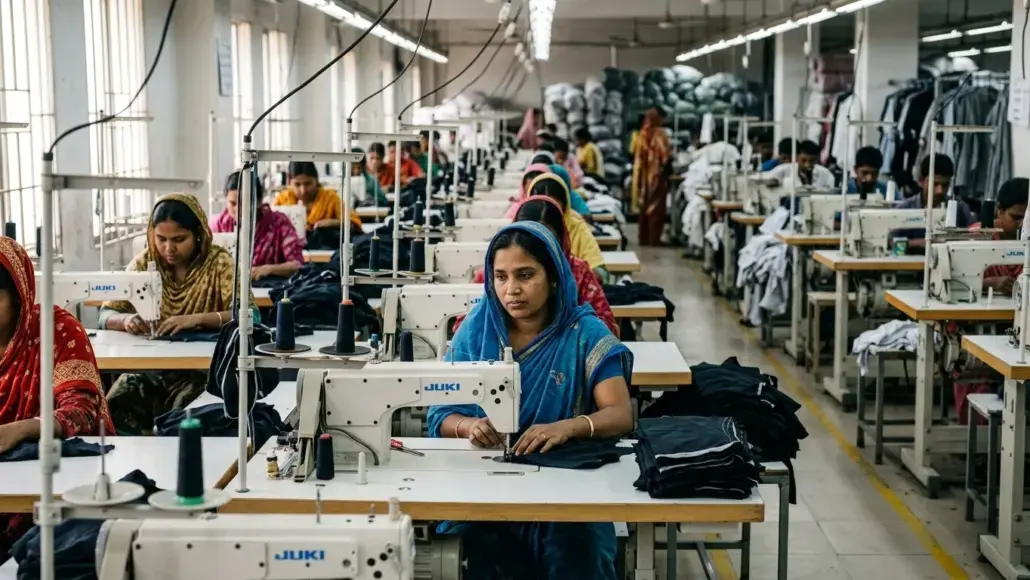
Bangladesh’s apparel industry is entering a period of heightened uncertainty as the Bangladesh garment sector under US tariffs faces increasing cost pressures, sourcing challenges, and growing competition in one of its largest export markets.
The United States remains Bangladesh’s biggest destination for ready-made garment (RMG) exports, making changes in U.S. trade policy particularly significant for the country’s export-driven economy. Higher tariffs are expected to increase the landed cost of Bangladeshi apparel, potentially forcing manufacturers to absorb lower margins, renegotiate prices with buyers, or risk losing orders to competing sourcing destinations.
Industry analysts believe global brands are unlikely to shift sourcing away from Bangladesh overnight due to its well-established manufacturing capacity, skilled workforce, and integrated supply chain. However, buyers are expected to diversify procurement strategies to reduce long-term tariff exposure and geopolitical risks.
The Bangladesh garment sector under US tariffs is also expected to face stronger competition from countries that secure preferential market access or lower effective duties. While Bangladesh continues to benefit from its scale and manufacturing expertise, rising compliance costs and pricing pressure could influence future sourcing decisions by international apparel brands.
Manufacturers may increasingly focus on improving productivity, expanding value-added product offerings, and exploring alternative export markets to reduce dependence on the United States. Investments in automation, sustainability, and supply chain transparency are also expected to become more important as brands seek reliable sourcing partners capable of meeting evolving regulatory and environmental requirements.
Despite the near-term challenges, Bangladesh remains one of the world’s largest apparel exporters, supported by a mature industrial base and strong relationships with global retailers. Industry observers note that the sector’s long-term competitiveness will depend on its ability to adapt to changing trade policies while maintaining cost efficiency and product quality in an increasingly competitive global marketplace.