




























The materials sector is currently witnessing a period of rapid transformation, driven by advancements in engineering and a shift toward circularity. From the integration of infrared technology in consumer goods to the scaling of cellulosic fiber production, these sustainable textile trends are redefining how fabrics are manufactured and utilized across the globe. Recent developments highlight a collective move toward resource efficiency and high-performance material applications.
Scaling Sustainable Fabrics through Strategic Partnerships
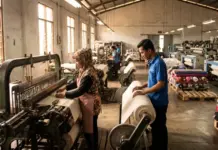
Bangladesh-based woven fabric manufacturer NZ Tex Group has formalized a partnership with Spinnova, a Finnish producer of cellulosic fiber. This collaboration follows extensive research and development where the two entities tested weaving, dyeing, and finishing processes for textiles containing the fiber. The partnership has identified a strong suitability for denim applications, with several of these developments scheduled for display at the Kingpins Show in New York this July.
Industrial Expansion and Market Reach
As NZ Tex Group integrates into the Spinnova ecosystem, the focus shifts toward scaling manufacturing. Saleudh Zaman Khan, chairperson at NZ Tex Group, noted that the partnership aligns with the company’s commitment to delivering innovative yarns and fabrics to the global clothing industry. The use of cellulosic fiber technology is expected to bring these specialized denim developments closer to commercial availability, enhancing the selection of sustainable fabrics available to international brands.
Advancements in Performance and Recovery Textiles
In the realm of wellness and recovery, Celliant and Dream Recovery have announced a collaboration to enhance weighted blankets using infrared technology. This design incorporates Celliant’s bioceramic minerals directly into the woven fabric. The technology functions by capturing body heat and reflecting it back as infrared light, which is intended to support circulation, oxygenation, and thermoregulation during rest.
Seth Casden, founder and CEO of Hologenix, LLC, stated that the synergy between deep pressure stimulation and infrared technology supports both bodily sensation and function during recovery periods. This innovation is targeted at athletes and professionals seeking optimized rest through advanced material science.
Innovations in Wool Treatment and Brand Evolution
I.S.T Corporation is expanding its partner network for IST Platinumwool, a treatment that polishes wool fibers to improve luster, hand feel, and elastic recovery. The company is launching “Platinumworld,” a collaborative platform for brands and designers, which will be introduced at upcoming industry showcases including Pitti Immagine Filati and Milano Unica.
Simultaneously, Asahi Kasei’s stretch fiber brand, Roica, has undergone a comprehensive rebranding. The update includes a new tagline, “Stretch Your Future,” and a redesigned digital platform. Takaaki Kondo, senior executive manager of the Roica division, emphasized that this evolution builds on 50 years of expertise while strengthening technologies and supply chain collaboration to reduce environmental impact.
Breakthroughs in Textile Recycling and Infrastructure
The sector is also seeing significant investment in textile recycling infrastructure. GR3N, a firm specializing in PET recycling, recently secured 15.5 million euros in Series B funding. These funds are earmarked for the construction of the “Modus” facility in Spain, an industrial-scale plant capable of producing 40,000 tons of PET chips annually from waste.
Microwave Assisted Depolymerization
The facility utilizes microwave assisted depolymerization technology to break down polymers into monomers. This process is capable of handling complex materials, such as colored plastic bottles and textile waste, converting them into new chips for textile fibers or plastic applications. By creating a circular stream, this technology aims to replace fossil fuel-based inputs in the production of sustainable fabrics.
In Hong Kong, the non-governmental organization Redress concluded its “Get Redressed Month” campaign, collecting 14.8 metric tons of used apparel. This initiative focused on textile recycling through redistribution, resale, and downcycling, supported by a “sort-a-thon” involving 400 participants to manage the collected merchandise.
Technological Hubs and Digital Printing Evolution
Durst Group is expanding its footprint by establishing Durst Como in Italy, a new research and development facility focused on digital printing. With an investment of approximately 20 million euros, the hub will concentrate on advancing inkjet applications for apparel and home textiles. This project is part of a larger 50-million-euro investment into the company’s textile business over the last decade.
The facility will also integrate technologies from the acquisition of Aleph, focusing on direct-to-fabric digital printing. Alessandro Manes, director of global sales for industrial textiles at Durst Group, indicated that the objective is to create a specialized technology hub that attracts expertise and generates new opportunities within the local textile production landscape.
Portable Resource Harvesting and Research Facilities
Engineers at the University of Texas at Austin have developed a jacket capable of capturing water from the air. The garment uses a biomass-derived hydrogel textile to absorb moisture, which then condenses into harvesting units when heated by sunlight. During testing in various climates, the jacket collected between 14 and 30 ounces of water daily. Guihua Yu, chair professor at the Cockrell School of Engineering, suggested that this rethink of water-harvesting technology opens new directions for portable water access.
Finally, the Advanced Functional Fabrics of America (AFFOA) has opened its new headquarters in Bedford, Massachusetts. The facility serves as a hub for fiber and fabric technology development, aimed at fostering collaboration between academics, government officials, and manufacturers to inspire future sustainable textile trends.

