




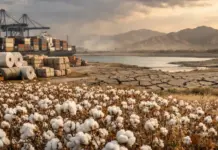



















The global apparel industry is currently at a crossroads, facing a growing crisis of textile waste that threatens ecological stability and resource availability. For decades, the dominant model of clothing production has been linear, characterized by massive consumption and a “take-make-waste” philosophy that sees millions of tons of fabric sent to landfills annually. However, a revolutionary shift is underway, driven by advanced textile recycling technologies that are fundamentally transforming how we recover and reuse fibers. These innovations are moving beyond traditional downcycling where textiles are turned into low-value products like insulation or cleaning rags and are instead enabling high-quality fiber-to-fiber recovery. By reclaiming the molecular value of discarded clothing, the industry is creating a sustainable pathway toward circular manufacturing, where textile waste is no longer an environmental burden but a valuable raw material for the next generation of apparel.
This transition is essential for the long-term survival of the textile industry, as the extraction of virgin resources whether petroleum for synthetics or water and land for cotton is becoming increasingly unsustainable. Advanced textile recycling offers a way to decouple industry growth from resource depletion, allowing for a continuous cycle of production that respects the planet’s boundaries. The shift from “waste management” to “resource recovery” represents a profound change in mindset, turning what was once a liability into a strategic asset. As the technology continues to mature and scale, it will redefine the economics of fashion, making recycled fibers the standard rather than the exception.
The Technological Breakthroughs in Fiber Recovery
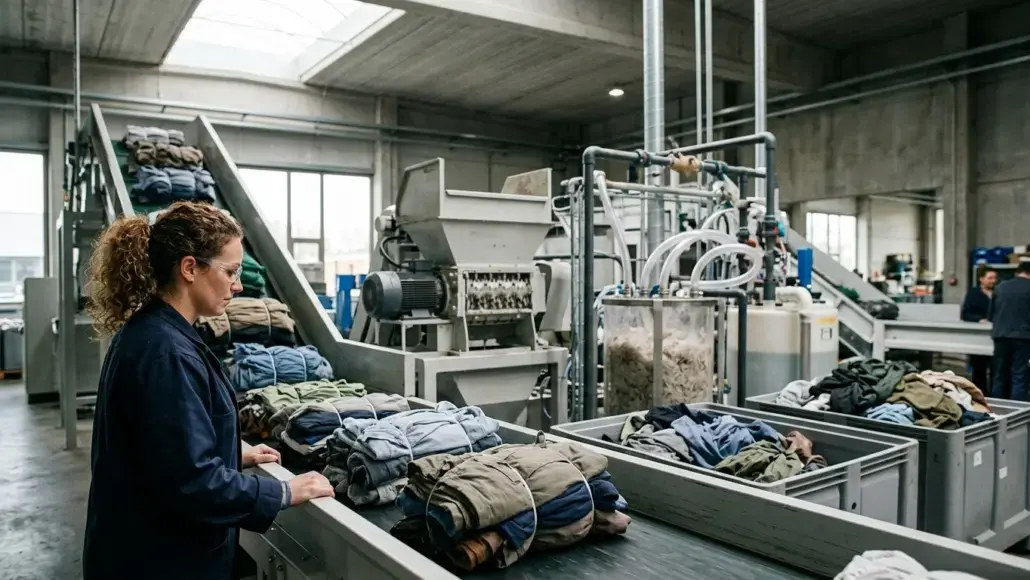
At the heart of advanced textile recycling are two primary methodologies: mechanical and chemical recycling, both of which have seen significant advancements in recent years. Traditional mechanical recycling involves shredding fabrics back into fibers, which often results in shorter, weaker strands that require blending with virgin materials to maintain strength. However, modern mechanical innovations have refined this process through the use of high-precision sensors and gentler tearing techniques that minimize fiber damage. This allows for higher percentages of recycled content in premium garments without compromising on durability or feel. These mechanical systems are particularly effective for high-quality cotton and wool, where the natural structure of the fiber can be preserved.
More transformative is the rise of chemical recycling, which uses solvents, heat, or enzymes to break down synthetic and natural polymers into their original chemical building blocks, such as monomers or high-purity cellulose pulp. This process effectively “resets” the material, allowing for the creation of new fibers that are identical in quality to virgin polyester, nylon, or lyocell. Unlike mechanical recycling, chemical processes can remove dyes, finishes, and contaminants at the molecular level, producing a “clear” feedstock that can be used for any new design. This capability is essential for handling the complex colors and finishes that make up the vast majority of modern wardrobes. Advanced textile recycling is thus bridging the gap between waste and high-end fashion, providing a solution that does not require a compromise in aesthetic or technical performance.
Solving the Challenge of Complex Fabric Blends
One of the greatest obstacles to a circular textile economy has been the ubiquity of multi-material fabrics, such as poly-cotton blends or spandex-enhanced activewear. Historically, these mixtures were nearly impossible to recycle efficiently because each fiber type requires a different recovery process, and separating them was too costly and technically difficult. Advanced textile recycling is addressing this through sophisticated “fractionation” technologies. New chemical processes can selectively dissolve one fiber type while leaving the other intact, allowing for the recovery of both components as pure streams. For instance, some systems can extract pure polyester from a blend and then process the remaining cotton into high-quality cellulosic fibers.
This level of precision is a major breakthrough, as it opens up the vast majority of existing textile waste to high-value recycling. It also removes a significant design constraint for brands, who previously felt pressured to use only monomaterials to ensure recyclability. With advanced textile recycling, the technical properties of a blend can be maintained during the product’s life, and its value can still be fully recovered at the end. This flexibility is key to the widespread adoption of circularity, as it allows for the continued creation of the complex, high-performance fabrics that consumers demand. The focus is now on optimizing these separation processes to handle even the most challenging additives, such as waterproof coatings and elastic fibers, ensuring that nothing is lost in the recycling loop.
Scaling Material Recovery Infrastructure
While the technology for advanced textile recycling has matured in the laboratory, the current focus is on scaling this infrastructure to handle the millions of tons of waste generated each year. This involves the development of large-scale, automated sorting facilities that act as the “gatekeepers” of the circular economy. Using near-infrared (NIR) sensors and artificial intelligence, these facilities can identify the exact fiber composition of a garment in milliseconds, sorting it into the appropriate recycling stream with near-perfect accuracy. This automated sorting is the critical link between waste collection and advanced chemical processing, ensuring that the feedstock is pure enough for high-quality recovery.
Building this infrastructure requires significant capital investment and collaboration across the entire value chain. We are seeing a rise in “circular hubs” regional clusters of sorting and recycling facilities located near major apparel consumption centers. These hubs reduce the carbon footprint associated with transporting waste and create localized loops that are more resilient to global supply chain disruptions. Furthermore, major apparel brands are increasingly investing in these facilities through long-term off-take agreements, providing the financial certainty needed for recyclers to scale their operations. Advanced textile recycling is thus moving from a series of isolated pilot projects to a globally coordinated industrial system, capable of transforming the waste stream of entire continents into a sustainable resource for the future.
Biological and Enzymatic Recycling Innovations
Some of the most innovative work in advanced textile recycling is happening in the field of biotechnology. Researchers are developing specialized enzymes that can “digest” specific polymers like polyester or cotton, breaking them down into their basic components at much lower temperatures and pressures than traditional chemical recycling. This biological approach is inherently more energy-efficient and can be highly selective, targeting only the plastic components in a blended fabric while leaving the natural fibers untouched. This “nature-based” recycling offers a path toward a truly low-carbon circular economy.
The potential for enzymatic recycling extends to the treatment of microplastics and textile runoff, providing a way to capture and neutralize pollutants before they enter the environment. As synthetic biology continues to advance, we may see the development of “designer enzymes” that are specifically tailored to break down the most difficult-to-recycle synthetic blends. These biological innovations represent the next frontier of advanced textile recycling, offering a more delicate and precise way to recover the value of our clothes. By harnessing the power of microbial processes, the textile industry can move toward a future where recycling is as natural and efficient as the decomposition of a leaf on the forest floor.
The Role of Design in Enhancing Recyclability
The success of advanced textile recycling is not solely dependent on the technology used at the end of a product’s life; it is also deeply tied to how garments are designed from the outset. Designers are increasingly adopting “circular design” principles, which prioritize the use of materials that are compatible with existing and emerging recycling streams. This includes moving toward monomaterial construction when possible, but also ensuring that where blends are used, they are compatible with advanced separation technologies. The goal is to create products that are “born to be reborn,” with every component chosen for its eventual recovery.
This shift in design also involves the use of “removable” components, such as snap buttons, zippers, and labels that can be easily detached before the recycling process begins. Some brands are even experimenting with “dissolvable” threads that allow a garment to literally fall apart under specific conditions, facilitating instant disassembly. By considering the end-of-life recovery during the initial sketching phase, designers can significantly reduce the cost and energy required for advanced textile recycling. This proactive approach ensures that the circular loop is closed efficiently, maximizing the value that can be reclaimed from every garment. Design is thus the first step in the recycling process, and its importance cannot be overstated in the journey toward a waste-free industry.
Impact on Brand Sustainability and Consumer Perception
For global apparel brands, the adoption of advanced textile recycling is a critical component of their broader sustainability strategies. As consumers become more aware of the environmental impact of their fashion choices, they are demanding higher transparency and real solutions to the problem of waste. Brands that can demonstrate that their products are being recycled back into high-quality clothing rather than just being shipped to developing countries or burned are seeing a significant boost in consumer trust and loyalty. Advanced textile recycling provides the data-backed proof that a brand’s commitment to circularity is more than just marketing rhetoric.
This shift is also being reflected in the marketplace, where premium lines made from 100% chemically recycled fibers are achieving significant commercial success. These products are often marketed with the “story” of their recovery, making the consumer feel like they are part of a larger solution. Furthermore, as regulatory bodies begin to mandate higher levels of recycled content and stricter waste management practices, companies that have invested in advanced fiber recovery will be best positioned to navigate the changing legal landscape. Sustainability is thus becoming a key driver of competitiveness, and advanced textile recycling is the engine that is powering this transformation.
Future Horizons for a Waste-Free Textile Industry
The future of advanced textile recycling is one of continuous improvement and radical innovation. We are seeing the development of digital tools, such as digital product passports, that will provide recyclers with the exact “recipe” for every garment, further optimizing the recovery process. This data-driven approach will allow for even more precise sorting and more efficient chemical treatments. Additionally, as the global middle class continues to grow and the demand for textiles increases, the importance of recovered fibers will only grow, eventually becoming the primary source of raw material for the entire industry.
We can envision a future where the textile industry operates within a completely closed loop, virtually eliminating the need for virgin resource extraction. This transition will not only protect the planet’s natural ecosystems but will also provide a resilient and sustainable foundation for the global apparel industry for centuries to come. The goal is to reach a point where “waste” is an obsolete concept in fashion, and every fiber is seen as a temporary embodiment of a permanent and precious resource. Advanced textile recycling is the transformative force that is making this vision a reality, one fiber at a time.