
































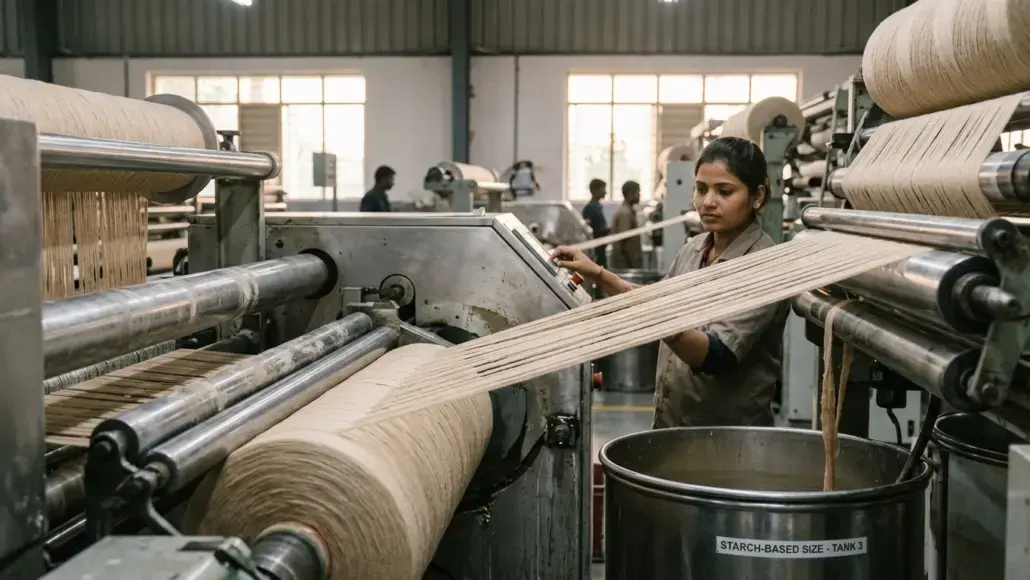
The Bio-Based Warp Sizers Market is expected to expand significantly over the next decade, reaching a valuation of USD 690 million by 2036, according to a new industry report. Valued at USD 260 million in 2025 and projected to hit USD 295 million in 2026, the sector is set to grow at a compound annual growth rate (CAGR) of 8.9% during the forecast period. This growth reflects mounting pressure from apparel brands, export-oriented textile mills, and regulatory frameworks to reduce reliance on synthetic sizing agents such as polyvinyl alcohol (PVA).
Bio-based polymer sizing, which includes modified starch and cellulose-based formulations, is gaining traction because it offers a practical transition pathway for weaving mills. Unlike conventional chemical substitutions that require major process changes, these renewable materials maintain performance characteristics such as yarn protection, adhesion control, and loom efficiency while easing desizing and lowering wastewater burden. The Bio-Based Warp Sizers Market is projected to create an absolute opportunity of USD 395 million between 2026 and 2036.
Adoption of Sustainable Sizing Solutions
Key drivers include sustainability pressure across the textile value chain, with apparel brands increasingly requesting improved environmental documentation and lower chemical impact. The adoption of sustainable sizing solutions is becoming a priority for manufacturers aiming to meet these rigorous standards. Modified starch formulations are particularly popular because they fit existing sizing equipment and provide cost advantages, allowing textile mills to integrate them without major infrastructure investments.
Denim manufacturers represent an important demand segment, as denim production involves high warp stress and repeated washing cycles. This creates a specific need for sustainable sizing solutions that maintain yarn strength while supporting efficient desizing. Innovation in the field is currently focused on improving film strength, viscosity control, and processing consistency.
Technical Advancements and Modified Starch Formulations
Modified starch formulations remain central to the industry due to their compatibility with existing textile operations, while cellulose derivatives are gaining attention for applications requiring controlled wash-off behavior. Low-PVA sizing systems are emerging as a trend as mills attempt to balance sustainability objectives with production efficiency. Bio-based polymer sizing provides the necessary technical attributes to support this transition.
Despite strong growth potential, the market faces challenges. Maintaining consistent performance across different yarn types, loom speeds, and processing conditions is a primary restraint. Starch viscosity and formulation behavior can vary depending on storage conditions and mill operating practices, requiring extensive testing before approval. Supplier capability is becoming critical, with companies needing to provide technical support and performance documentation.
Regional Growth and Green Textile Manufacturing
The move toward green textile manufacturing is most evident in South Asia, which is one of the fastest-growing regions. India leads global growth with a CAGR of 10.4%, supported by integrated textile parks and export mill expansion. Vietnam follows at 10.1%, driven by apparel export growth and buyer demand for traceable manufacturing. Bangladesh is projected to grow at 9.8%, while China advances at 9.3%. Mature markets such as Germany, Italy, and the United States remain strategically important due to sustainability compliance and technical textile demand.
The shift to green textile manufacturing is also influenced by how textile manufacturers evaluate performance. Textile weaving efficiency remains a top priority, with success measured primarily through reduced yarn breaks and improved weaving stability. By chemistry, modified starch is expected to account for approximately 46.0% of the market in 2026, benefiting from price competitiveness. Cotton yarn is projected to hold about 34.0% share, driven by a long history of starch-based sizing use. Ultimately, maintaining high textile weaving efficiency is the benchmark for any new bio-based solution entering the production line.
Competitive Landscape and Future Outlook
The competitive landscape is shaped by chemical suppliers, starch producers, and specialty textile solution providers. Competition is increasingly focused on application support, mill trial capabilities, and customized sizing solutions. Leading entities maintain strong positions through textile chemical solutions, advanced starch capabilities, and dry warp size blends for denim and other applications. Specialty polymer and cellulose chemistry expertise also contribute significantly to the market’s technical evolution.
Future competitive advantage will depend on the ability to demonstrate measurable improvements in weaving efficiency, desizing performance, and environmental compliance. Investment is focused on developing improved formulations, expanding technical service networks, and supporting textile mills during transition periods. The combination of environmental regulations, brand sustainability commitments, and textile modernization will continue accelerating adoption.

