

























Spanish company Hilaturas Arnau has successfully integrated firefighter uniforms into a new production cycle, converting them into fire-resistant fabric. This initiative, highlighted by the European Cluster Collaboration Platform on March 3, 2025, utilizes a combination of fibers from used protective garments and textile industry leftovers to create a sustainable material solution.
The process of fire-resistant fabric recycling requires rigorous control, as firefighter uniforms are engineered for extreme heat and flame resistance. Even when a garment appears intact, the degradation of fibers over time means it can no longer be used for active duty. This disposal does not signify a total loss of material value, as specific fibers can gain a new industrial function through specialized reuse routes.
Transitioning from Waste to Raw Material
When protective clothing reaches the end of its service life, it typically exits the station permanently. However, the project demonstrates that these materials still hold industrial value. By extracting specific fibers, the industry can create a secondary use-case that preserves flame-retardant properties. The difference lies in the final destination; the used uniform does not return to the station but becomes raw material for another fabric with a separately evaluated purpose.
Hilaturas Arnau and the Recycling Process
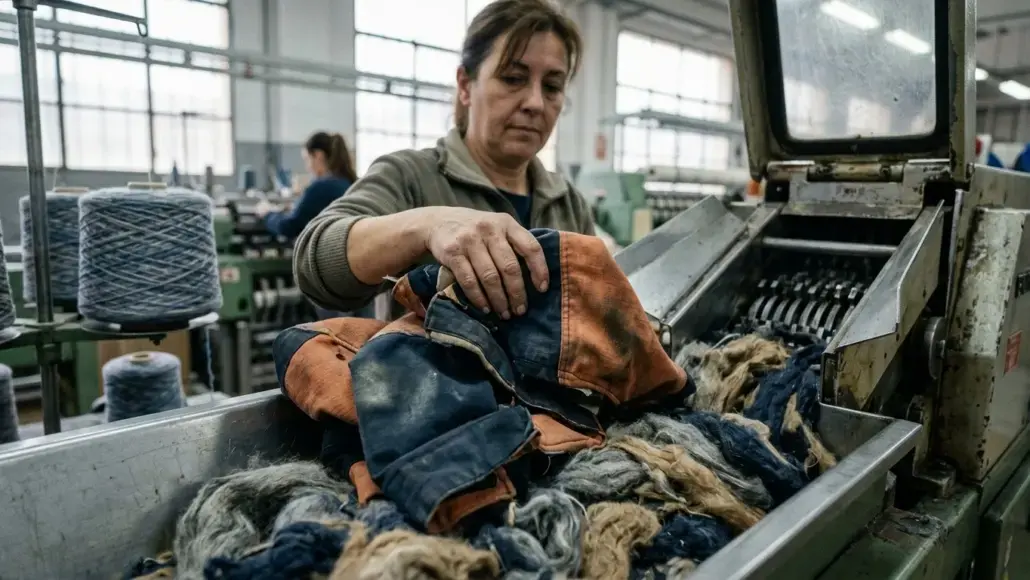
The methodology employed by Hilaturas Arnau involves blending fibers from the discarded garments with pre-consumer textile waste. These industrial scraps, generated during the initial manufacturing of other goods, are repurposed before they ever reach the consumer market. This mixture forms a new base for producing fire-resistant fabric, though the process requires extreme care because different materials can react in distinct ways to heat and flame.
Technical Performance and the Oxygen Limit Index
A critical component of this development is the material’s performance in standardized safety tests. The project recorded an oxygen limit index of 45. This metric determines the concentration of oxygen required to support the combustion of a material.
Interpreting the Oxygen Limit Index Results
In standard atmospheric conditions, materials with an index below 21 ignite easily. A rating above 26 suggests a material is self-extinguishing. The achieved oxygen limit index of 45 indicates a high level of fire resistance within this measurement type. However, researchers emphasize that this figure alone does not summarize all the necessary conditions for a fabric to be used in professional protective activities.
Safety Standards and Technical Fibers
The reuse of technical fibers does not imply an immediate return to the front lines. Safety certifications are mandatory to ensure any recycled material meets the specific demands of high-risk environments. Textile recycling in this sector must prioritize worker safety, ensuring that a recycled fabric is not treated as an automatic substitute for a professional uniform without specific evaluations.
Future of Fire-Resistant Fabric Recycling
By extending the lifecycle of specialized materials, the industry reduces the loss of valuable technical fibers. The Spanish company’s approach proves that factory scraps and used garments can coexist in a new production chain. Textile recycling offers an alternative for materials that would normally have little use after disposal, provided that testing and quality control remain the central focus of the operation.

