







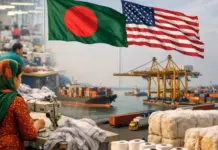



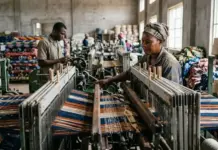




















India’s yarn exports to Bangladesh have adjusted to a new reality—shipment via sea—following the recent ban on land-based imports. The government of Bangladesh, under the leadership of Mohammad Yunus, has prohibited yarn imports from India through land routes connected to West Bengal. Despite the ban, Bangladesh’s textile industry has turned to sea routes to sustain its yarn supply from India, as finding an alternative sourcing country has proven challenging. This development marks a significant shift in India Bangladesh yarn trade dynamics.
As one of the world’s leading garment exporters, Bangladesh remains heavily reliant on India and China for yarn and fabric supplies. India continues to be the largest supplier of yarn to Bangladesh. However, recent regime changes in Bangladesh have strained trade relations, leading to increased uncertainty for Indian exporters since mid-2024.
In August 2024, Indian spinning mills faced risks in the Bangladeshi market, as concerns about payment delays forced exporters to cut back on shipments. This cautious approach reduced export volumes but did not eliminate India’s dominance in the Bangladeshi market. Previously, the land border offered a key logistical advantage, with shipments completed in just 3–4 days.
A trader from the Panipat market remarked that no other nation could match India’s speed and cost-effectiveness for supplying yarn to Bangladesh. Land-based shipments were both faster and cheaper, and several Indian producers had even set up warehouses in Kolkata to facilitate prompt deliveries to Bangladeshi buyers.
However, in a controversial move last month, the Bangladeshi government banned yarn imports through five land checkpoints along the India-Bangladesh border. The government justified the decision by claiming that affordable Indian yarn was undermining its domestic textile industry. Yet, this decision faced strong opposition from Bangladesh’s garment sector, which argued that the ban would increase production costs and reduce competitiveness in global export markets.
To adapt to the ban, Indian exporters have shifted to shipping yarn via Chittagong port in Bangladesh.
A yarn trader in Delhi highlighted that the slowdown in yarn exports to Bangladesh has also impacted domestic demand. With India’s spinning industry possessing significant capacity, reduced exports to Bangladesh have left the domestic market unable to absorb the excess supply, creating bearish market conditions. Though exports to Bangladesh have not ceased entirely, the shift to sea routes has disrupted the market.
A Panipat-based market source confirmed that Bangladeshi importers are still receiving yarn via sea shipments, although transportation now takes 7–10 days instead of the previous 3–4 days. Additionally, Bangladesh continues to import recycled yarn from Panipat, particularly for use in home furnishing and garment production.
The shift to sea routes, while ensuring trade continuity, has added logistical challenges for Indian exporters. This adaptation serves as a critical turning point in India Bangladesh yarn trade, highlighting the evolving complexities of textile commerce between the two nations.

