
























The textile industry talks a lot about fibre, dye chemistry and finishing. It talks far less about the metal underneath all of it. Yet every loom, spinning frame, carding machine and finishing line depends on hundreds of precision metal parts that have to spin, slide and hold tolerance for years without failing. When one of those parts wears out or breaks, the cost is rarely the part itself. It is the line that stops while you wait for a replacement.
That quiet dependency is becoming a bigger deal as mills automate. More automation means more moving parts, tighter tolerances and less room for downtime. It also means more pressure on the supply chain behind those parts, because the original machine builder is not always the fastest or cheapest place to source a spare.
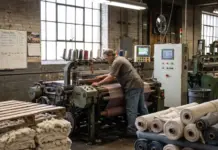
Walk the floor of any modern textile plant and the metal is everywhere once you start looking for it. Spindle housings and bearing seats on ring-spinning frames. Rollers and guides that carry yarn at high speed. Cams, gears and shafts inside the drive train of a loom. Tensioner arms, brackets and mounting plates that hold sensors and actuators in place on automated lines.
Each of these has a job that sounds simple and is not. A yarn guide has to be smooth enough that it does not abrade the thread thousands of times a minute. A spindle has to run true so the package winds evenly. A gear has to mesh cleanly under load through millions of cycles. Get the geometry slightly wrong and you see it in the cloth, not on a gauge.
Why off-the-shelf often does not fit
Two things make textile machinery parts awkward to source. First, a lot of the equipment running today is old. A mill might be running frames that are twenty or thirty years into service, long after the original spares program has dried up. Second, plants modify their machines. They retrofit new motors, add automation, change a roller diameter to run a different yarn count. The moment you do that, the catalogue part no longer matches.
This is where custom manufacturing earns its place. Instead of hunting for a discontinued spare, a mill can have the exact part reproduced from a sample or a drawing, in the right material, to the right tolerance. A worn cam can be reverse-engineered and re-cut. A bracket can be redesigned to carry a new sensor. A batch of guides can be made in a harder, longer-wearing alloy than the original.
How the parts actually get made
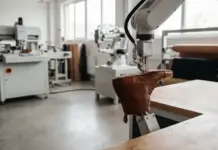
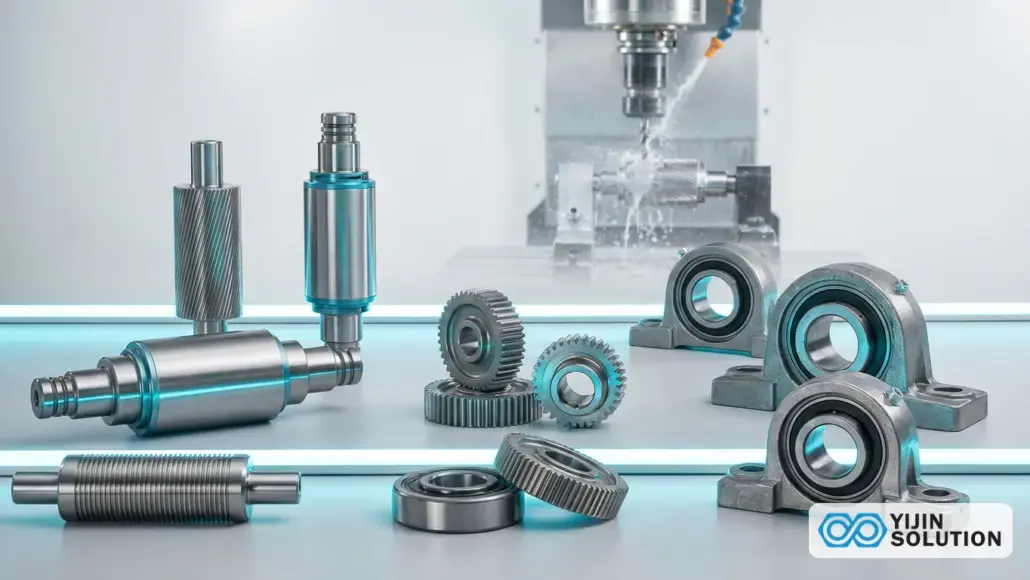
Most of these components come off a CNC machine. Computer-controlled milling and turning let a shop hold tolerances down to a few hundredths of a millimetre and repeat that across a whole production run, which is exactly what you want when you are replacing a part that has to drop straight in. Harder wear parts get surface treatments such as anodising or hardening so they last longer than the originals. For complex shapes, the same shops run sheet metal fabrication, die casting and 3D printing alongside machining, so a mill can source guards, housings and structural brackets from one place rather than five.
Companies like Yijin Solution sit in exactly this niche, and the Yijin Solution official site lays out the full range. They run multi-axis CNC machining, Swiss-type turning, sheet metal fabrication, die casting and 3D printing under one roof, working in metals from aluminium and stainless steel through to titanium and copper. For a plant manager, the appeal is simple: send a sample or a drawing, get a design-for-manufacturability check back, approve it, and have replacement parts produced to a known tolerance rather than scavenged from a shrinking pool of old stock.
The maintenance angle nobody budgets for
The reason this matters to the textile business and not just the maintenance crew is downtime. A stopped line is lost production, missed delivery dates and idle labour. Most mills carry some spares, but you cannot stock every part for every machine, and the parts that fail are often the ones you did not predict.
A reliable custom-machining partner changes the maths. It turns a multi-week wait for an obscure spare into a short, predictable lead time. It lets a plant standardise on better materials over time, so the replacement outlasts the original instead of failing again on the same cycle. And it gives engineering the freedom to improve a machine rather than just restore it.
None of this shows up in a fashion trend report. But the next time a mill quietly hits its output targets through a tariff squeeze or a labour crunch, there is a decent chance a few precisely machined pieces of metal had something to do with it.

