

























PSI 2026

Italian Textile Industry Meets for Rome Declaration 2025

Note* - All images used are for editorial and illustrative purposes only and may not originate from the original news provider or associated company.

Subscribe

- Never miss a story with notifications

- Gain full access to our premium content

- Browse free from up to 5 devices at once

Media Packs

Expand Your Reach With Our Customized Solutions Empowering Your Campaigns To Maximize Your Reach & Drive Real Results!
– Access The Media Pack Now!
– Book a Conference Call
Leave Message for us to Get Back

Related stories

Advancements in Natural Fiber Textile Recycling for Cotton and Wool

Natural fiber textile recycling has advanced significantly through cutting-edge chemical dissolution, fiber regeneration, and advanced separation technologies enabling high-purity recovery of cotton and wool fibers matching virgin specifications. Processes like Renewcell’s Circulose® and Evrnu’s NuCycl technology now enable indefinite cycling of cotton fibers while wool recycling technologies preserve fiber properties across multiple reuse cycles, creating genuine circular pathways for natural textiles and addressing the environmental advantages of fiber recovery from conventional resource-intensive virgin cultivation.

The Role of AI and Automation in Advancing Textile Recycling Systems

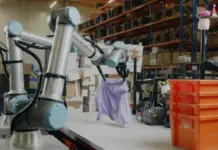
Artificial intelligence and automation technologies are revolutionizing textile recycling by dramatically improving sorting accuracy, material separation efficiency, and overall system throughput. Machine learning algorithms, computer vision systems, near-infrared spectroscopy, and robotic automation are transforming labor-intensive manual processes into intelligent automated systems capable of identifying and processing hundreds of items per hour with accuracy exceeding 95%, enabling scalable textile recycling infrastructure that was previously economically unviable.

How Brands are Redesigning Products to Support Textile Recycling and Circularity

Fashion brands are fundamentally redesigning product architecture to support textile recycling and circular business models through design-for-recycling principles including mono-material construction, detachable trims, and simplified component design. These design transformations address downstream processing requirements, reduce end-of-life complexity, and enable brands to achieve circular positioning while simultaneously improving manufacturing efficiency and creating differentiated market positioning in sustainability-conscious segments.

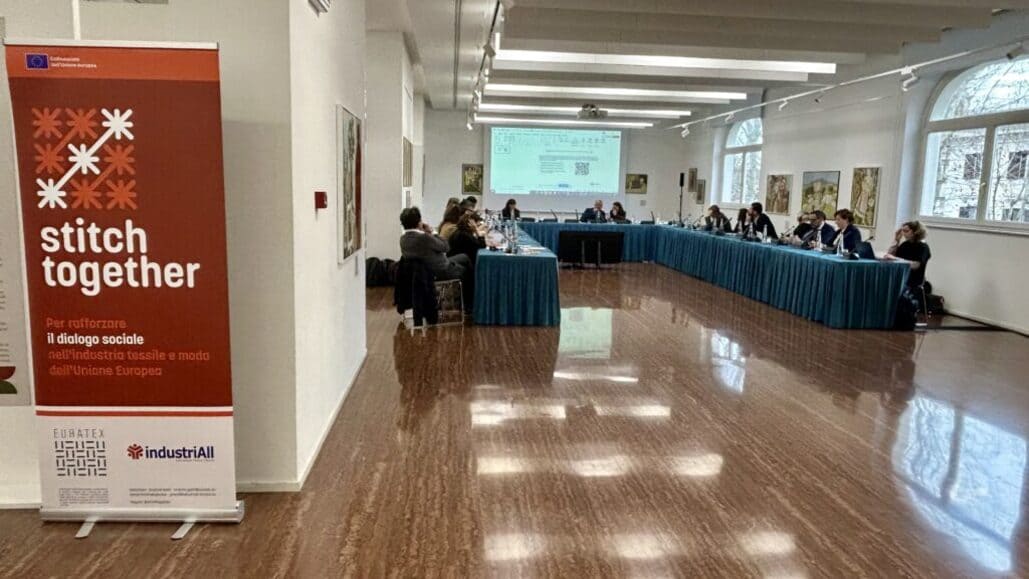
On 19-20 February 2025, social partners from the Italian textile and fashion industry met in Rome to deepen their understanding of the upcoming EU legislations and their impact on the Italian textile industry, as well as to further discuss the next step in their effort for a more broad and effective social dialogue. In the context of the EU co-funded StitchTogether project, which aims at promoting social partnerships in the European Textiles and Clothing Industry, the meeting was also the occasion to draft the Rome Declaration: a joint statement to emphasise the social partners’ strong commitment to work together.

The meeting in Rome brought together representatives of the Italian textile industry, including the Italian employer association (Confindustria Moda), national trade unions (Femca-Cisl, Filctem-Cgil and Uiltec-Uil), regional clusters and companies to discuss the future of the industry. Together, they discussed the proposal for a sectoral industrial policy strategy to present to the Italian Government and the EU Commission for the support, consolidation and development of the textile-clothing supply chain.

The Rome Declaration includes a series of priorities, confirming social partners’ commitment in working together for a more competitive and fair Italian textile industry. The Declaration also calls upon the Italian Government and the European Union to support the upcoming transformation of the textile and clothing industries, technology and skills upgrades, regional development and just transition.

Says Judith Kirton-Darling, IndustriAll Europe’s general secretary stated that “the Italian textile industry employs around 300,000 workers, or 24% of the European workforce in the textile and clothing sector, making it the largest in Europe. In a context of numerous challenges for the European textile industry, such as unfair globalization, green and digital transition, social dialogue is a real lever for improving working conditions and job security. We are committed alongside our Italian partners to a resilient and attractive textile industry in Italy”.

Dirk Vantyghem, EURATEX Director General, stressed that “Italy represents 36% of the total European textile and fashion industry; it is critically important therefore to maintain a strong Italian textile industry, which can be a benchmark for other countries. Combining quality, creativity and innovation is the recipe for success. This requires a dynamic company spirit, where employers and employees work hand in hand.”

Latest stories

Related stories

Advancements in Natural Fiber Textile Recycling for Cotton and Wool

Natural fiber textile recycling has advanced significantly through cutting-edge chemical dissolution, fiber regeneration, and advanced separation technologies enabling high-purity recovery of cotton and wool fibers matching virgin specifications. Processes like Renewcell’s Circulose® and Evrnu’s NuCycl technology now enable indefinite cycling of cotton fibers while wool recycling technologies preserve fiber properties across multiple reuse cycles, creating genuine circular pathways for natural textiles and addressing the environmental advantages of fiber recovery from conventional resource-intensive virgin cultivation.

The Role of AI and Automation in Advancing Textile Recycling Systems

Artificial intelligence and automation technologies are revolutionizing textile recycling by dramatically improving sorting accuracy, material separation efficiency, and overall system throughput. Machine learning algorithms, computer vision systems, near-infrared spectroscopy, and robotic automation are transforming labor-intensive manual processes into intelligent automated systems capable of identifying and processing hundreds of items per hour with accuracy exceeding 95%, enabling scalable textile recycling infrastructure that was previously economically unviable.

How Brands are Redesigning Products to Support Textile Recycling and Circularity

Fashion brands are fundamentally redesigning product architecture to support textile recycling and circular business models through design-for-recycling principles including mono-material construction, detachable trims, and simplified component design. These design transformations address downstream processing requirements, reduce end-of-life complexity, and enable brands to achieve circular positioning while simultaneously improving manufacturing efficiency and creating differentiated market positioning in sustainability-conscious segments.

Subscribe

- Never miss a story with notifications

- Gain full access to our premium content

- Browse free from up to 5 devices at once

Media Packs

Expand Your Reach With Our Customized Solutions Empowering Your Campaigns To Maximize Your Reach & Drive Real Results!

– Access The Media Pack Now!
– Book a Conference Call
Leave Message for us to Get Back

Translate »