
















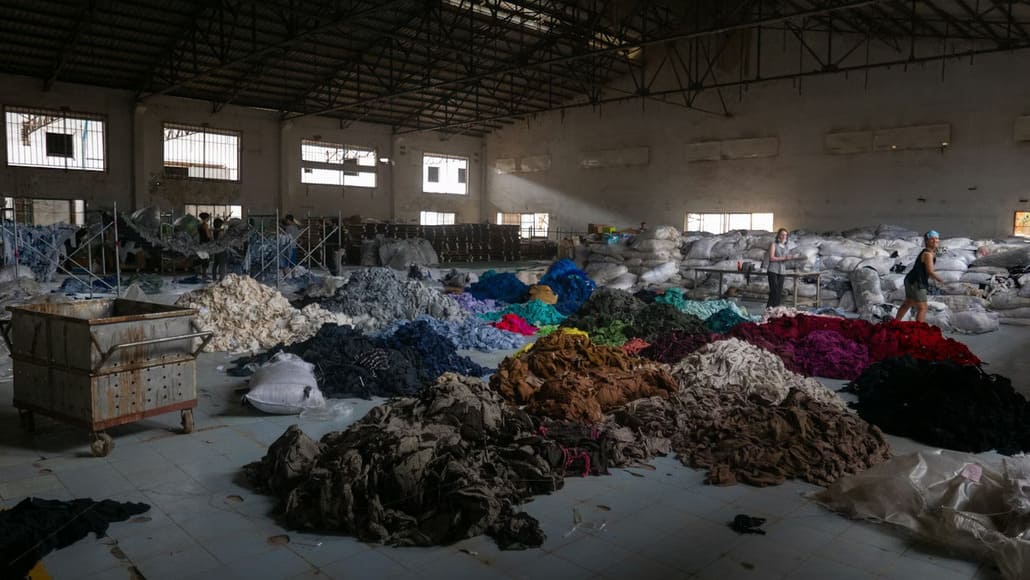
Fashion for Good is launching a new European programme aimed at solving one of circular fashion’s most persistent bottlenecks: the lack of consistent, recycler-ready input material. The initiative, called Project Feedstock Activation Europe (FAE), is designed to create the systems needed to turn non-rewearable post-consumer textiles into dependable, scalable textile-to-textile recycling feedstock.
While textile recycling technology has advanced quickly in recent years, Fashion for Good argues that many projects still struggle to secure the right quality and quantity of raw input—especially when dealing with mixed materials, stretch fibres and contamination common in used clothing. Project FAE focuses on making post-consumer waste practical and cost-effective to process, so recyclers can use it as a commercially viable raw material rather than a problematic, inconsistent stream.
The programme has two main workstreams. The first is a technical review of advanced pre-processing methods that can prepare waste textiles for recycling at industrial scale. Fashion for Good said it will assess how close these approaches are to deployment, including techniques for separating fibre blends, removing elastane, and extracting contaminants. The goal is to determine which technologies can be implemented immediately and which still need development or scale-up.
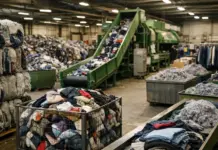
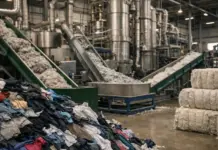
The second workstream is structural: designing a blueprint for a network of regional hubs across Europe. These hubs would aggregate post-consumer textiles, apply automated sorting and mechanical pre-processing, and then output feedstock streams tailored to specific recycler requirements. By centralising processes and using automation, the model aims to reduce costs while improving consistency and quality—two factors that determine whether textile-to-textile recycling feedstock can be secured at volume.
Project FAE brings together a wide coalition spanning sorting, recycling and ecosystem support. Sorting and collection organisations participating include Boer Group, Circle-8 Textile Ecosystems, Erdotex, Formació i Treball, Humana People to People, Kringwinkel Antwerpen, New Retex, Nouvelles Fibres Textiles, Plaxtil-Essaimons, Sympany, Texaid and Texlimca. On the recycling side, contributors include Circ, Circulose, CuRe Technology, eeden, Infinited Fiber Company, Kipas (fibR-e), Matterr, Meltem Kimya, Recover, Reju, OnceMore (Södra) and WornAgain, representing multiple technology pathways and end-market formats.
Supporting organisations include InvestNL, Landbell Group, Refashion, Reverse Resources, TEXroad, Wargon Innovation, WRAP, ZDHC and the Global Fashion Agenda, signalling an intention to align the programme with existing European policy and industry initiatives.
Fashion for Good said it wants FAE to deliver more than technical recommendations. The goal is a viable commercial structure that can be adopted by industry—helping establish a functioning post-consumer textile value chain in Europe that can reliably serve recycling plants at scale.
Fashion for Good managing director Katrin Ley said: “We have been talking about textile circularity for years, and the honest truth is that the technology is no longer the bottleneck. What is holding us back is much more unglamorous: the sorting lines, the pre-processing steps, the supply systems that need to exist before a single fibre can be recycled.
“Project FAE is our attempt to tackle that unglamorous, necessary work head-on – together with the brands, sorters and recyclers who know this problem better than anyone. If we get this right, we unlock something the industry has been trying to reach for a long time.”