




























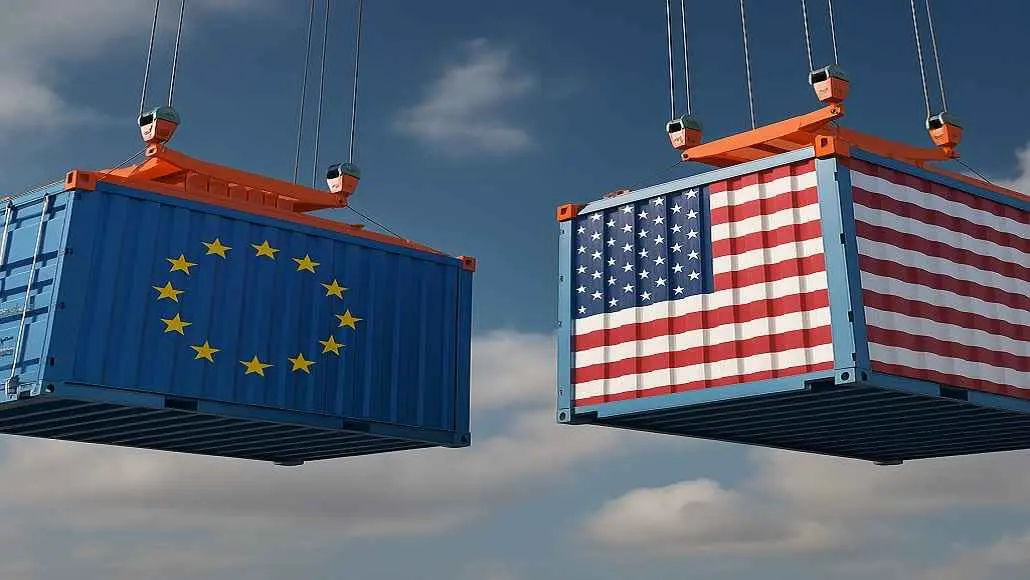
The United States Government has formally called on the European Union to significantly scale back the application of its Corporate Sustainability Due Diligence Directive (CSDDD) and Corporate Sustainability Reporting Directive (CSRD) on American companies, arguing that the current scope of these directives creates undue barriers to transatlantic trade and places duplicative regulatory burdens on US firms operating in or connected to the EU market.
Washington Invokes Prior EU Commitment on Trade
In an official statement, the US Government referenced a prior commitment made by the EU to “undertake efforts to ensure” that the CSDDD and CSRD “do not pose undue restrictions on transatlantic trade.” The statement also called on the EU to “work to address US concerns regarding the imposition of CSDDD requirements on companies of non-EU countries with relevant high-quality regulations.”
The US further stated that “the directives’ extraterritorial reach and costly and onerous supply chain due diligence obligations will adversely impact the ability of US businesses to compete on a level playing field in the EU market.”
Reporting Standards and the Double Materiality Divide
A central point of friction highlighted in the US statement concerns the difference in reporting standards between the two jurisdictions. The CSDDD and CSRD require impact-based materiality reporting under a “double materiality” standard, which takes into account both financial risks and a company’s broader impact on people and the environment. This stands in direct contrast to the single financial materiality standard that governs reporting obligations under US law.
According to the US Government, “the extraterritorial reach of the CSRD and CSDDD would significantly expand the reporting burden for non-EU companies with minimal links to the EU market.” The statement went on to assert that the United States already maintains “a rigorous regulatory regime governing supply chain mapping and due diligence,” and that extending CSDDD obligations to US companies already subject to this domestic framework “would create duplicative and potentially conflicting obligations for US firms, thus violating basic principles of international comity.”
What the US Is Formally Requesting
The US Government has laid out a set of direct requests to the EU, seeking concrete changes to how the CSDDD and CSRD are applied to American businesses and their affiliates operating within Europe.
The US has asked the EU and its Member States to significantly limit CSDDD and CSRD reporting and due diligence requirements on US businesses, and to limit enforcement actions against them. More specifically, the application of the CSDDD should be restricted to the activities of EU subsidiaries of US businesses or the EU business partners of US businesses.
Furthermore, the US has requested that the EU only apply the CSDDD to goods that are produced in, or services that are supplied from, within the EU. On the matter of penalties, Washington has asked that the EU prohibit the levying of any financial penalty on a US business, or an EU subsidiary of a US business, where that penalty is based on revenue derived from activities conducted outside the EU.
The US has also called on the EU to prohibit private rights of action — meaning civil lawsuits brought by individuals or organisations — unless they are premised on an official supervisory or enforcement finding by a regulatory body.
A Deepening Regulatory Divide
The US position underscores the growing tension between the EU’s expanding framework for corporate sustainability and supply chain due diligence and the concerns of trading partners who view these measures as having an overreaching extraterritorial effect. The CSDDD US trade rules dispute reflects broader questions about how global businesses will navigate an increasingly complex and sometimes conflicting landscape of sustainability regulations across major economies.
With the EU having previously signalled a willingness to engage on concerns around transatlantic trade, the pressure from Washington adds new urgency to ongoing discussions about the scope and enforcement of supply chain due diligence obligations under EU law.