

























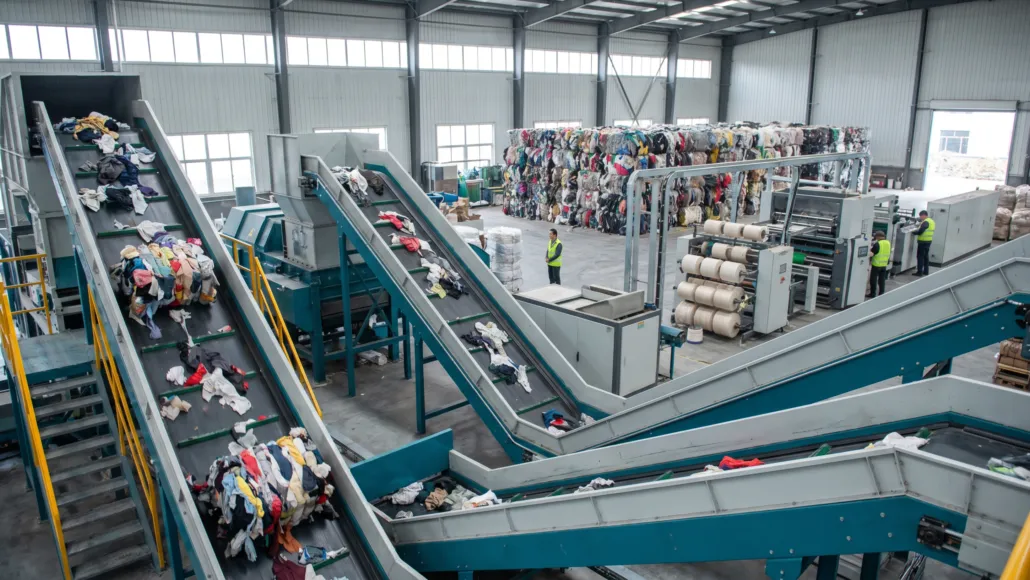
The era of fashion’s use-and-dispose model is drawing to a close as the global industry pivots towards more sustainable practices. Each year, approximately 92 million tonnes of textile waste are generated worldwide, with a significant portion being pre-consumer waste. This pressing environmental challenge is driving a crucial shift towards Textile Recycling for Circular Economy, a key strategy for reducing impact and fostering a regenerative system.
A growing number of legislations worldwide are now pushing the industry towards robust Textile Waste Management. The European Union’s Extended Producer Responsibility (EPR) for textiles, for instance, mandates that brands take accountability for their products’ entire lifecycle, from collection and sorting to reuse and recycling. Similar frameworks are emerging globally; California, USA, requires producers to join a Producer Responsibility Organisation focused on textile collection and prioritizing reuse and recycling. France’s AGEC Law also compels fashion brands to finance the collection, sorting, reuse, and recycling of post-consumer textiles, reinforcing the legislative impetus behind EPR Textiles.
Retail Giants Embrace Sustainable Fashion
In response to these tightening regulations and consumer demand for Sustainable Fashion, major retail players are actively integrating textile recycling into their operations. European giants like Inditex/Zara, H&M, and Primark are at the forefront of addressing textile waste. H&M, for example, has incorporated Renewcell’s Circulose into a growing number of its collections, utilizing recycled cellulosic materials. Zara has forged direct partnerships with innovators such as Ambercycle and Circ to embed textile-to-textile recycled fibers into their commercial lines. Beyond the EU, Primark’s Textile Takeback programme in the UK, developed with Yellow Octopus, collects unwanted textiles for reuse and regeneration. Uniqlo’s RE.UNIQLO initiative also facilitates the recycling of unwearable garments into new textile materials via in-store collection schemes.
Global Innovators Advancing Textile Recycling Technologies
Buoyed by industry initiatives and a commitment to the Circular Economy, numerous emerging players are scaling their Textile Recycling efforts with innovative technologies. Companies like Circ, Circulose, ErdoTex, Infinited Fibre Company, Recover™, RE&UP, Worn Again Technologies, and Fiberly are establishing themselves as leaders in this critical space.
- US-based Circ has pioneered technology to separate cotton and polyester from post-consumer textile waste through hydrothermal processing.
- Sweden’s Circulose transforms discarded post-consumer and pre-consumer textile waste into dissolving pulp for new cellulosic fibers.
- Finland’s Infinited Fibre Company offers Infinna™, a virgin-quality fiber made entirely from cotton-rich textile waste.
- Netherlands-based Erdotex focuses on textile-to-textile recycling of primarily post-consumer textile waste, managing collection, sorting, and processing across various hubs.
- Seattle-based Evrnu uses its patented NuCycl® technology to break down cotton-rich manufacturing waste and discarded consumer fashion into molecular components, repolymerizing them into new high-performance lyocell fiber.
- Stockholm-based Syre targets large-scale pre-consumer and post-consumer textile recycling, aiming for 3 million metric tonnes of circular polyester annually by 2032.
India’s Pivotal Role in the Circular Economy for Textiles
India is also taking significant strides in nurturing its Textile Recycling ecosystem. This domestic push is partly motivated by upcoming trade agreements with major markets like the US, the UK, and the EU. The impending India–EU Free Trade Agreement, expected by early 2027, holds particular significance for India’s apparel sector, which exports approximately US$4.5–5 billion worth of ready-made garments to the EU. To maximize the benefits of such pacts, Indian manufacturers are strengthening their Sustainable Fashion infrastructure.
Several Indian companies are leading the charge in sustainable textile solutions:
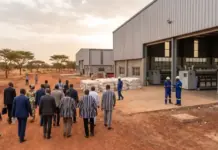
- Vardhman Textiles launched ReNova, a fiber recycling facility in Baddi, Himachal Pradesh, transforming pre- and post-consumer textile waste into GRS-certified recycled cotton and polyester fibers.
- Surat-based CanvaLoop converts agricultural waste into forest-free textile fibers known as Agro-Lyocell.
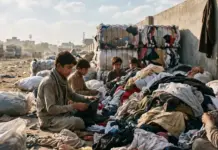
- Mumbai’s ReCircle operates a textile recovery facility where pre- and post-consumer waste is collected, sorted for reusability or recyclability, and then either given a second life or shredded for new fibers. In FY25, their efforts returned 129,357.99 metric tonnes of dry waste to the value chain.
- Panipat-based Respun diverts post-consumer fashion waste and fabric scraps from landfills, sorting and recycling them into new fiber, yarn, and fabric. In 2025, they prevented 6,160 tonnes of textile waste from landfills and reduced approximately 33,600,000 kgs of CO2 emissions.
- Birla Cellulose, part of the Aditya Birla Group, has a strategic partnership with Circ, aiming to purchase up to 5,000 tons of Circ’s pulp annually for five years from Circ’s Saint Avold, France facility.
- Filatex India, through its subsidiary Ecosis Limited, is set to launch a ₹300 crore textile-to-textile chemical recycling facility in Dahej, Gujarat.
Overcoming Challenges for a Regenerative Future
Despite the momentum, Textile Recycling still faces notable barriers. Chemical recycling processes can be resource-intensive, while mechanical recycling often degrades fiber quality and struggles to remove dyes or chemical finishes effectively. Scalability is further hindered by limited collection, sorting, and recycling infrastructure, with recycling costs frequently exceeding the market value of recovered materials.
Addressing these challenges will necessitate stronger policies, clearer mandates, and targeted incentives to accelerate industrial-scale adoption. The global industry’s current recycling rate, which remains below one percent, underscores the extensive work still required to build the comprehensive infrastructure needed for a truly regenerative system based on Textile Recycling for Circular Economy.

