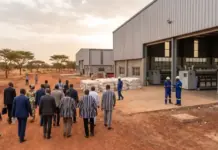






















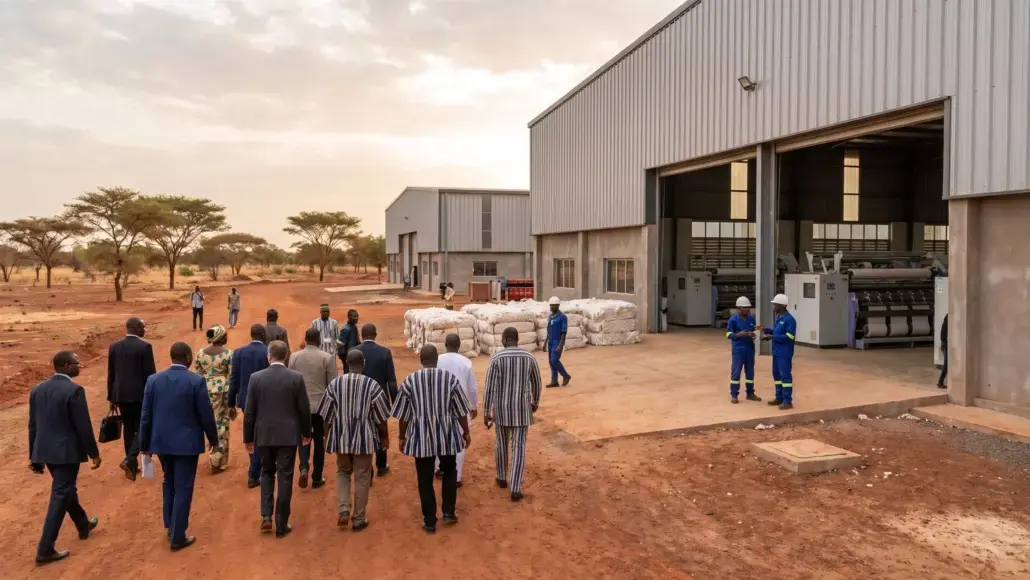
Burkina Faso has taken a concrete step toward reducing its dependence on imported clothing with the inauguration of a major industrial textile complex. President Ibrahim Traoré officially unveiled the Textile des Forces du Burkina Faso — known as TEXFORCES-BF — at a dedicated ceremony marking the launch of the $30 million facility.
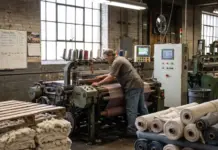
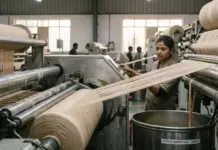
The industrial complex is situated on a 30-hectare site in Logofourousso and brings together several core stages of textile manufacturing under one roof, including weaving, knitting, dyeing, finishing, and garment production, as reported by Ecofin Agency.
A Facility Built for Scale
TEXFORCES-BF is designed to serve both defence and civilian purposes. The facility will supply uniforms to Burkina Faso’s Defence and Security Forces as well as the Volunteers for the Defence of the Homeland. In addition, it will produce a broad range of clothing items for the civilian population.
Initial government estimates place the factory’s daily cotton fibre processing capacity at over 12 tonnes. On an annual basis, the facility is expected to produce approximately 20 million metres of fabric, six million knitted garments, six million uniforms, six million T-shirts, and one million pairs of socks.
Strengthening the Domestic Cotton Value Chain
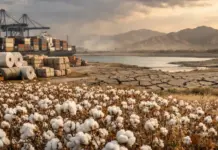
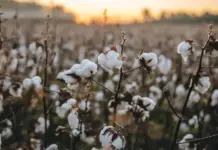
The launch of TEXFORCES-BF is part of a wider national strategy to expand Burkina Faso’s capacity for transforming its domestic cotton into finished goods. The intent is to strengthen the local value chain and retain a greater share of economic benefits within the country rather than exporting raw cotton while importing manufactured clothing.
This drive to build out domestic cotton processing infrastructure extends beyond large-scale industry. In November 2025, authorities opened the National Centre for Support to Artisanal Cotton Processing — referred to as CNATAC — in Bobo-Dioulasso. Funded at CFA Fr1.5 billion, the centre was established to enhance artisanal weaving, dyeing, and sewing, with a focus on supporting small-scale producers and preserving traditional textile knowledge.
Partnerships and Investment Activity
In July 2025, Burkina Faso’s Caisse des Dépôts et d’Investissements signed a memorandum of understanding with Basra Textile Mills from Kenya. The agreement aims to establish an integrated textile plant, with a proposed investment of around $25 million structured as a potential public-private partnership.
Production Targets and the Import Challenge
Alongside the expansion of textile manufacturing capacity, the government has set an ambitious target for domestic cotton production. By the 2026/2027 agricultural season, Burkina Faso plans to harvest 532,000 tonnes of seed cotton — a 69% increase compared to the previous year.
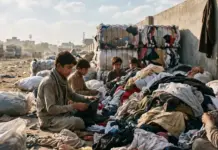
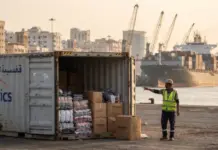
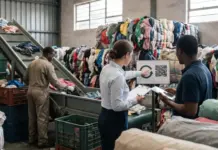
The urgency behind these investments becomes clearer when looking at import data. According to figures from the National Institute of Statistics and Demography, Burkina Faso imported nearly 39,000 tonnes of clothing and accessories annually between 2019 and 2023, at an average annual cost of roughly CFA Fr18.65 billion. Reducing reliance on clothing imports remains one of the central challenges the Burkina Faso textile sector is working to address through these coordinated domestic cotton production and manufacturing initiatives.