





























Cameroon’s Chamber of Agriculture, Fisheries, Livestock and Forestry (CAPEF) has initiated crucial discussions with Tunisia’s Textile Technical Centre (CETTEX) to catalyze the Cameroon textile industry and significantly accelerate local cotton processing capabilities. This strategic engagement, unfolding during an economic mission to Tunisia led by CAPEF President Mready toartin Paul Mindjos Momeny, aims to unlock the substantial potential for textile industry growth within the nation.
Elevating Cameroon’s Textile Value Chain
During a pivotal meeting with CETTEX Director General El Mohsen Missaoui, both institutions thoroughly examined a spectrum of cooperation opportunities. These encompass vital areas such as advanced textile manufacturing, technology transfer, innovation, stringent quality control measures, specialized training programs, and comprehensive support for small and medium-sized enterprises (SMEs), all crucial for robust industrial development.
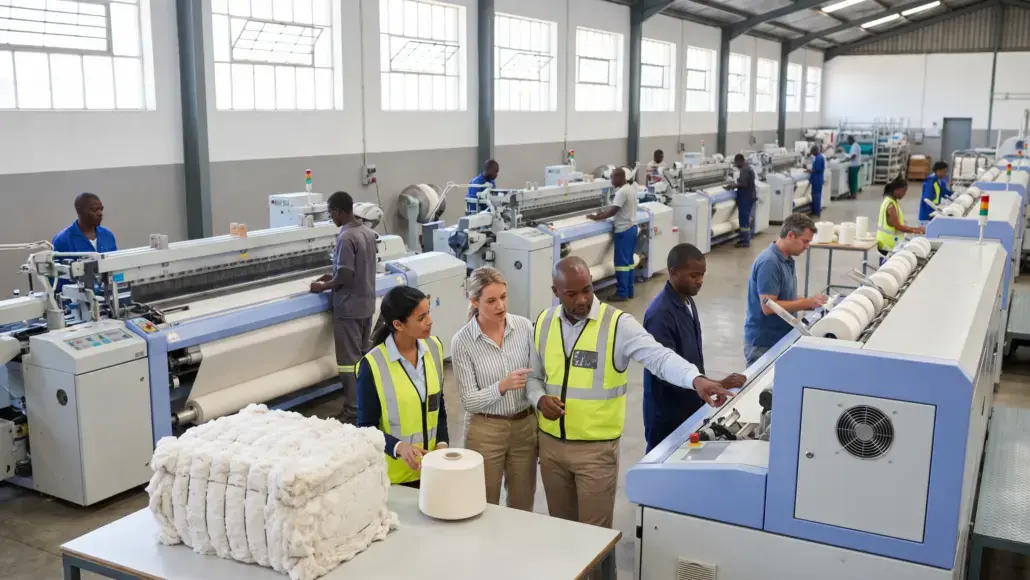
CAPEF underscored that the primary focus of these discussions is to fortify Cameroon’s cotton value chain. Despite the nation’s impressive annual production of over 300,000 tonnes of cotton, a significant portion is currently exported in raw form, largely due to existing limitations in domestic processing capacity. The overarching objective is to cultivate an integrated value chain that seamlessly spans from initial cotton production to spinning, weaving, garment manufacturing, and the ultimate marketing of sophisticated finished textile products. This initiative is closely aligned with Cameroon’s broader industrialisation strategy, designed to empower local producers to fully leverage the extensive opportunities presented by the African Continental Free Trade Area (AfCFTA). The pursuit of enhanced cotton processing and manufacturing is a cornerstone of this national vision.
Blueprint for Industrial Collaboration
CETTEX showcased Tunisia’s successful textile development model, which is fundamentally built on strategic investments in cutting-edge technology, continuous innovation, rigorous skills development, and robust industrial support services. The dialogue explored how key facets of this established experience could effectively underpin the burgeoning textile industry growth in Cameroon.
CAPEF further identified several promising avenues for collaboration. These include specialized production of professional workwear, the manufacture of distinct printed fabrics tailored for diverse African markets, targeted training initiatives for skilled artisans and processing SMEs, and engaging in triangular cooperation projects that involve established European and international partners. These efforts are integral to fostering holistic industrial development. The initiative significantly supports national endeavors to enhance local value addition across agriculture-based sectors, a core tenet of Cameroon’s National Development Strategy (NDS30). Recent data from the Ministry of Agriculture and Rural Development and SODECOTON confirms that national cotton production has consistently remained above 300,000 tonnes in recent years, highlighting the untapped potential for the Cameroon textile sector.
Forging Future Partnerships
Concluding the productive engagement, CAPEF and CETTEX mutually agreed to establish a dedicated technical working group. This group will be tasked with meticulously preparing a structured cooperation programme, a proposal that will subsequently be presented to both Cameroonian and Tunisian authorities through established bilateral cooperation mechanisms, paving the way for concrete implementation.

