




















KARACHI, September 21 — Pakistan’s textile and apparel exports climbed to $18 billion in fiscal year 2025-26, marking their highest level in four years, according to the Pakistan Textile Council’s first annual Export Performance Report. The achievement came despite only marginal annual growth of 0.3 percent, at a time when Pakistan’s overall exports fell sharply by 5.9 percent to $30.14 billion. As a direct result, the textile industry Pakistan now accounts for nearly 60 percent of the country’s total export earnings.
Apparel and Home Textiles Drive Growth
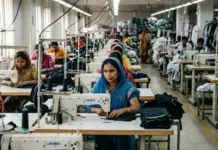
The performance of Pakistan textile exports was largely underpinned by apparel and home textile made-ups. Exports under Chapters 61 to 63 rose 1.1 percent to $14.98 billion, expanding their share of total textile exports to 83.2 percent — up from 77 percent recorded in fiscal year 2021-22.
Non-knit apparel exports stood out, reaching a record $4.295 billion after growing 3.9 percent during the year. Within this segment, men’s cotton trouser exports grew 19 percent, while women’s cotton trouser exports posted a remarkable 54 percent increase.
Home textile exports remained the single largest textile export category, registering $5.705 billion, although growth was limited to 0.6 percent. Knitwear exports, on the other hand, declined 0.7 percent to $4.979 billion.
Raw Materials and Intermediate Products Under Pressure
In contrast to the gains seen in finished goods, exports of raw materials and intermediate products declined 3.4 percent to $3.03 billion — the lowest level recorded in five years, according to the report.
Key Export Markets
The European Union retained its position as Pakistan’s largest textile export market, with exports standing at $7.103 billion, though this represented a dip from the prior year’s $7.248 billion. Shipments to the United States rose to $4.853 billion, while exports to the United Kingdom stood at $1.730 billion.
Exports to China increased to $644 million, and those to Bangladesh remained broadly stable at approximately $620 million. Growth in both markets was primarily supported by cotton yarn and fabric.
Cotton Supply Remains a Critical Concern
Pakistan Textile Council Chief Executive Officer Muhammad Hassan Shafqat acknowledged that the modest growth reflected the sector’s ability to stay competitive in global markets. However, he drew attention to the growing concern around raw material availability, particularly cotton.
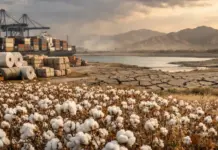
Shafqat noted that Pakistan produced only 5.5 million bales of cotton in the latest season — the lowest in three decades — compared with a peak of 14.8 million bales in 2011-12. The resulting shortfall, he added, is increasingly being bridged through imports, placing additional pressure on the textile industry Pakistan’s cost structure.
June 2026 Signals Cautious Outlook
The report also flagged weaker export activity toward the close of the fiscal year. Pakistan textile exports in June 2026 stood at $1.27 billion, down 17 percent year-on-year and 23 percent from the previous month. The Pakistan Textile Council noted this as an indicator of softer order flows at the start of fiscal year 2026-27.
Policy Recommendations for Strengthening Competitiveness
To reinforce export competitiveness, the Pakistan Textile Council has put forward 11 measures spanning six key areas. These include reducing corporate income tax to 15 percent, automating and accelerating sales and income tax refunds, ensuring competitive and reliable energy supplies, improving financing access for exporters and small and medium enterprises, and facilitating indirect exporters.
On the trade policy front, the council called for long-term continuity of GSP Plus preferences, efforts toward free trade agreements with the United States and the United Kingdom, competitive freight rates, shorter transit times, and greater capacity for the Pakistan National Shipping Corporation.
For cotton production Pakistan specifically, the council recommended a coordinated national strategy covering quality seeds, farmer digitalization, and traceability systems. The council confirmed that these recommendations will form the foundation of its policy advocacy agenda for fiscal year 2026-27.